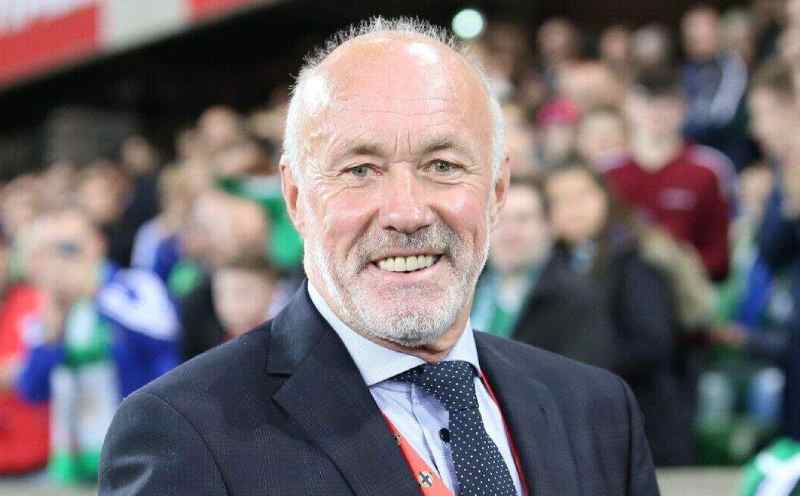
In the rich tapestry of British football, certain players stand out not merely for their statistics but for what they represent. Sammy McIlroy is one such figure—a footballer whose career bridged generations and whose influence extended far beyond the pitch. Known affectionately as the “Last Busby Babe,” McIlroy symbolises the final chapter of an iconic era under Sir Matt Busby while simultaneously helping shape the future of Manchester United.
His story is not one of fleeting brilliance, but of sustained excellence, adaptability, and commitment. From his early days in Belfast to his celebrated career at Old Trafford and beyond, McIlroy’s journey reflects determination, humility, and a deep understanding of the game.
Early Life in Belfast
Sammy McIlroy was born on 2 August 1954 in Belfast, Northern Ireland. Growing up in a working-class environment during a turbulent period in the city’s history, football provided both escape and identity. Like many children in Belfast, he spent hours playing in the streets, developing skills that would later define his professional career.
Street football had a profound influence on McIlroy’s playing style. Tight spaces demanded quick thinking, close control, and creativity—qualities that became hallmarks of his game. Even at a young age, his awareness and composure set him apart.
Football was more than just a pastime; it was a pathway. Scouts quickly noticed his talent, and before long, he was given the opportunity that would change his life—joining Manchester United’s youth system.
Joining Manchester United
For any young footballer, joining Manchester United is a dream. For McIlroy, it was also a responsibility. The club was still shaped by the legacy of Sir Matt Busby and the famed Busby Babes, and expectations were high.
McIlroy joined the club as a teenager and progressed rapidly through the ranks. His technical ability, combined with his football intelligence, impressed coaches and senior players alike.
He was not just another academy player—he was seen as someone who could carry forward the club’s identity.
A Historic Debut
McIlroy’s first-team debut in 1971 was nothing short of remarkable. At just 17 years old, he stepped onto the pitch in a Manchester derby against Manchester City. The pressure was immense, but McIlroy rose to the occasion.
He scored a goal and provided an assist, instantly capturing the imagination of fans. It was a performance that announced his arrival and hinted at the career to come.
Moments like these are rare, and they often define how a player is remembered. For McIlroy, it was the beginning of a long and influential journey at Old Trafford.
Becoming the “Last Busby Babe”
The nickname “Last Busby Babe” carries deep meaning within Manchester United’s history. It connects McIlroy to a lineage of players developed under Sir Matt Busby, known for their technical skill, teamwork, and character.
Being the final player signed by Busby placed McIlroy in a unique position. He was both a continuation of tradition and a bridge to a new era.
This role was not without pressure. Expectations were high, and comparisons were inevitable. Yet McIlroy handled it with quiet confidence, allowing his performances on the pitch to speak for themselves.
Manchester United Career
Consistency and Contribution
McIlroy spent over a decade at Manchester United, making more than 400 appearances. During this time, he established himself as one of the team’s most reliable and intelligent players.
He was not always the headline-maker, but he was often the player who made things happen. His ability to link defence and attack, create opportunities, and maintain possession made him invaluable.
The Relegation and Promotion Years
One of the most challenging periods in McIlroy’s career came during the 1973–74 season when Manchester United were relegated from the First Division.
For many players, relegation can define a career negatively. For McIlroy, it became a test of character. He remained with the club and played a key role in their immediate promotion back to the top flight.
This period highlighted his loyalty and resilience—qualities that endeared him to supporters.
FA Cup Triumph
Perhaps the crowning achievement of McIlroy’s time at Manchester United came in the 1976–77 season when the club won the FA Cup.
In the final against Liverpool FC, Manchester United delivered a memorable performance to secure victory. The win was significant not just for the trophy, but for what it represented—a resurgence of the club.
McIlroy’s contribution throughout the campaign was vital, and lifting the FA Cup remains one of the defining moments of his playing career.
Playing Style and Strengths
Sammy McIlroy was a versatile player capable of operating in midfield or attack. His style was defined by intelligence rather than physical dominance.
Key Attributes
Technical Ability
McIlroy possessed excellent ball control and passing accuracy. He could operate in tight spaces and retain possession under pressure.
Vision and Awareness
He had an innate ability to read the game. This allowed him to anticipate movements and create opportunities for teammates.
Work Ethic
While not the most physically imposing player, McIlroy compensated with determination and effort. He contributed both offensively and defensively.
Versatility
His ability to adapt to different roles made him a valuable asset. Whether playing deeper in midfield or further forward, he maintained a high level of performance.
A Thinking Player
McIlroy’s greatest strength was perhaps his football intelligence. He understood the rhythm of the game and could influence it without necessarily dominating possession or scoring goals.
This subtle influence is often overlooked, but it is what separates good players from great ones.
International Career with Northern Ireland
McIlroy’s contributions were not limited to club football. He was also a key figure for the Northern Ireland national team.
Major Tournaments
He represented Northern Ireland in two FIFA World Cups:
- 1982 in Spain
- 1986 in Mexico
The 1982 World Cup was particularly memorable. Northern Ireland achieved a historic victory over the host nation, Spain, marking one of the greatest moments in the country’s football history.
McIlroy played a significant role in this success, demonstrating his ability to perform on the biggest stage.
Leadership Role
By the time of the 1986 World Cup, McIlroy had become one of the team’s senior players and captained the side.
His leadership was based on experience and composure rather than vocal authority. He led by example, maintaining high standards and guiding younger players.
Later Playing Career
After leaving Manchester United in 1982, McIlroy continued his career with several clubs, including Stoke City, Manchester City, and Preston North End.
While these years did not bring the same level of recognition as his time at Old Trafford, they demonstrated his professionalism and love for the game.
He adapted to different teams and environments, continuing to contribute with consistency and experience.
Transition into Management
Following his retirement as a player, McIlroy moved into management—a natural progression for someone with such a deep understanding of football.
Macclesfield Town Success
One of his most notable achievements came with Macclesfield Town. Under his leadership, the club experienced remarkable success, including promotion to the Football League.
This period showcased McIlroy’s ability to inspire and organise a team, translating his playing intelligence into managerial effectiveness.
Morecambe Achievement
McIlroy later managed Morecambe FC, leading them to promotion into the Football League for the first time in their history.
This accomplishment remains one of the club’s greatest achievements and further cemented McIlroy’s reputation as a capable manager.
Northern Ireland Manager
He also had the honour of managing the Northern Ireland national team. While results were mixed, his tenure reflected his commitment to contributing to football in his home country.
Life Beyond Management
After stepping away from management, McIlroy remained involved in football in various capacities.
He has worked as a pundit, offering insights based on decades of experience. His analysis is respected for its clarity and depth, reflecting his understanding of the game.
He has also served as an ambassador for Manchester United, maintaining a connection with the club and its supporters.
Honours and Recognition
Sammy McIlroy’s contributions to football have been recognised in several ways.
He was awarded an MBE in 1986 for services to football—an honour that reflects both his achievements and his character.
His legacy at Manchester United is secure, and he is widely regarded as one of the club’s most important players of his era.
Legacy in Football
Sammy McIlroy’s legacy is not defined solely by trophies or statistics. It is defined by what he represented.
A Bridge Between Eras
He connected the Busby era with the modern age of Manchester United, carrying forward values of teamwork, discipline, and technical excellence.
A Model Professional
Throughout his career, McIlroy maintained a reputation for professionalism and humility. He was respected by teammates, opponents, and fans alike.
Influence on Future Generations
His style of play and approach to the game have influenced countless players. He demonstrated that intelligence and awareness can be just as important as physical attributes.
Why Sammy McIlroy Still Matters Today
In an era where football is often dominated by headlines and statistics, McIlroy’s career serves as a reminder of the importance of substance over spectacle.
He represents a type of player who may not always receive widespread recognition but is essential to a team’s success.
His story resonates because it reflects dedication, resilience, and a genuine love for the game.
FAQs
What made Sammy McIlroy famous at Manchester United?
Sammy McIlroy became famous for his technical skill, intelligence on the ball, and being the “Last Busby Babe.” His debut performance and consistent contributions made him a key figure at Manchester United.
Did Sammy McIlroy play in the FIFA World Cup?
Yes, Sammy McIlroy represented Northern Ireland in the 1982 and 1986 FIFA World Cups, playing an important role in one of the nation’s most successful football eras.
What did Sammy McIlroy achieve after retiring as a player?
After retiring, McIlroy became a successful football manager, leading clubs like Macclesfield Town and Morecambe to promotion and also managing the Northern Ireland national team.
Conclusion
Sammy McIlroy’s journey from Belfast to Manchester United legend is a story of perseverance, skill, and quiet leadership. As the “Last Busby Babe,” he carried forward a legacy that defined one of football’s most iconic clubs.
His contributions to club and international football, combined with his achievements as a manager, make him a truly significant figure in the sport’s history.
More than anything, McIlroy’s career reminds us that greatness is not always about being the most visible player on the pitch. Sometimes, it is about being the one who makes everything work—and that is exactly what Sammy McIlroy did throughout his remarkable career.