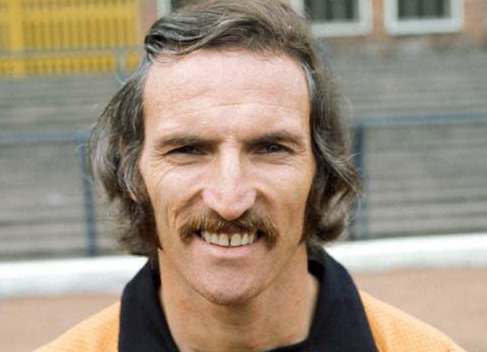
The story of Derek Dougan is not merely one of goals, matches, and trophies. It is a narrative woven with courage, individuality, and influence that extended far beyond the football pitch. Known affectionately as “The Doog,” Derek Dougan was a commanding centre-forward, an outspoken personality, and a transformative figure in football governance.
In an era when players were often expected to remain silent and compliant, Derek Dougan stood apart. He challenged authority, defended players’ rights, and helped reshape the relationship between footballers and the institutions that governed them. His legacy lives on not only in the history of clubs like Wolverhampton Wanderers but also in the broader structure of modern football.
Early Life in Belfast
Derek Dougan was born on 20 January 1938 in Belfast, Northern Ireland. Growing up in a working-class environment, football quickly became a central part of his life. Like many young boys in Belfast during that time, he honed his skills in local streets and school grounds, developing a natural flair for the game.
From an early age, Dougan displayed physical strength, determination, and an instinct for scoring goals. These qualities would later define his playing style. His upbringing also shaped his personality—forthright, confident, and unafraid to speak his mind. These traits would become hallmarks of his career both on and off the field.
Early Football Career and Rise Through the Ranks
Derek Dougan’s professional journey began in England, where he signed for Portsmouth F.C.. Although his early years were somewhat inconsistent, they provided him with valuable experience and exposure to top-level football.
He later moved to clubs such as Blackburn Rovers and Aston Villa, where his reputation as a strong and capable forward began to grow. Despite flashes of brilliance, Dougan struggled at times with consistency and discipline, which occasionally led to transfers and changes in direction.
However, these formative years were crucial. They allowed him to develop resilience, refine his technique, and gain a deeper understanding of the game. By the time he reached his peak, he had transformed into a formidable striker capable of dominating defenders.
The Wolverhampton Wanderers Era
The defining chapter of Derek Dougan’s career came when he joined Wolverhampton Wanderers in 1967. It was here that he truly established himself as a footballing legend.
At Wolves, Dougan became the focal point of the team’s attack. His physical presence, aerial ability, and sharp finishing made him a constant threat. He was not just a goal scorer; he was a leader who inspired those around him.
During his time at Wolves, Dougan helped the club achieve significant success. One of the highlights was winning the League Cup in 1974, a moment that remains etched in the club’s history. He also played a key role in Wolves reaching the final of the UEFA Cup in 1972, showcasing his abilities on the European stage.
Dougan’s influence extended beyond statistics. His personality, confidence, and willingness to take responsibility made him a central figure at the club. He became a symbol of Wolves’ fighting spirit during a competitive era in English football.
Playing Style and Strengths
Derek Dougan was a classic centre-forward, but with qualities that set him apart from many of his contemporaries. His playing style combined physical strength with technical skill, allowing him to excel in various aspects of the game.
He was particularly known for his aerial dominance. Dougan could outjump defenders and score powerful headers, making him a constant danger from crosses and set pieces. His ability to hold up the ball also allowed teammates to join the attack, making him an effective focal point.
Beyond his physical attributes, Dougan possessed intelligence and awareness. He understood positioning, timing, and movement, enabling him to find space and create scoring opportunities. His confidence on the ball and willingness to take risks often led to decisive moments in matches.
However, it was his personality that truly defined him. Dougan was fearless, outspoken, and unapologetically himself. He played with passion and intensity, never shying away from challenges or confrontation.
International Career with Northern Ireland
Derek Dougan also represented Northern Ireland national football team, earning over 40 caps for his country. He was part of the squad during the 1958 FIFA World Cup, a historic tournament for Northern Ireland.
Although his international career did not bring major trophies, Dougan’s contributions were significant. He provided leadership, experience, and a goal-scoring threat that benefited the national team.
Playing for Northern Ireland allowed him to showcase his talents on a global stage. It also reinforced his status as one of the country’s most recognisable football figures during his era.
A Voice for Players: Role in the PFA
One of Derek Dougan’s most important contributions to football came after his playing career, when he became deeply involved with the Professional Footballers’ Association (PFA).
At a time when footballers had limited rights and little influence over their careers, Dougan emerged as a strong advocate for change. He served as chairman of the PFA and played a crucial role in improving conditions for players.
Dougan fought for fair wages, better contracts, and greater autonomy for footballers. His efforts contributed to the gradual shift in power dynamics within the sport, paving the way for modern player rights and freedoms.
He was not afraid to challenge authority or speak out against injustice. This often made him a controversial figure, but it also earned him respect from players who benefited from his advocacy.
Media Career and Public Persona
After retiring from professional football, Derek Dougan transitioned into media and public life. He became a football pundit, appearing on television and radio to share his insights and opinions.
Dougan was known for his candid and sometimes provocative commentary. He did not conform to expectations or soften his views, which made him both admired and criticised. His ability to engage audiences and spark debate ensured that he remained a prominent figure in the football world.
In addition to broadcasting, Dougan also wrote books and articles, offering his perspective on the game and its evolution. His writing reflected his deep understanding of football and his passion for the sport.
Leadership at Wolverhampton Wanderers
Derek Dougan’s relationship with Wolverhampton Wanderers did not end with his playing career. He later became chairman of the club, taking on a leadership role during a challenging period.
At a time when Wolves faced financial difficulties, Dougan played a key role in stabilising the club. His commitment, determination, and willingness to take responsibility helped ensure the club’s survival.
This chapter of his life demonstrated his dedication to the club and his belief in its importance. It also highlighted his ability to lead and make difficult decisions under pressure.
Controversies and Challenges
Derek Dougan was not without controversy. His outspoken nature and refusal to conform often placed him at odds with authorities and institutions.
He was involved in disputes over player rights, management decisions, and football governance. While some viewed him as confrontational, others saw him as a necessary voice for change.
These challenges did not diminish his legacy. Instead, they reinforced his reputation as someone who was willing to stand up for what he believed in, regardless of the consequences.
Legacy in Football
The legacy of Derek Dougan is multifaceted. As a player, he is remembered for his goals, strength, and leadership. As an administrator, he is recognised for his role in advancing players’ rights and shaping modern football structures.
His impact on Wolverhampton Wanderers remains particularly significant. He is celebrated as one of the club’s greatest figures, and his contributions continue to be acknowledged by fans and historians.
Beyond club football, Dougan’s influence can be seen in the broader evolution of the sport. The improved conditions and freedoms enjoyed by players today are, in part, a result of efforts by individuals like him.
Personal Life and Character
Derek Dougan’s personality was as compelling as his career. He was confident, charismatic, and unafraid to express his views. These qualities made him a natural leader but also a polarising figure.
He valued independence and integrity, often prioritising principles over popularity. His willingness to challenge norms and question authority set him apart from many of his contemporaries.
Despite controversies, Dougan was respected for his honesty and conviction. Those who worked with him recognised his passion for football and his commitment to improving the game.
Influence on Modern Football
The influence of Derek Dougan extends into the modern era of football. Today’s players benefit from stronger unions, better contracts, and greater autonomy—developments that were shaped by pioneers like Dougan.
His work with the Professional Footballers’ Association helped lay the foundation for these changes. By advocating for players’ rights, he contributed to a more balanced and fair system within the sport.
Modern footballers, with their global influence and financial power, operate in a landscape that has been significantly shaped by earlier struggles for equality and representation.
FAQs
Who was Derek Dougan?
Derek Dougan was a Northern Irish professional footballer, best known for his time at Wolverhampton Wanderers and his role in improving players’ rights through the PFA.
What position did Derek Dougan play?
He played as a centre-forward, known for his physical strength, aerial ability, and goal-scoring instincts.
Why is Derek Dougan important in football history?
He is important not only for his playing career but also for his work in advancing players’ rights and shaping modern football governance.
Conclusion
Derek Dougan was far more than a footballer. He was a leader, a reformer, and a figure who challenged the status quo at a time when doing so required courage. His contributions to football—both on and off the pitch—have left a lasting imprint on the sport.
From his early days in Belfast to his achievements with Wolverhampton Wanderers and his influential role in the Professional Footballers’ Association, Dougan’s journey reflects determination, resilience, and vision. He was a man who understood the power of football not just as a game, but as a platform for change.