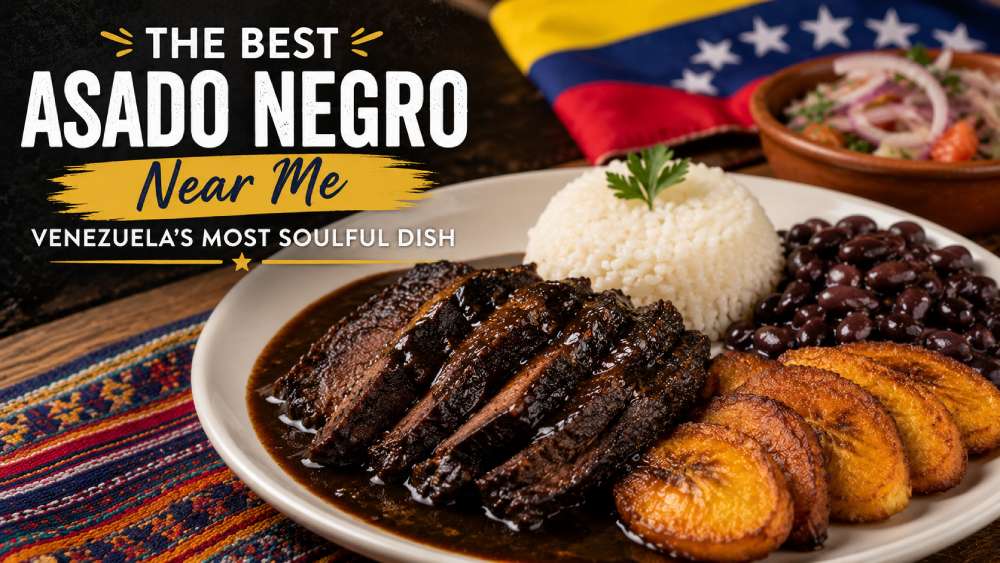
If you have ever typed “best Asado Negro near me” into your phone late at night, hoping a plate of that dark, glossy, sweet-and-savory beef would magically appear within a ten-minute drive, you are not alone. Asado Negro has a way of getting stuck in your head. One taste and you start chasing it everywhere you go. The trouble is that this dish, beloved across Venezuela, is not exactly on every street corner the way pizza or burgers are. So let me walk you through what Asado Negro actually is, why it is worth the hunt, how to track down a great version near you, and what to do when the search comes up empty. Think of this as the conversation you would have with a friend who happens to be obsessed with Venezuelan food.
What Exactly Is Asado Negro?
Asado Negro, which translates roughly to “black roast,” is a slow-braised beef dish that sits at the heart of Venezuelan cuisine. A large cut of beef, usually something like eye of round or top round, is seared until the sugar coating turns almost burnt, then braised low and slow in a deeply flavored liquid until it becomes meltingly tender. The “black” in the name is not an exaggeration. The exterior takes on a glossy, dark mahogany color that borders on truly black, and that color is the whole point. It signals caramelization, depth, and hours of patient cooking. When you slice into it, you get thin, fork-tender medallions of beef swimming in a rich, slightly sweet sauce that tastes like nothing else in the world of Latin American food.
Why Asado Negro Holds a Special Place in Venezuelan Cuisine
Every culture has that one dish reserved for the moments that matter, and in Venezuela, Asado Negro is often that dish. It shows up at Christmas tables, at Sunday family lunches that stretch into the late afternoon, and at celebrations where grandmothers quietly compete over whose version is darker, sweeter, and more tender. It is comfort food in the truest sense, but it also carries a quiet prestige. Because it takes time and a bit of skill to get right, serving Asado Negro is a way of telling your guests that you went the extra mile for them. When you understand that emotional weight, you start to see why finding an authentic plate of it can feel like such a treasure hunt, and why the people who make it well tend to take enormous pride in their work.
The Flavor Profile: What to Expect on Your First Bite
If you have never had Asado Negro before, the flavor can genuinely surprise you. The first thing that hits is the sweetness, but it is not dessert sweet. It is the rounded, almost smoky sweetness that comes from caramelized sugar, usually panela or brown sugar, that has been pushed right to the edge of burning. Underneath that sweetness runs a savory backbone built from onions, peppers, garlic, and a splash of wine, all melted down into a sauce that clings to every slice. The beef itself should be so tender that you barely need a knife. Good Asado Negro balances on a knife’s edge between sweet and savory, and when a cook nails that balance, you understand instantly why this is one of the most celebrated dishes in all of Venezuelan food.
How to Actually Find the Best Asado Negro Near Me
Here is the honest truth that most search results will not tell you: Asado Negro is not widely available outside of Venezuela and the regions with large Venezuelan communities. So your search strategy needs to be a little smarter than just typing the dish name into a map app. Start by searching for Venezuelan restaurants specifically, because that is where you are most likely to find a properly made version. If your city does not have a dedicated Venezuelan spot, broaden the search to general Latin American food restaurants, since some of them rotate Venezuelan specials or have a chef who grew up cooking the dish. Reading recent reviews is your best friend here, because a single glowing comment about “the best Asado Negro I have had outside Caracas” is worth more than any star rating.
Searching Beyond the Obvious: Latin American Food Hubs
When the basic search fails, it pays to think about where Venezuelan communities have settled, because that is where the food follows. Cities with large Latin American populations tend to have at least one place quietly serving the classics, even if it is not splashed across the front of the menu. Food halls, weekend markets, and pop-up kitchens are surprisingly good places to find Asado Negro, since many talented home cooks sell their food this way before they ever open a storefront. Social media is another underrated tool. Searching local food groups or hashtags tied to Venezuelan cuisine in your area can surface caterers and small operations that never show up on standard restaurant maps. Sometimes the best plate in town is being made out of someone’s home kitchen, and you only find it by asking around.
What Makes a Restaurant’s Asado Negro Worth the Trip
Not all Asado Negro is created equal, and once you have tasted a few versions, you start to develop an eye for the real thing. The color is the first giveaway. A genuinely good Asado Negro should look dark and glossy, never pale or grey, because that deep color is proof the cook caramelized the sugar properly. The sauce should be thick enough to coat the back of a spoon, rich without being greasy, and balanced so that neither the sweetness nor the savory notes overwhelm the other. The beef should slice cleanly into thin medallions that hold together but surrender the moment you bite. If a restaurant rushes the process or skips the caramelization step, you will taste it immediately, so a place that takes Asado Negro seriously is usually one that takes the rest of its menu seriously too.
Questions to Ask Before You Order
A little curiosity goes a long way when you are hunting for great Venezuelan food, and the staff at a good restaurant usually love talking about their signature dishes. Ask how long they braise the beef, because the honest answer should be measured in hours, not minutes. Ask what they use to get the color, since panela or papelón is the traditional choice and a sign the kitchen is doing things the old-fashioned way. You can also ask what they serve it with, because the right sides tell you whether the kitchen understands the full picture of the dish. None of this is about being difficult. It is about showing genuine interest, and more often than not the person taking your order will light up and steer you toward the most authentic experience on the menu.
Pairings: What to Eat With Your Asado Negro
Asado Negro is rich and bold, so the dishes served alongside it are designed to balance and stretch that intensity. The most traditional companion is white rice, which soaks up the dark sauce and gives you a neutral canvas against all that sweetness and depth. Right next to it you will usually find tajadas, which are sweet fried plantains that echo the caramel notes of the beef and add a soft, golden contrast. Many plates also come with a scoop of black beans or a simple salad to cut through the richness. The genius of this combination is how the whole plate works together, with each element making the Asado Negro taste even better, which is exactly why so many fans consider it one of the most satisfying meals in all of Latin American food.
The Secret Behind That Black Color
People are often fascinated by how Asado Negro gets its signature dark hue, and the answer is both simple and a little intimidating for first-time cooks. The color comes from sugar that is melted in hot oil and cooked until it goes well past golden into a deep, almost burnt caramel. The beef is then seared in that scorching caramel, which coats the meat and starts building the dramatic color that defines the dish. As the beef braises over the next few hours, that caramelized base melts into the cooking liquid, turning the whole sauce dark and giving the meat its trademark glossy finish. It is a technique that demands a steady nerve, because there is a fine line between perfectly caramelized and genuinely burnt, and that fine line is exactly what separates a memorable Asado Negro from a forgettable one.
Can’t Find It Nearby? Making Asado Negro at Home
Let me be real with you. Depending on where you live, your search for “best Asado Negro near me” might come up completely empty, and that is honestly the case for a lot of people outside major Venezuelan communities. The good news is that this is one of those dishes where making it yourself is incredibly rewarding, and the ingredients are not exotic. You need a good cut of beef, sugar or panela, onions, bell peppers, garlic, a splash of wine, and a few hours of patience. The technique is the only real hurdle, and once you understand the caramelization step, the rest is mostly slow braising while your kitchen fills with an unbelievable smell. Cooking it at home also means you get to control the sweetness and tenderness exactly to your liking, and there is a special kind of pride in pulling off a dish that even many restaurants do not offer.
A Quick Look at How It Comes Together
Without turning this into a full recipe, it helps to understand the rhythm of cooking Asado Negro so you know what you are getting into. First comes the marinade, where the beef rests with seasonings to build flavor from the inside. Then comes the dramatic part, the caramel sear, where the sugar is taken to the brink and the beef is browned in it. After that, the meat braises slowly in a pot with the aromatics and liquid, gently transforming over a couple of hours until it is tender enough to cut with a fork. The final step is reducing the sauce into something thick and luxurious. The whole process is forgiving in the braising stage but demanding in the caramel stage, which is the part worth practicing. Once you have done it once, you will never look at a plate of Asado Negro the same way again.
Common Mistakes People Make When Hunting for Asado Negro
The biggest mistake people make is assuming that any Latin American restaurant will have Asado Negro on the menu, which often leads to disappointment. Venezuelan food has its own distinct identity, separate from Mexican, Colombian, or Argentinian cooking, so a great taco spot is not necessarily going to know this dish at all. Another common error is judging a place by a fancy interior rather than by the reviews and the crowd it draws, because some of the most authentic Venezuelan cuisine comes out of humble kitchens run by families who have been making these recipes for generations. Finally, a lot of people give up too early. The best plate in your area might be hiding under a slightly different spelling, tucked into a daily specials board, or served only on weekends, so a little persistence pays off enormously.
Is Asado Negro Worth the Hype?
After all this talk about searching, asking questions, and possibly cooking it yourself, you might be wondering whether Asado Negro really lives up to the effort, and I can tell you without hesitation that it does. This is not a trendy dish riding a wave of social media attention. It is a deeply rooted classic that has earned its place at the center of Venezuelan celebrations for generations, and that staying power says everything. The combination of tender beef, that unmistakable sweet and savory sauce, and the dramatic dark color makes for a meal that feels both comforting and special at the same time. Whether you finally track down a restaurant version or master it in your own kitchen, the first time you get a truly great bite, you will understand exactly why so many people keep searching for it.
FAQs
What is Asado Negro and why is it called “black roast”?
Asado Negro is a Venezuelan slow-braised beef dish named for its strikingly dark, glossy color, which comes from sugar that’s caramelized until it’s almost burnt before the beef is seared in it. The result is fork-tender meat in a rich, sweet-and-savory sauce that’s a staple of Venezuelan cuisine.
Where can I find the best Asado Negro near me?
Your best bet is a dedicated Venezuelan restaurant, since this dish rarely appears on general menus. If your area doesn’t have one, widen your search to Latin American food spots, weekend markets, and local food groups on social media, then read recent reviews to find an authentic version.
Is Asado Negro the same as other Latin American beef dishes?
No. Venezuelan food has its own identity, and Asado Negro stands apart from Mexican, Colombian, or Argentinian beef dishes thanks to its signature caramelized sweetness and dark sauce. A great taco or churrasco spot won’t necessarily know how to make it at all.
What is Asado Negro usually served with?
It’s traditionally served with white rice to soak up the dark sauce, sweet fried plantains (tajadas) that echo its caramel notes, and often black beans or a simple salad. Together these sides balance the richness and round out the plate.
Can I make Asado Negro at home if I can’t find it nearby?
Absolutely. The ingredients are simple, and the only real challenge is caramelizing the sugar before braising the beef low and slow for a few hours. Cooking it yourself lets you control the sweetness and tenderness, and it’s deeply rewarding when restaurant versions aren’t available.
Conclusion
The search for the best Asado Negro near you is really a search for one of the most soulful dishes in all of Latin American food, and like most worthwhile food quests, it rewards a little patience and curiosity. Start with dedicated Venezuelan restaurants, widen your net to Latin American spots and local food communities when needed, and lean on recent reviews to separate the genuine article from the rushed imitations. Pay attention to the color, the tenderness, and the balance of sweet and savory, because those are the markers of an Asado Negro made with care. And if your area simply does not have it yet, take it as an invitation rather than a dead end, because cooking this dish at home connects you directly to the traditions of Venezuelan cuisine in a way that ordering never quite can. However you get there, that first perfect plate of dark, glossy, melt-in-your-mouth beef will be worth every minute of the hunt.