If you have ever found yourself typing “best tarta de acelga near me” into your phone with a slightly desperate look on your face, you are in good company. This humble green tart has a way of getting under your skin. One bite and you are hooked, and suddenly nothing else in the bakery case looks quite as appealing. The trouble is that a truly great tarta de acelga is not always easy to find, and once you have had a good one, a mediocre version just will not cut it. So let’s talk about what you are actually looking for, where to find it, and how to know the real deal when it lands on your plate.
What Exactly Is Tarta de Acelga?
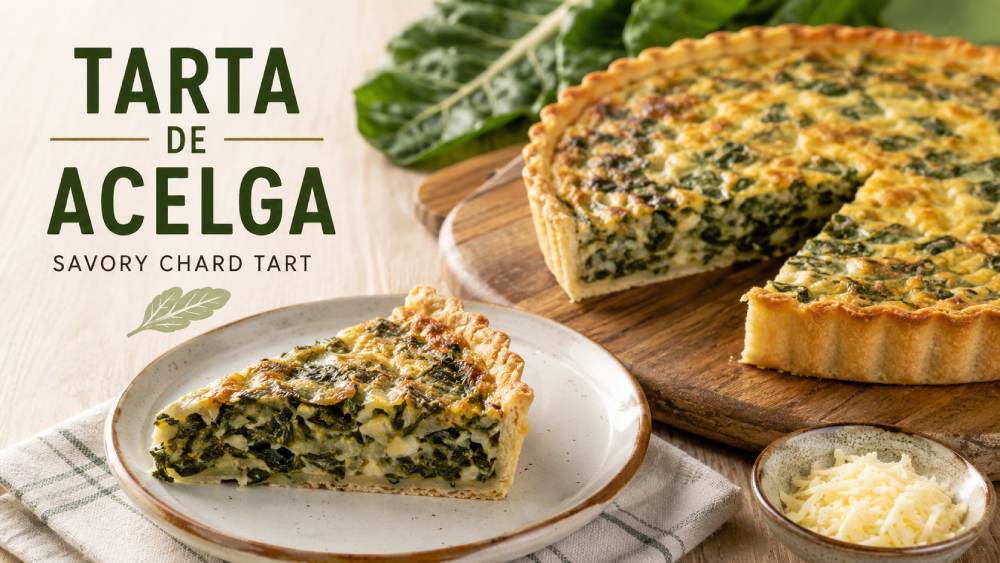
At its heart, tarta de acelga is a savory chard tart, and that simple description hides a surprising amount of personality. The name comes from Spanish, where “acelga” means Swiss chard and “tarta” means tart or pie. Picture a flaky or slightly buttery pastry shell hugging a generous filling of cooked chard, sautéed onion, eggs, and usually a handful of cheese, all baked until the top sets into something golden and lightly firm. It is the kind of food that walks the line between comfort and freshness, hearty enough to fill you up but green enough that you feel reasonably virtuous about it. Some versions lean custardy and soft, while others are denser and almost sliceable like a quiche that has been to the gym. Either way, the chard is the star, and a well-made one tastes earthy, faintly sweet, and deeply satisfying.
The Story Behind This Savory Chard Tart
To understand why people get so passionate about hunting down the best version, it helps to know where it comes from. Tarta de acelga is a fixture of Argentine and Uruguayan home cooking, carried across the Atlantic by waves of Italian and Spanish immigrants who shaped so much of South American food culture. In Argentina especially, it is the sort of thing your grandmother made on a Sunday, the leftovers wrapped in foil and eaten cold straight from the fridge the next morning. It shows up at family lunches, picnics, and the glass cases of neighborhood bakeries, sitting proudly next to empanadas and slices of tarta de jamón y queso. That heritage matters, because the best examples you will find today still carry that homemade, no-shortcuts spirit. When a place treats it as a beloved tradition rather than a menu filler, you can taste the difference immediately.
Why People Search “Best Tarta de Acelga Near Me”
There is a particular hunger that drives this search, and it usually falls into one of a few camps. Some folks grew up eating it and are chasing the memory of a flavor from childhood, hoping to find a slice that tastes like the one their family used to make. Others stumbled on it at a friend’s house or a South American café and now cannot stop thinking about it. And then there are the curious eaters who read about it somewhere and want to try the real thing before attempting to bake it themselves. Whatever the reason, the phrase “best tarta de acelga near me” is really a request for authenticity and quality at the same time, which is a tall order. You are not just looking for any chard tart, you are looking for one made with care, by someone who actually understands what it is supposed to taste like.
What Makes a Great Tarta de Acelga
Once you have eaten enough of them, you start to notice the details that separate a forgettable slice from one you will talk about for weeks. First, the chard should taste like chard, not like a vague green mush that has been boiled into surrender. It should be cooked down but still have a little structure and that gentle bitterness balanced by the sweetness of slow-cooked onion. Second, the pastry matters enormously. A soggy bottom crust is a heartbreak, so the best versions have a base that holds its own against the moisture of the filling. Third, the seasoning needs to be confident. Chard can be shy on its own, so a good cook leans on salt, a whisper of nutmeg, plenty of onion, and often garlic to wake everything up. Finally, the egg-to-vegetable ratio should feel balanced, with just enough custard to bind the filling without turning the whole thing into an omelet. When all of those elements line up, you get something genuinely special.
Where to Find Tarta de Acelga Near You
Now for the practical part, because knowing what you want does not put a slice in your hand. Your single best bet is an Argentine bakery, often labeled as a “panadería” or sometimes an Argentine or Uruguayan café. These are the spots most likely to make a proper savory chard tart in-house, frequently baking fresh batches in the morning and selling them by the slice or the whole tart. Beyond dedicated bakeries, keep an eye out for South American grocery stores and delis, which often have a small prepared-food counter or a freezer section stocked with homestyle tarts. Empanada shops are another promising lead, since the same kitchens that hand-fold empanadas usually know their way around a tarta de acelga too. If you live somewhere without a strong South American community, you may need to widen your search radius or look toward the nearest large city, where immigrant food scenes tend to cluster and where your odds improve dramatically.
Argentine Bakery Versus Restaurant: Where Is It Better?
This is a question worth thinking through, because the setting shapes the product more than you might expect. An Argentine bakery is usually your most reliable source for an everyday, no-frills, deeply traditional slice. Bakeries bake in volume, turn over their stock quickly, and treat tarta de acelga as a staple rather than a special occasion dish, which tends to keep both quality and value high. A sit-down restaurant, on the other hand, might serve a fancier or more composed version, perhaps warmed and plated with a little salad on the side, but it can also be hit or miss depending on whether the kitchen genuinely specializes in this style of food. My honest advice is to start with the bakery when you want the authentic, comforting classic, and save the restaurant for when you are in the mood to sit down and make a meal of it. If a place happens to be both a bakery and a café, you have probably found the sweet spot.
How to Spot an Authentic One
Spotting the real deal takes a little detective work, but the signs are fairly consistent. Walk into a promising spot and look at the rest of the offerings, because a genuine Argentine bakery will usually have a whole supporting cast of empanadas, alfajores, medialunas, and other tarts that signal the kitchen knows what it is doing. Pay attention to how the tart looks: a good one has a slightly uneven, homemade appearance, a golden top, and a filling that is clearly packed with greens rather than mostly egg. Ask whether it is made in-house and how often they bake it, since the proud answer to that question tells you a lot. Reading recent reviews from other customers helps too, especially if people specifically mention the tartas rather than just the coffee. And if you hear Spanish being spoken behind the counter and see locals from the community lining up, you can be fairly confident you have landed in the right place.
Tarta de Acelga Versus Spinach Tart: What Is the Difference?
People often lump these together, and it is true they are close cousins, but there are real distinctions worth understanding before you order. A spinach tart, or tarta de espinaca, uses spinach as its green, which gives a softer, milder, slightly sweeter flavor and a more tender texture once cooked. Tarta de acelga, by contrast, relies on Swiss chard, which has a sturdier leaf, a more pronounced earthy and faintly mineral taste, and those crunchy stems that some cooks include for extra body. Neither one is better in any objective sense, they are simply different moods. If you like a gentle, almost creamy green flavor, you may prefer the spinach version, while if you enjoy a tart with a bit more backbone and rustic character, the chard wins. Many Argentine bakeries make both, so the good news is you do not actually have to choose. Order a slice of each and run your own taste test, which is honestly the most fun way to settle the debate.
Can’t Find One Nearby? Make Your Own Savory Chard Tart
Here is the reality for a lot of people: depending on where you live, there may not be a single Argentine bakery within a reasonable drive, and that search bar comes up empty. The good news is that tarta de acelga is genuinely forgiving and beginner-friendly, so making your own savory chard tart at home is more achievable than you might think. You start by sautéing chopped onion until soft, then wilting down a big pile of chard that you have washed, stemmed, and roughly chopped. Once the greens have cooked down and you have squeezed out the excess liquid, you mix them with beaten eggs, grated cheese, salt, pepper, and a pinch of nutmeg, then pour everything into a pastry shell and bake until set and golden. You can use store-bought pie dough to keep things easy or make a simple homemade crust if you are feeling ambitious. The first time you pull a warm, fragrant tart out of your own oven, you will understand why this dish has such a devoted following, and you may never go back to hunting for it.
A Few Tips for Storing, Reheating, and Serving
Once you have got your hands on a tarta de acelga, whether bought or homemade, a little know-how goes a long way toward keeping it delicious. It keeps beautifully in the fridge for a few days, and many devotees swear it actually tastes better cold the next day, when the flavors have had time to settle and the filling firms up nicely. If you prefer it warm, reheat slices in an oven or toaster oven rather than the microwave, which can turn the crust limp and sad. For serving, it shines at room temperature, which makes it a brilliant picnic, potluck, or lunchbox option that does not need babysitting. A simple green salad with a sharp vinaigrette is the classic companion, cutting through the richness of the egg and cheese. And if you want to lean into the full South American experience, a glass of crisp white wine or a strong cup of coffee rounds things out perfectly depending on the time of day.
What to Eat Alongside Your Chard Tart
Since you are likely visiting an Argentine bakery or café anyway, it would be a shame not to make the most of the trip and turn a single slice into a proper spread. Empanadas are the obvious pairing, and ordering a couple of beef or ham and cheese ones alongside your tart gives you that satisfying mix of textures and flavors. If the place leans sweet as well, an alfajor, which is two soft cookies sandwiched around dulce de leche and often coated in chocolate or rolled in coconut, makes for an unbeatable finish. Medialunas, the Argentine answer to croissants, are wonderful with coffee if you are stopping by in the morning. Building a little tasting menu like this is also the smartest way to evaluate a new spot, because how a kitchen handles its whole lineup tells you whether that tarta de acelga is a one-off fluke or a sign of a place worth returning to again and again.
FAQs
What is tarta de acelga?
Tarta de acelga is a savory Argentine and Uruguayan chard tart made with Swiss chard, sautéed onion, eggs, and cheese baked in a pastry shell. It’s earthy, comforting, and delicious served warm, cold, or at room temperature.
Where can I find the best tarta de acelga near me?
Your best bet is a genuine Argentine bakery, South American café, or empanada shop, since these kitchens make it fresh and treat it as a tradition. If none are nearby, check the closest large city, where immigrant food scenes tend to cluster.
Is tarta de acelga the same as a spinach tart?
Not quite. A spinach tart uses spinach for a softer, milder, sweeter flavor, while tarta de acelga uses Swiss chard for a sturdier texture and earthier taste. They’re close cousins, so many bakeries make both.
Is tarta de acelga vegetarian?
Yes, the classic recipe is vegetarian, built around chard, onion, eggs, and cheese with no meat. Always double-check at a bakery, though, since some versions add ham or use animal-based fats in the crust.
Can I eat tarta de acelga cold?
Absolutely, and many fans prefer it that way. It keeps well in the fridge for a few days, and the flavors often taste even better the next day once the filling has firmed up, making it a great picnic or lunchbox option.
Conclusion
Searching for the best tarta de acelga near me is really a search for something deeper than just lunch. It is a craving for a dish that carries history, comfort, and a whole lot of love in every slice, the kind of food that tastes like someone’s grandmother stood over the stove getting it exactly right. Your strongest path to finding it is to seek out a genuine Argentine bakery or a South American café, look for the telltale signs of an authentic kitchen, and not be afraid to try both the chard and spinach versions while you are at it. And if your neighborhood comes up short, remember that this savory chard tart was born in home kitchens, which means yours can join the tradition with very little fuss. However you get your hands on a slice, take a moment to appreciate it, because a great tarta de acelga is one of those quietly perfect foods that proves the simplest ingredients, treated with care, can be the most memorable of all. Happy hunting, and even happier eating.