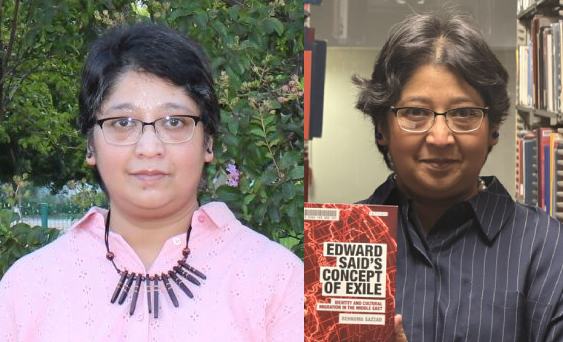
If you spend any time in the world of postcolonial literary studies, you start to notice a small group of scholars who don’t just analyze texts but seem to live inside the big questions those texts raise — questions about home, displacement, identity, and what it means to belong somewhere when the ground keeps shifting beneath you. Dr Rehnuma Sazzad belongs squarely in that group. She’s a literary scholar and author based in the United Kingdom whose research circles around exile, diaspora, cultural identity, and the messy, beautiful collisions that happen when languages and histories overlap. What makes her interesting isn’t just the topics she chooses, but the seriousness and warmth she brings to them. Her writing reads like someone who genuinely cares about the human cost of displacement, not just the theory of it. That combination — intellectual rigor wrapped in moral attentiveness — is exactly what earns a scholar a quiet but durable reputation, and it’s the thread that runs through everything she’s done.
Her Academic Roots and Training
Behind every confident voice in academia there’s usually a long, unglamorous stretch of training, and Sazzad’s path is no exception. She holds a PhD in Literary and Cultural Studies from Nottingham Trent University, along with two master’s degrees and a bachelor’s degree, which is the kind of layered education that tends to produce scholars comfortable moving across disciplines rather than staying boxed into one. You can feel that breadth in her work — she doesn’t treat literature as a sealed-off art object but as something tangled up with politics, history, language rights, and lived experience. That sort of formation matters because postcolonial studies is inherently interdisciplinary; you can’t really talk about Edward Said or Frantz Fanon without bumping into philosophy, geopolitics, and psychology along the way. Her training seems to have given her the toolkit to handle all of that without flinching, and it shows in how confidently she reaches across fields when she’s building an argument.
The Institutions That Anchor Her Work
These days Sazzad wears several hats across the British academic landscape, and the institutions she’s tied to tell you something about the company she keeps. She’s a Research Fellow at the Institute of English Studies and an Associate Fellow at the Institute of Commonwealth Studies, both part of the School of Advanced Study at the University of London — a hub built specifically for advanced, research-led humanities work. On top of that, she serves as an Associate Tutor at the School of Literature, Drama and Creative Writing at the University of East Anglia, an institution with a serious literary pedigree. Her associate fellowship at the Institute of Commonwealth Studies runs through 2026, and her listed research interests stretch across colonization, migration, culture, regional history, and screen studies, spanning regions from Asia to the Middle East to North America. What this constellation of roles tells you is that she isn’t a one-note specialist tucked away in a single department; she operates across the connective tissue of the field, which is often where the most original work gets done.
The Book That Made Her Name: Edward Said’s Concept of Exile
If there’s a single piece of work most associated with Sazzad, it’s her first monograph, Edward Said’s Concept of Exile: Identity and Cultural Migration in the Middle East, published in 2017. The book takes on one of the towering figures of twentieth-century intellectual life — Said, the Palestinian-American critic who practically founded postcolonial studies — and zeroes in on his lifelong preoccupation with exile. What Sazzad does so well here is refuse the easy reading. Exile, in her hands, isn’t just a sad story of being kicked out of your homeland; it becomes a productive, even generative condition, a vantage point from which a thinker can see the world more clearly precisely because he no longer fully belongs to it. She uses Said’s own life — the “out of place” Palestinian intellectual in America who watched the consequences of 1948 unfold through his family’s experience — as a lens for understanding how displacement reshapes identity. The monograph adds genuine depth to discourses of resistance, home, and identity, and it’s the kind of book that gets cited not because it’s trendy but because it actually moves the conversation forward.
Why Exile Sits at the Center of Everything She Writes
Once you’ve read a bit of Sazzad’s work, you realize that exile isn’t just the subject of one book — it’s the gravitational center of her whole intellectual project. And she handles it with real nuance. For her, exile is both a physical reality and a cultural and psychological state, a kind of permanent in-between-ness that can be painful and clarifying at the same time. This is a more sophisticated take than the version you often see, where displacement gets treated purely as loss. Sazzad is interested in the doubled nature of it: yes, the exile loses a homeland, but they also gain a strange, critical distance that lets them question the assumptions everyone else takes for granted. That tension — between mourning what’s gone and using the freedom that comes with it — is something she returns to again and again. It’s also why her work resonates beyond academia, because honestly, in a century defined by migration, refugee crises, and people living across multiple cultures at once, the experience of being “in between” is something a lot of readers recognize in their own lives.
Language, Nationalism, and the Politics of the Mother Tongue
One of the most compelling directions in Sazzad’s research is her attention to language as a battleground for identity and rights. She’s been working on a second monograph focused on linguistic nationalism, exploring the relationship between mother language, motherland, and liberation struggle, with the decolonization of South Asia as her central case study. This is rich territory, especially for anyone with roots in the subcontinent. Her published work in this vein includes a study of language movements in Sri Lanka and Pakistan, where she examines how conflicts over language and cultural rights intersect with broader human rights — a piece that appeared in The International Journal of Human Rights in a special issue dedicated to the cultural and language rights of minorities and Indigenous peoples. What I appreciate about this strand of her thinking is how it draws on cultural nationalism, including ideas tracing back to thinkers like Johann Gottfried Herder, to argue for the centrality of language in the formation of modern nation-states. In other words, she’s making the case that the fight over which language you’re allowed to speak, learn, and grieve in is never just linguistic — it’s about power, belonging, and survival.
Sitting With Fanon at 100
Sazzad’s intellectual range isn’t confined to Said. She’s also engaged seriously with Frantz Fanon, the psychiatrist and revolutionary theorist whose writing on colonialism and liberation remains explosive even decades later. In 2025 she was a confirmed keynote speaker at a University of Amsterdam conference marking the centenary of Fanon’s birth, where she spoke on the urgencies of Fanonian thought across scholarship, pedagogy, and activism, engaging specifically with his contributions to what she frames as humanist nationalism. Choosing to read Fanon through the lens of humanism is a deliberate and slightly provocative move, because Fanon is so often invoked purely for his fiery analysis of violence and colonial domination. Sazzad seems more interested in what his ideas can offer to teaching, care, and constructive political imagination today — how a hundred-year-old thinker can still help us figure out how to build rather than just tear down. That she was invited to keynote alongside other prominent scholars in the field is a useful signal of where she stands; you don’t get those slots by accident.
The Quiet, Crucial Work of Editing
Plenty of academics write; far fewer take on the unglamorous, time-consuming labor of shaping other people’s scholarship, and Sazzad does both. She serves as an Associate Editor and Reviews Editor of the Journal of Postcolonial Writing, published by Routledge, and she sits on the Editorial Advisory Board of English: Journal of the English Association. This kind of editorial work is genuinely important even though it rarely gets celebrated. Editors and reviews editors are the people who decide which conversations get amplified, which new voices get a platform, and which books are deemed worth reviewing in the first place — they’re effectively curating the field’s bloodstream. Beyond that, she’s been editing a collection for Vernon Press on decolonizing the curriculum and developing knowledge about Indigenous literature, and co-editing a volume on the Martinican writer and theorist Édouard Glissant, whose ideas about relation and the “archipelago” of cultures fit beautifully alongside her own interests. Taking on editorial roles like these says something about her sense of responsibility to the wider community, not just her own publication record.
Writing for the World Outside the Ivory Tower
Here’s a detail I find quietly admirable: Sazzad doesn’t keep all her thinking locked behind paywalls and academic jargon. She regularly contributes to Impakter, a publication aimed at a general, globally minded readership, where she writes on big questions like climate change and the ongoing challenges of decolonization. This matters because there’s a long-standing — and fair — criticism that academic writing too often reaches almost nobody, trapped by the demands of scholarly precision and the limits of a specialist audience. By writing for a broader public, Sazzad pushes against that gravity. She’s clearly trying to demonstrate that careful, theory-informed scholarship can still be readable, relevant, and useful to people who aren’t sitting in a seminar room. It’s a bridge-building instinct, and in an era where the gap between expert knowledge and public understanding feels dangerously wide, that instinct is worth something. Her public writing keeps the human stakes of her academic work front and center, which is, frankly, the whole point.
A Genuinely Global Literary Imagination
One thing that sets Sazzad apart from scholars who stay in a single regional lane is the sheer geographic sweep of her reading. Her work examines the role of ontology — basically, questions of being and existence — across Middle Eastern, South Asian, Caribbean, African, North American, and New Zealand literatures. That’s an enormous canvas, and it reflects a worldview where the literatures of the formerly colonized world are in conversation with one another rather than isolated by region. A good example is her analysis of the 1997 film East Is East, the semi-autobiographical story by Ayub Khan-Din about a mixed-race family navigating identity in white working-class 1970s Salford. She reads it as a black comedy of diasporic homemaking, where the cultural demands of the subcontinent crash up against the freedoms of life in Britain, and the children of the family end up forming layered, complicated responses to both. That kind of analysis — pulling apart how belonging gets negotiated between an ancestral homeland and an adopted one — captures her method perfectly: she’s always tracing how people make a home out of in-between spaces.
What Makes Her Voice Distinctive
So what actually distinguishes Rehnuma Sazzad from the many capable scholars working in postcolonial studies? I’d argue it comes down to tone and intention. Her writing carries both intellectual depth and a kind of moral seriousness — she treats exile, displacement, and cultural loss not as abstract puzzles but as real human experiences deserving of care. At the same time, she resists the trap of being grim or purely tragic; her readings tend to find agency, resilience, and even possibility in conditions that other critics would file under pure suffering. There’s a generosity to her approach, a sense that she’s reading these texts and these lives looking for what they can teach us about living well across difference. Combine that with her interdisciplinary range and her willingness to work across regions, editorial desks, and public platforms, and you get a scholar whose influence is felt more in the quality and direction of conversations than in viral fame. That’s a particular kind of legacy — substantial, principled, and built to last.
Where Her Work Seems to Be Heading
It’s always a little risky to predict where a working scholar will go next, but the trajectory here is fairly readable. With a second monograph on linguistic nationalism in progress and edited collections on Glissant and on decolonizing the curriculum underway, Sazzad appears to be deepening two complementary commitments at once: the theoretical project of understanding how language, land, and liberation interlock, and the practical, pedagogical project of changing what and how we teach. That second piece — the focus on curriculum and teaching — feels especially timely, given how loudly universities everywhere are debating decolonization, representation, and whose stories get told in the classroom. Sazzad isn’t just theorizing about these issues from a safe distance; through her editing, her teaching, and her public writing, she’s actively shaping the materials and conversations that the next generation of students and scholars will inherit. If her past work is anything to go by, whatever comes next will be careful, humane, and quietly insistent on the dignity of people living between worlds.
FAQs
Who is Rehnuma Sazzad?
Rehnuma Sazzad is a UK-based literary scholar and author specializing in postcolonial and world literatures. She holds a PhD in Literary and Cultural Studies and works across the School of Advanced Study, University of London, and the University of East Anglia, with research centered on exile, diaspora, and cultural identity.
What is Rehnuma Sazzad best known for?
She is best known for her 2017 monograph Edward Said’s Concept of Exile: Identity and Cultural Migration in the Middle East, which reframes exile as a clarifying, generative condition rather than pure loss. Her editorial roles at the Journal of Postcolonial Writing and her public writing for Impakter have also raised her profile.
What topics does Rehnuma Sazzad research?
Her research spans exile, displacement, linguistic nationalism, and cultural rights, drawing on thinkers like Edward Said and Frantz Fanon. She examines literatures from the Middle East, South Asia, the Caribbean, Africa, North America, and New Zealand, with a strong focus on language as a battleground for identity.
Conclusion
Rehnuma Sazzad is the kind of scholar who reminds you why the humanities still matter. She takes some of the heaviest experiences of the modern world — exile, displacement, the loss of language and homeland — and she refuses to let them stay abstract, turning them instead into a richer understanding of how human beings build identity and belonging under pressure. From her landmark study of Edward Said’s concept of exile to her ongoing work on linguistic nationalism, her engagement with Fanon, her editorial stewardship of important journals, and her public writing that reaches well beyond the academy, she’s assembled a body of work that’s coherent, principled, and genuinely useful. Her name may not be a household one outside scholarly circles, but within them she carries real weight, and the influence she’s built is the kind that shapes how a whole field thinks. In a time when so many people are living across borders, cultures, and languages, her central insight — that being “out of place” can be a source of clarity and even strength, not just sorrow — feels less like academic theory and more like something close to wisdom. That’s a rare thing to find in any writer, and it’s why her work is worth paying attention to.