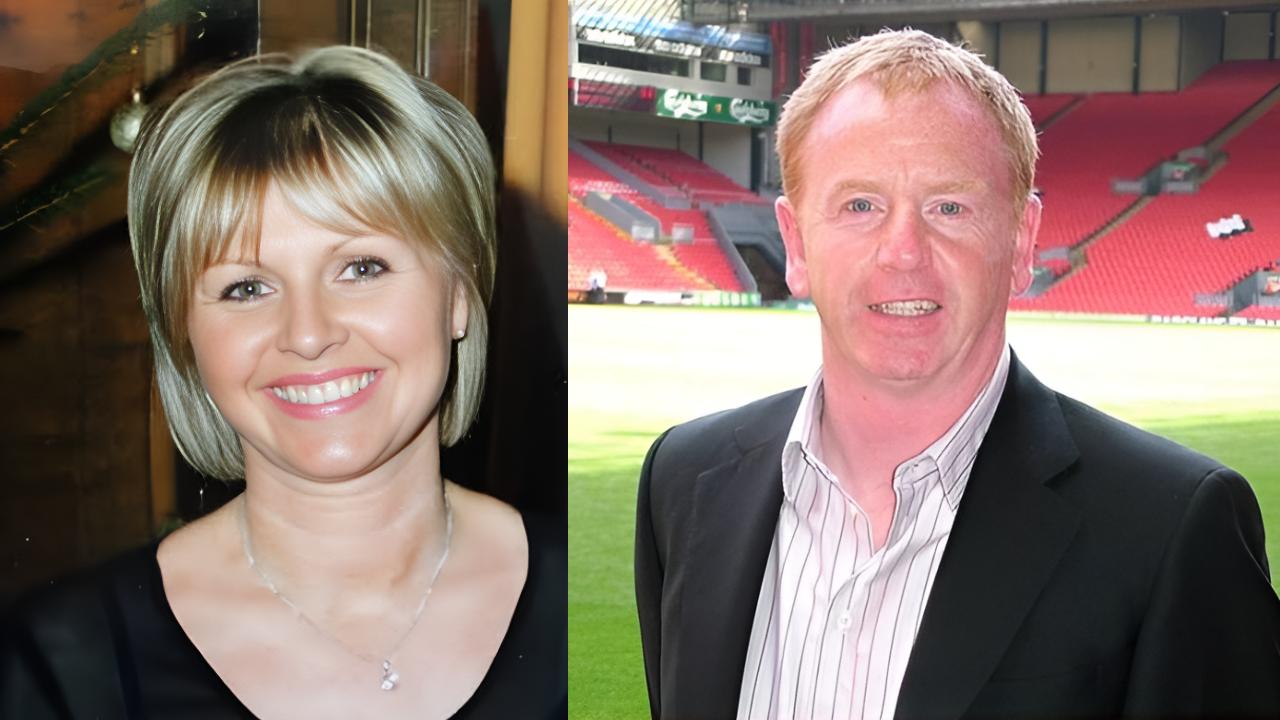
Jan Fairclough is a name that carries a surprising amount of weight in Liverpool footballing circles, even though she never kicked a ball or stood on the touchline as a manager. She was the wife of David Fairclough, the striker famously nicknamed “Supersub,” and over the years her story has become woven into the wider fabric of Anfield history. Hers is a tale of love, family, sudden loss, and a legacy that refused to fade quietly into the background. If you have ever wondered who she was and why her name still appears in headlines, charity events, and tributes more than a decade after her passing, then settle in, because there is genuinely a lot worth knowing here.
Who Was Jan Fairclough?
Jan Fairclough was, first and foremost, a wife, a mother, and a proud supporter of Liverpool Football Club. While much of the public attention naturally gravitated towards her husband’s playing career, those who knew her described a warm, beloved figure who was deeply embedded in the community around the club. She was not a celebrity in the conventional sense, and she did not chase the limelight. Instead, she was the steady presence at home and at the heart of a tight-knit family, the sort of person whose importance you only fully appreciate when you hear how completely she was loved. Liverpool FC itself later remembered her as a beautiful woman and a wonderful mother, which says quite a lot about the impression she left on everyone fortunate enough to cross her path.
The Bond Between Jan and David Fairclough
The relationship between Jan and David Fairclough was, by all accounts, the real thing. When tributes poured in after her death, one phrase came up again and again: the two of them were “inseparable.” That is not the kind of word people throw around lightly, and it paints a vivid picture of a couple who genuinely went through life as a partnership. David built his name as one of the most thrilling impact players in Liverpool’s golden era, but behind the goals and the roar of the Kop was a marriage that grounded him. Jan supported his career, raised their children, and stood beside him through the ups and downs that come with life in and around professional football. Theirs was a long and devoted marriage, and when it ended so abruptly, the loss was felt not just by David but by an entire football community that had quietly admired the pair for years.
A Family Rooted in Liverpool: Tom and Sophie Fairclough
Jan and David were the proud parents of two children, Tom Fairclough and Sophie Fairclough, and the family’s connection to Liverpool FC ran deep through all of them. Tom Fairclough has been a consistent and active presence in the family’s later charity work, helping to drive forward the causes that became so important after his mother’s passing. Sophie Fairclough, meanwhile, carved out her own connection to the club, working for Liverpool FC and even winning the Grand National Aintree style award in the year before her mother died, a nice nod to the family’s roots in Merseyside life beyond just football. For a time, both David and Sophie worked at the club’s television channel, LFC TV, which meant the Fairclough name remained a familiar one to a new generation of supporters. It is a lovely detail, really, the idea of a footballing family staying so closely tied to the club across decades and generations.
The Sudden Loss That Shook Anfield
The most heartbreaking chapter of Jan Fairclough’s story is also the most sudden. In early April 2011, she collapsed on a Wednesday morning after suffering a brain aneurysm, a catastrophic brain haemorrhage that struck without warning. She was rushed for treatment, but despite the best efforts of the medical team, she could not be saved. Jan passed away on Saturday 9 April 2011, just three days after collapsing. There was no long illness, no drawn-out goodbye, just a devastatingly fast turn of events that left her family and the wider football world reeling. Brain aneurysms are notoriously unpredictable, and many patients do survive them, but tragically Jan did not. The speed and shock of it all is part of what made her death resonate so widely, because it was the kind of loss that reminds everyone just how fragile life can be.
Tributes Pour In From the Football World
When news of Jan’s death broke, the response from the football community was immediate and heartfelt. Liverpool’s then Managing Director, Ian Ayre, led the official tributes, describing how everyone at the club who knew David and Jan was devastated, and emphasising once more how inseparable the couple had been. Marina Dalglish, the wife of then Liverpool manager Kenny Dalglish, shared her own public condolences, calling Jan a true friend and admitting how much she would be missed. Supporters from across the world added their voices too, flooding online forums and social media with messages of sympathy and the club’s famous refrain, “You’ll Never Walk Alone.” Perhaps the most poignant tribute of all came on 11 April 2011, when a minute of silence was held at Anfield before Liverpool’s match against Manchester City. Jan was honoured alongside the 96 Hillsborough victims and Mark Burgan, a soldier from Liverpool, a moment that placed her firmly within the club’s collective memory.
The Jan Fairclough Ball and a Lasting Legacy
Out of profound grief, the Fairclough family found a way to create something genuinely good, and that is where the story takes a more uplifting turn. Jan had been treated at The Walton Centre, a specialist neurology and neurosurgery hospital in Liverpool, and although the staff there could not save her, the family was struck by the skill and compassion they encountered during the darkest moment of their lives. In her memory, they helped launch the Jan Fairclough Ball, an annual fundraising event that has become a fixture on the local calendar. When David was first asked whether the ball could carry his late wife’s name, he admitted to being deeply moved by the gesture. The events have been enormous successes, with individual balls raising tens of thousands of pounds, often in the region of £55,000 to £57,000 at a single night. It is a fitting tribute, turning the memory of a much-loved woman into tangible support for the very hospital that cared for her.
The Fairclough Family Lounge and the Home from Home Appeal
The family’s fundraising efforts have gone well beyond a single annual event. David Fairclough became a patron of The Walton Centre Charity, and he, Tom, and Sophie have all thrown themselves into supporting its work. One of the central causes has been the Home from Home appeal, an initiative to build accommodation and additional rehabilitation facilities so that the relatives of patients have somewhere comfortable to stay, a quiet cup of tea, and a warm bed during the most stressful of times. The idea grew directly out of the Fairclough family’s own experience, and they understood better than most just how much that kind of support can mean. In recognition of everything they have done, there is now a Fairclough Family Lounge at the hospital, named in tribute to David, Tom, and Sophie, and of course to Jan herself. Over the course of a decade, the family raised more than £400,000 for The Walton Centre, which is a staggering achievement born out of personal tragedy.
Pushing for the Next Generation of Surgeons
The Fairclough family’s ambitions have not stopped at accommodation and comfort. In more recent years, their fundraising has been channelled towards a Neuro Virtual Reality simulator, a cutting-edge piece of training equipment designed to help develop the next generation of neurosurgeons. The device allows experienced surgeons to refine the very latest techniques and gives trainees the chance to practise safely in a realistic environment, and it would be among the first of its kind in the UK, with similar tools already used in specialist centres across the United States and Canada. With a price tag of around £130,000, it is a serious undertaking, and a significant chunk of that has already been raised through the Jan Fairclough Ball. The beauty of this particular goal is its ripple effect, because the simulator would be used to train surgeons across the North West and ultimately benefit thousands of patients well beyond Liverpool. In a quiet way, Jan’s name continues to improve and even save lives.
A New Generation: Teddy, Summer, and Lily
While much of Jan Fairclough’s story is tinged with sadness, there is real joy in what has come since, particularly in the arrival of David’s grandchildren. By late 2021, David had become a doting grandad to three little ones: Teddy, who was three years old at the time, and Summer and Lily, who were both one. By all accounts, David has thrown himself into the role with enormous enthusiasm, describing being a grandad as the role of his life, which is a heartwarming thing to read about a man who once thrilled tens of thousands at Anfield. Teddy, Summer, and Lily represent the future of the Fairclough family, and there is even hope within the family that the next generation will one day take up the mantle and keep the Jan Fairclough Ball going strong for years to come. It is a beautiful continuity, the idea that a woman who passed away can still be honoured by grandchildren who never had the chance to meet her.
Why Jan Fairclough’s Story Still Resonates
There is something genuinely moving about why Jan Fairclough’s name has endured, and it is worth pausing to reflect on it. She was not a public figure who courted attention, and her fame, such as it is, came entirely through the love of her family and the actions they took in her memory. Her story resonates because it is universal, the sudden loss of a wife and mother, and the determination of those left behind to turn heartbreak into help for others. The Fairclough family could have grieved privately and quietly, and no one would have thought any less of them. Instead, they chose to build something lasting, raising hundreds of thousands of pounds, naming events and hospital spaces in her honour, and ensuring that future patients and their families would be cared for a little better. That is a remarkable legacy for anyone, and it is why, more than a decade on, people still search for and remember the name Jan Fairclough.
FAQs
Who was Jan Fairclough?
Jan Fairclough was the wife of former Liverpool striker David Fairclough and the mother of their two children, Tom and Sophie. She was a much-loved family figure and a proud Liverpool FC supporter who passed away in April 2011.
How did Jan Fairclough die?
Jan Fairclough died on 9 April 2011 after suffering a brain aneurysm, having collapsed just three days earlier. She was treated at The Walton Centre in Liverpool, but tragically could not be saved.
What is the Jan Fairclough Ball?
The Jan Fairclough Ball is an annual fundraising event held in her memory, supporting The Walton Centre hospital that cared for her. It has raised tens of thousands of pounds for causes such as the Home from Home appeal and a neurosurgery training simulator.
Conclusion
Jan Fairclough’s story is ultimately one of love that outlasted loss. Behind the goals and the glory of David Fairclough’s career stood a woman who anchored a family and earned the affection of an entire football community, often without ever seeking it. Her sudden passing in 2011 left a deep mark, but the way her family responded, with the Jan Fairclough Ball, the Fairclough Family Lounge, and hundreds of thousands of pounds raised for The Walton Centre, transformed grief into something genuinely good. Today, with grandchildren Teddy, Summer, and Lily carrying the family forward, Jan’s memory lives on not just in tributes and silences at Anfield, but in the tangible care given to patients and families who walk through the doors of the hospital she once relied upon. That, more than anything, is why her name deserves to be remembered.