If you follow European football closely, you’ve probably noticed a pattern. Some strikers explode onto the scene in their teens, get plastered across transfer rumour columns, and then spend years trying to live up to the hype. Others take the long road, grinding through smaller leagues, scoring goals where the cameras rarely point, and only later showing up at the bigger clubs ready to deliver. Andrej Ilić belongs squarely in that second camp, and honestly, those are usually the careers worth watching.
The Serbian forward has gone from the Partizan youth ranks to Latvia, then Norway, then France, and now Germany’s Bundesliga with Union Berlin. It’s not the kind of CV that builds itself on luck. Let’s walk through who he is, how he got here, and why his name keeps popping up in scouting reports across Europe.
Early Life in Belgrade and the Partizan Years
Andrej Ilić was born on 3 April 2000 in Belgrade, in what was then the Federal Republic of Yugoslavia. Like a lot of Serbian kids who later turn into professional footballers, his earliest formal football education came at FK Partizan, one of the two giants of Serbian football. He spent a full decade in the Partizan youth system, from 2008 through 2018, which is honestly a long stretch for any young player to stay at one academy. That kind of continuity tells you something about how the club viewed him as a prospect, even if his senior breakthrough ultimately happened elsewhere.
What’s worth appreciating about Partizan’s academy is the kind of player it tends to produce. The system has historically valued technically clean strikers who can hold the ball up, link play, and finish under pressure. Ilić fits that mould reasonably well, and you can trace those foundations back to those formative years in Belgrade.
The Move to Napredak Kruševac and Javor Ivanjica
Plenty of Partizan academy graduates never quite get the first-team chance they were promised, and Ilić’s path into senior football took him through Serbia’s smaller clubs instead. From 2018 to 2020, he was at Napredak Kruševac, before moving to Javor Ivanjica for the 2020–2021 season. These aren’t glamorous stops, but they were exactly what a young centre-forward needed: minutes, responsibility, and the chance to learn how senior football actually feels when you’re being kicked by experienced defenders every weekend.
For young strikers especially, this stage of a career is often underrated. You’re not yet in the spotlight, but you’re learning what works against grown professionals. The instinct, the timing, the patience in front of goal — these traits are usually forged in leagues that don’t get much international attention.
Becoming a Star at RFS in Latvia
The first real turning point came on 3 September 2021, when Ilić signed a three-year contract with FK RFS in the Latvian Higher League. On the surface, moving from Serbia to Latvia might not sound like a step up, but for him, it absolutely was. He made his league debut on 22 September against FK Liepāja, getting 62 minutes of action, and scored his first league goal soon after against city rivals Spartaks on 16 October.
What he did next is what really mattered. He became RFS’s top scorer across all competitions in his first full season, helping the club lift major domestic silverware. The Latvian Higher League title and the Latvian Cup both arrived during his time there. For a striker, finishing as a club’s leading scorer in a title-winning season is the kind of CV line that gets phones ringing across European recruitment departments. And ring they did.
The Vålerenga Move and Norwegian Eliteserien Test
On 16 August 2023, Ilić signed a four-year contract with Vålerenga in Norway’s Eliteserien. The transfer fee was reported at just under €900,000, which was a serious investment from the Norwegian club. The Eliteserien is a noticeable step up from the Latvian league in physicality and tactical sophistication, and the move felt like a genuine test of whether his Latvian numbers were the real deal or simply a product of context.
He handled it well enough that scouts kept watching. Norwegian football is increasingly seen as a fertile hunting ground for European recruiters — think Erling Haaland and Alexander Sørloth as the obvious headliners — and Ilić’s performances there put him firmly on radars in France and Germany. By the time he was getting close to a year into his Vålerenga deal, the rumour mill was already turning.
The Lille Transfer and Loan to Union Berlin
The next jump was the biggest one yet. Ilić moved to Lille in Ligue 1, signing for the French club ahead of the 2024–25 season. Lille is a club with a strong history of identifying undervalued attacking talent and either developing them into stars or selling them on for serious money. Think of how they’ve handled the likes of Nicolas Pépé, Jonathan David, and Victor Osimhen over the years. Getting through their scouting filter is itself a stamp of credibility.
That said, breaking into a Ligue 1 squad immediately is brutal for any young forward, and the club arranged a loan to Bundesliga side Union Berlin for the same season. Union Berlin is a fascinating destination in this kind of situation. They’re a club that punches above their weight, plays a fiercely physical brand of football, and has historically gotten remarkable performances out of strikers who arrived without much fanfare. For a 24-year-old forward looking to prove he belongs at the top European level, it’s almost an ideal sandbox.
Settling in at Union Berlin Permanently
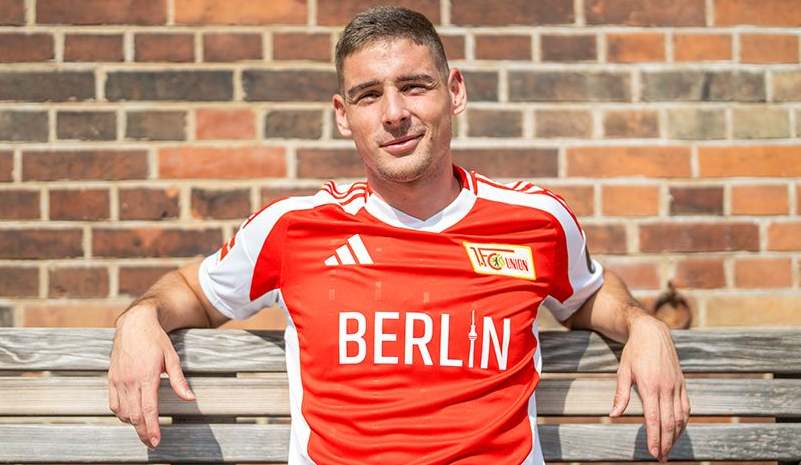
In 2025, the loan converted into something permanent. Andrej Ilić now wears the number 23 shirt for Union Berlin as a Bundesliga player, no longer borrowed property but a fully signed-up member of the squad. That progression from loanee to permanent signing is meaningful. Clubs only make that decision when they’ve seen enough up close to be confident the player fits both the tactical setup and the dressing room culture.
Standing at 1.89 metres (about 6 ft 2 in) and playing as a classic centre-forward, he brings a certain old-school quality to the position — a target presence who can also drift and link, rather than just a pure poacher. The Bundesliga rewards that kind of striker, especially in a system like Union’s that values aerial duels, runs in behind, and finishing chances created out of transition.
International Career with Serbia
The senior national team call-up arrived in 2025, after earlier appearances at the Serbia U21 level between 2021 and 2022. Breaking into the Serbia senior squad is no small thing — this is a country that has produced Dušan Vlahović, Aleksandar Mitrović, Luka Jović, and a long line of accomplished centre-forwards. Getting your name on that team sheet means you’ve earned it. Ilić’s senior international career is still in its early chapters, but the door has clearly opened, and what he does with Union Berlin in the coming seasons will shape how often he gets the call.
Playing Style and What Makes Him Interesting
What stands out about Ilić as a player is that he’s not really chasing any of the modern striker trends. He’s not a false nine, he’s not a pressing monster who exists primarily to harass centre-backs, and he’s not the kind of forward who drifts wide to make himself a winger. He’s a centre-forward in the traditional sense — physically present in the box, comfortable with his back to goal, and a finisher who tends to take chances cleanly when they arrive.
That profile is actually becoming scarcer at the elite level, which arguably makes him more valuable, not less. Plenty of top clubs across Europe still want that classical number nine, and players who can credibly do the job aren’t as plentiful as you’d think.
FAQs
How old is Andrej Ilić and where is he from?
Andrej Ilić was born on 3 April 2000 in Belgrade, Serbia, which makes him 26 years old. He grew up in the Serbian capital and went through the Partizan youth academy before launching his senior career.
Which club does Andrej Ilić play for right now?
He plays for Union Berlin in the German Bundesliga, having joined the club permanently in 2025 after an initial loan spell from Lille during the 2024–25 season. He wears the number 23 shirt.
Has Andrej Ilić played for the Serbian national team?
Yes. He represented Serbia at the U21 level between 2021 and 2022, and earned his senior international call-up in 2025. He’s now part of the Serbia senior national team setup.
Conclusion
Andrej Ilić’s career is the kind of story you don’t get told often enough. There’s no viral teenage breakthrough, no eight-figure transfer at seventeen, no media circus following him around. Instead, there’s a Serbian striker who left home, learned his trade in Latvia, sharpened it in Norway, earned a move to one of Europe’s smartest recruiting clubs in France, and is now plying his trade in the Bundesliga. Each step was earned on merit, and each league he played in seemed to actually develop him rather than just pass him through.
For Union Berlin fans, having him as a permanent signing is a quiet win — the kind of move that doesn’t dominate transfer windows but tends to pay off across a couple of seasons. For Serbia, he’s another credible option in a forward line that already has serious depth. And for the rest of us watching from the outside, he’s worth keeping an eye on. The classical number nine isn’t dead, and Andrej Ilić is one of the players quietly making the case for its survival.