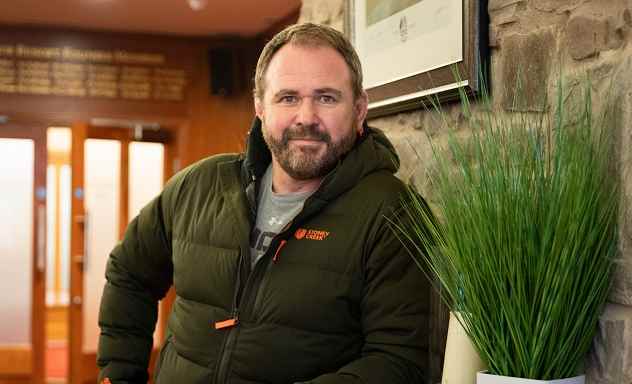
Scott Quinnell stands as one of the most recognisable and admired figures in Welsh rugby history. Known for his thunderous ball-carrying, commanding physical presence, and charismatic personality, Scott Quinnell built a career that few players in modern rugby have matched. Excelling in both rugby union and rugby league, he became a rare athlete to succeed at elite international level in two versions of the sport, earning lasting respect from fans across Britain and beyond.
From his early days in Llanelli to representing Wales on the international stage, and from starring for Wigan in rugby league to wearing the prestigious British & Irish Lions jersey, Scott Quinnell’s story is one of resilience, adaptability, and sporting excellence. His influence extends beyond the pitch too, as he has become a familiar face in broadcasting and rugby commentary since retirement.
Early Life and Family Background
Born on 20 August 1972 in Morriston, Swansea, Scott Quinnell was raised in a family where rugby was not merely a pastime but a way of life. His father, Derek Quinnell, was a celebrated Welsh international rugby player, while his brothers Craig and Gavin also forged successful professional rugby careers.
Growing up in Llanelli, Scott was immersed in rugby culture from a young age. The Quinnell household was steeped in competitive spirit, discipline, and a passion for Welsh sport. This environment helped shape his mentality and prepared him for the demands of professional rugby.
Being surrounded by rugby excellence gave Scott Quinnell a strong foundation, but his rise was never simply inherited. His success came from relentless effort, natural athleticism, and a fierce commitment to improvement.
First Steps in Rugby Union
Scott Quinnell began his rugby journey with Llanelli RFC, one of Wales’ most historic clubs. He joined Llanelli juniors at an early age and quickly developed into a formidable forward with immense strength and mobility.
He made his senior debut as a teenager and soon became known for:
- Explosive carries from the base of scrums
- Strong defensive tackling
- High work-rate across the pitch
- Ability to break defensive lines
His performances for Llanelli earned widespread praise, and it became evident that he possessed rare qualities suited to international rugby.
At a time when Welsh rugby was seeking new heroes, Scott Quinnell emerged as one of the brightest young forwards in the game.
International Debut for Wales
Scott Quinnell earned his first cap for Wales in 1993. Representing one’s country is the highest honour in rugby, and his debut marked the beginning of an impressive international career.
In 1994, he played a major role in Wales’ Five Nations Championship campaign. One of his standout performances came against France, where he was instrumental in a famous Welsh victory.
Over time, Scott Quinnell became central to Wales’ forward pack because of:
- His consistency under pressure
- Leadership qualities
- Physical dominance in contact areas
- Tactical intelligence in open play
He would go on to earn 52 caps for Wales and score 11 tries, an excellent return for a forward.
Switching Codes: Move to Rugby League
In 1994, Scott Quinnell made a bold decision that surprised many observers: he switched from rugby union to rugby league and joined Wigan, one of the biggest clubs in the sport.
This transition was significant because the two codes demand different tactical awareness, positional discipline, and gameplay rhythm.
At Wigan, Quinnell adapted impressively:
- He embraced the faster pace of rugby league
- Developed sharper handling under pressure
- Refined his decision-making in open-field situations
During his time there, he helped Wigan secure major honours, including league success, and further proved his versatility as an athlete.
His rugby league spell also included representing Wales in international competition, highlighting his ability to thrive regardless of code.
Return to Rugby Union
After two years in rugby league, Scott Quinnell returned to rugby union in 1996, joining Richmond RFC before eventually returning home to Llanelli.
This comeback demonstrated remarkable adaptability. Many players struggle after changing codes, but Quinnell reintegrated into union seamlessly.
His second spell in union saw him become an even more complete player:
- Smarter positional awareness
- Better ball distribution
- Improved offloading skills
- Greater maturity as a leader
His return coincided with some of the strongest years of his professional career.
British & Irish Lions Recognition
Selection for the British & Irish Lions is among the highest honours in rugby. Scott Quinnell earned Lions selection in both 1997 and 2001.
1997 Lions Tour
His first Lions tour to South Africa ended prematurely because of injury after a double hernia problem. Though disappointing, his selection alone reflected how highly he was regarded across the rugby world.
2001 Lions Tour
The 2001 tour to Australia was a defining moment.
Scott Quinnell:
- Played in all three Test matches
- Scored a memorable try in the first Test in Brisbane
- Delivered powerful performances throughout the series
His displays against Australia remain among the most iconic moments of his career. The first Test in particular showcased his trademark combination of brute force and intelligent support play.
Playing Style: What Made Scott Quinnell Unique?
Scott Quinnell was not merely effective; he was unforgettable.
His playing style combined several rare qualities:
Physical Power
Few players could match his sheer strength in collisions. He often carried multiple defenders over the gain line.
Mobility
Despite his size, he moved with surprising agility and speed.
Ball-Carrying Threat
His ability to attack from close range made him dangerous near the try line.
Leadership Presence
Even without wearing the captain’s armband, he inspired teammates through actions.
Cross-Code Intelligence
His league experience sharpened his spatial awareness and quickened his reactions.
These traits made him one of the most feared back-row forwards of his era.
Challenges: Injuries and Health Battles
Like many elite athletes, Scott Quinnell’s career included adversity.
One of his most notable physical struggles was playing for years with rheumatoid arthritis in his knee, a condition that could have ended many careers early.
Yet he continued competing at the highest level through:
- Pain management
- Rigorous rehabilitation
- Exceptional mental toughness
His perseverance under these circumstances deepened admiration for his achievements.
Scarlets Era and Domestic Legacy
When Welsh rugby entered the regional era, Scott Quinnell became a major figure for the Scarlets.
At Scarlets he:
- Played 59 matches
- Scored 32 tries
- Helped win the Celtic League title in 2004
His contributions extended beyond statistics. He became a symbol of regional pride and one of the emotional leaders of Welsh domestic rugby.
Supporters admired him not just because he performed brilliantly, but because he represented Llanelli identity with authenticity and passion.
Retirement from Professional Rugby
Scott Quinnell retired from professional rugby in 2005.
His retirement marked the end of a distinguished playing career spanning:
- Rugby union and rugby league
- Club and international honours
- Domestic and global competition
By retirement, he had established himself as:
- A Welsh rugby icon
- A Lions Test player
- One of the most respected forwards of his generation
Life After Rugby
Unlike some former athletes who fade from public view, Scott Quinnell transitioned naturally into media.
Since retirement he has become:
- Rugby television pundit
- Match analyst
- Radio personality
- Motivational speaker
His humour, honesty, and rugby insight have made him especially popular with audiences.
Fans appreciate that he brings the same energy to broadcasting that he once brought to the pitch.
Personal Life and Public Image
Scott Quinnell is widely respected not only for his sporting achievements but also for his approachable personality.
He is known for:
- Warm humour
- Straightforward honesty
- Strong family values
- Deep loyalty to Welsh rugby
His popularity has endured because he remains relatable and grounded despite fame.
Scott Quinnell’s Legacy in Welsh Rugby
Scott Quinnell’s legacy rests on several remarkable achievements:
- Success in both rugby union and rugby league
- 52 caps for Wales
- Lions Test appearances at elite level
- Major domestic titles in two rugby codes
- Enduring influence as broadcaster and ambassador
Few players have matched his breadth of accomplishment.
He remains an example of:
- Versatility
- Courage
- Commitment
- National pride
Why Scott Quinnell Still Matters Today
Modern rugby continues to evolve, but Scott Quinnell’s impact remains relevant because he represents timeless sporting values.
Young players study him as an example of:
- Professional adaptability
- Physical excellence
- Competitive resilience
His career reminds rugby supporters that greatness is not defined only by trophies, but by consistency, integrity, and influence.
FAQs
Who is Scott Quinnell best known for playing for?
Scott Quinnell is best known for representing Wales, the British & Irish Lions, Llanelli Scarlets, and Wigan.
Did Scott Quinnell play both rugby union and rugby league?
Yes, he successfully played both codes at elite international level, a rare achievement in professional rugby.
How many times did Scott Quinnell play for Wales?
He earned 52 caps for Wales during his international rugby union career.
Conclusion
Scott Quinnell remains one of the most admired figures in Welsh rugby history because his career combined strength, versatility, and genuine sporting character. From dominating matches for Wales and the British & Irish Lions to excelling in both rugby union and rugby league, he built a legacy that few players can equal. His continued presence in broadcasting ensures that his voice and influence remain central to rugby culture, securing his place as a lasting icon of the game.