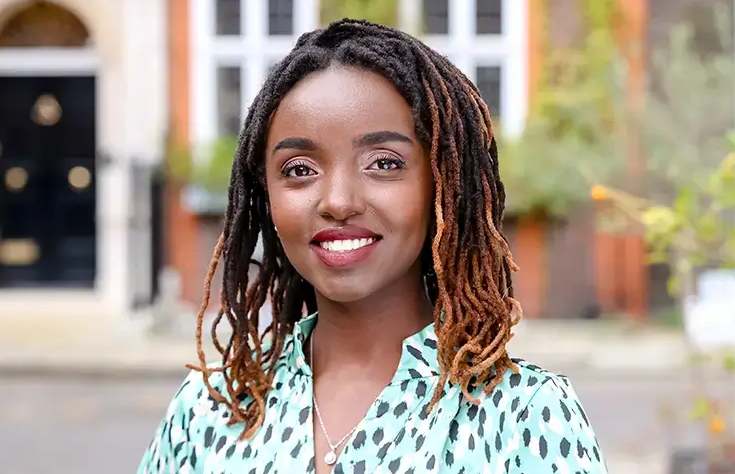
Mercy Muroki is one of those rare figures in modern British media who manages to blend serious academic credentials with the kind of plain-spoken commentary that cuts through the noise. She’s a researcher, a columnist, a former television presenter, and a policy adviser whose journey from a Nairobi childhood to the corridors of Whitehall reads almost like fiction. Yet what makes her interesting isn’t just the rise itself, it’s the perspective she brings to debates about race, class, and opportunity in Britain today. Her arguments tend to ruffle feathers on both sides of the political spectrum, which is probably the clearest sign that she’s saying something worth listening to.
Early Life and Roots in Kenya
Mercy was born on 19 July 1995 in Nairobi, Kenya, and spent the first five years of her life there before her family made the decision to move to the United Kingdom. She has spoken openly in interviews about what that early childhood in Kenya looked like, including memories of attending a school that had no electricity and no proper toilet facilities, just a latrine. Those formative years gave her a frame of reference that most of her contemporaries in British media simply don’t have. When she talks about poverty or hardship, she’s not theorising from a comfortable distance. She knows what genuine material deprivation looks like, and that perspective consistently shapes how she approaches policy debates around social mobility and inequality.
Growing Up in West London
When her family arrived in the UK, they settled in West London, and Mercy’s upbringing took place on a council estate. This is a part of her story she returns to often, particularly when discussing education, opportunity, and the kind of structural conversations that dominate British politics. Her parents, both Kenyan immigrants, placed enormous emphasis on education and hard work. They weren’t wealthy, they weren’t connected, and they didn’t have any obvious advantages to pass down, but they did pass down a set of values that clearly stuck. It’s worth noting that Mercy has kept her parents and any siblings firmly out of the public eye. She’s protective of their privacy, and you won’t find their names or photographs splashed across her social media. That restraint, in an age of oversharing, feels deliberate and quite admirable.
Becoming a Mother at Eighteen
One of the most defining chapters of Mercy’s life began when she became pregnant at eighteen, just as she finished her A-levels. Her daughter, Rosalind, was born in 2015. For most young women, becoming a single mother at that age would derail academic ambitions entirely. For Mercy, it became part of a story of remarkable determination. She started university while raising her child and while claiming Universal Credit to keep the household afloat. She doesn’t dress this period up as anything heroic when she talks about it, but the facts speak for themselves. Studying politics at a competitive London university while caring for a newborn and managing benefits paperwork is the kind of grind that breaks people, and she came out the other side with first-class honours.
Education at Queen Mary and Oxford
Mercy completed her A-levels at Northampton College, then went on to Queen Mary University of London, where she studied Politics from 2015 to 2018. She didn’t just scrape through either, she graduated with a first and racked up several academic prizes along the way, including the Professor Lord Smith of Clifton Prize and a Political Studies Association essay competition win. From Queen Mary she moved to Jesus College, Oxford, where she completed a Master of Science in Comparative Social Policy between 2019 and 2021. Oxford is a tough environment for anyone, but doing it as a young mother from a council estate background is a different kind of challenge altogether. Her academic record is part of why her commentary carries weight, she’s not just opining, she’s been trained in the methodology behind social policy research.
The Commission on Race and Ethnic Disparities
In 2021, Mercy was appointed as the youngest researcher on the UK government’s Commission on Race and Ethnic Disparities. The commission published a report concluding that Britain is not institutionally racist, a finding that ignited fierce debate across the country. Critics accused the commission of downplaying structural inequalities, while supporters argued it offered a more nuanced look at the actual drivers of disparity in modern Britain. Mercy stood firmly behind the findings and has continued defending the methodology in subsequent interviews and columns. Whatever side of that debate you sit on, being entrusted with that kind of work at her age was a significant statement of confidence in her abilities.
Television Career at GB News
The same year the commission published its report, Mercy was signed by the newly launched GB News. She first co-hosted Brazier & Muroki alongside veteran anchor Colin Brazier, weekday mornings from 9 am to noon. By August 2021, the format was retooled into To the Point, which she co-hosted with Patrick Christys. On screen she came across as composed, sharp, and willing to push back, qualities that made her stand out on a channel known for big personalities. She announced her departure from GB News in late October 2022. She hasn’t gone into extensive detail about the reasons, and given the turbulent first couple of years at GB News generally, the move probably reflects a broader career repositioning rather than any single dramatic moment.
Print Journalism and Columns
Alongside television, Mercy has built a substantial print journalism career. She’s been a columnist for The Sun, where her writing leans conservative and frequently challenges the political left. She has argued that the Labour Party demonises black and female conservatives, criticised what she calls the politics of class and victimhood, and pushed back on various aspects of what’s often labelled woke culture. She’s also written for The Times, contributed to the Times Red Box column, and offered commentary on Sky News. Her writing style is conversational but underpinned by genuine research, which makes her harder to dismiss than the average opinion columnist.
Policy Adviser to Kemi Badenoch
In 2023, Mercy took a significant step into formal politics by becoming a policy adviser to Kemi Badenoch, who was then serving as the Minister for Women and Equalities. It was a logical fit given the alignment between Badenoch’s outspoken style and Mercy’s own willingness to challenge progressive orthodoxies. Working as a policy adviser is a fundamentally different role from being a commentator, you’re crafting actual government positions rather than reacting to them, and it suggests Mercy was looking to influence policy directly rather than just from the sidelines.
Why Her Voice Matters
What makes Mercy Muroki genuinely interesting isn’t just her CV, it’s the combination of where she’s come from and what she now argues. A young black woman from a Kenyan immigrant family, raised on a council estate, who became a mother as a teenager and then went on to Oxford, doesn’t fit neatly into any of the standard political boxes. When she pushes back on narratives about racism in Britain or argues that personal agency matters as much as structural factors, she’s drawing on lived experience as much as research. That’s why her commentary cuts through, even for people who disagree with her conclusions.
FAQs
Is Mercy Muroki still working at GB News?
No, Mercy left GB News in October 2022. Since then she’s continued her column work and moved into government policy advisory roles, with her most prominent appointment being adviser to Kemi Badenoch in 2023.
How did Mercy Muroki get into Oxford as a single mother?
She earned her place through academic merit after graduating with a first-class degree in Politics from Queen Mary University of London. She studied as an undergraduate while raising her young daughter and claiming Universal Credit, then progressed directly to Oxford for her postgraduate degree.
What are Mercy Muroki’s political views?
She’s broadly conservative and has been critical of the Labour Party, structural racism narratives, and progressive cultural politics. She tends to emphasise personal responsibility, social mobility, and what she sees as the achievements of British society rather than its failures.
Conclusion
Mercy Muroki’s story is one of those that pushes back against easy assumptions about who gets a voice in British public life and how they earn it. From Nairobi to a West London council estate, from teenage motherhood to Oxford, from television studios to government corridors, her trajectory has been anything but conventional. Whether you agree with her politics or not, she’s earned her seat at the table through sheer hard work and a refusal to let circumstance define what was possible. In a media landscape that often rewards noise over substance, she remains one of the more substantive voices to emerge from the new generation of British commentators, and her career still has plenty of room left to grow.