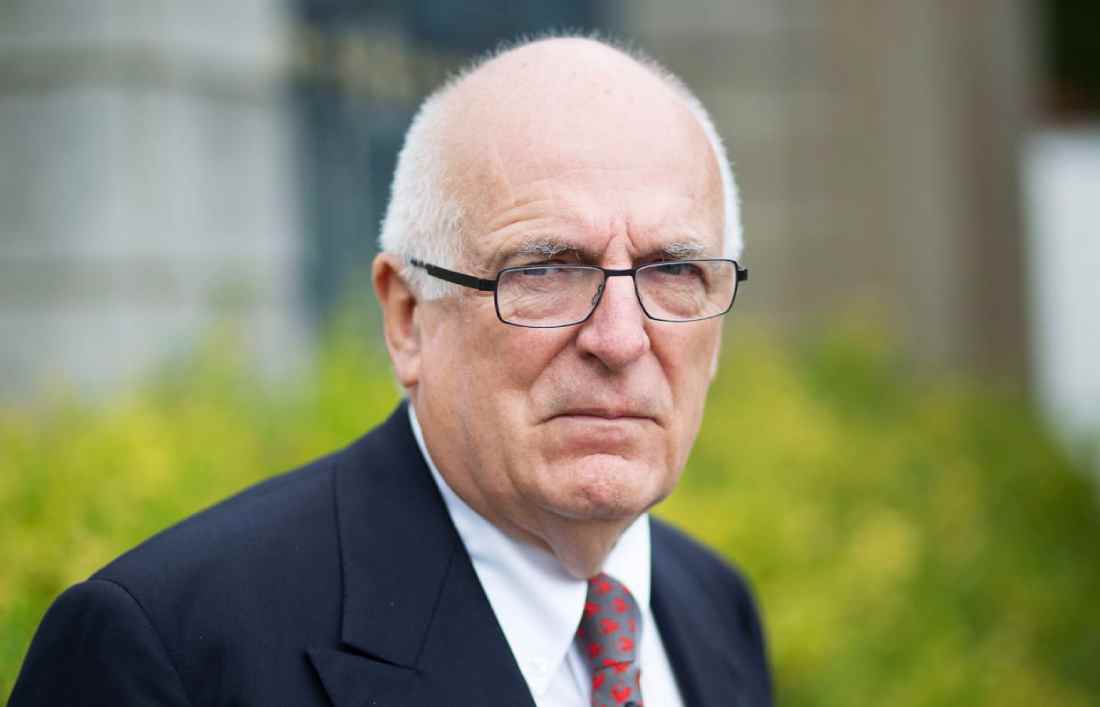
Few figures in modern British intelligence have attracted as much attention, respect, and controversy as Richard Dearlove. As the head of the United Kingdom’s Secret Intelligence Service during one of the most turbulent periods in global politics, his career sits at the intersection of secrecy, power, and high-stakes decision-making.
Richard Dearlove’s tenure as chief of MI6 coincided with defining moments in recent history, including the aftermath of the 9/11 attacks and the lead-up to the Iraq War. His influence extended far beyond intelligence gathering; he played a pivotal role in shaping how intelligence was interpreted and communicated at the highest levels of government.
Early Life and Education
Background and Upbringing
Richard Dearlove was born on 23 January 1945 in Cornwall, England, at a time when Britain was emerging from the devastation of the Second World War. Growing up in a country redefining its global role, he would later become one of the key figures responsible for safeguarding its national interests.
His upbringing was rooted in discipline and intellectual curiosity, traits that would later define his career in intelligence.
Academic Formation
Dearlove was educated at Lancing College, a prestigious independent school known for producing disciplined and capable leaders. He later attended University of Cambridge, where he studied history at Queens’ College.
His academic focus on history gave him a strong analytical foundation—an essential skill for intelligence work, where understanding context, patterns, and geopolitical dynamics is critical.
Entry into Intelligence
Joining MI6
Richard Dearlove joined MI6, formally known as the Secret Intelligence Service, in 1966. At the time, MI6 was still deeply influenced by Cold War priorities, focusing heavily on Soviet activities and global espionage networks.
His early career involved rigorous training and field assignments, where he developed expertise in intelligence gathering, covert operations, and diplomatic engagement.
Early Postings
Throughout his early years, Dearlove served in various international locations, including:
- Nairobi
- Prague
- Paris
- Geneva
- Washington
These postings exposed him to diverse geopolitical environments and helped him build a global network of contacts. His time in Eastern Europe during the Cold War was particularly significant, as it involved monitoring Soviet influence and intelligence operations.
Rise Through the Ranks
Strategic Roles
Over the decades, Richard Dearlove steadily rose through the ranks of MI6. His career progression was marked by increasing responsibility in both operational and strategic roles.
He eventually became Director of Operations, one of the most senior positions within MI6. In this role, he oversaw global intelligence operations, managing agents, missions, and sensitive intelligence flows.
Leadership Qualities
Dearlove was known for:
- Strong analytical judgement
- Calm decision-making under pressure
- Ability to navigate complex political environments
- Effective communication with government leaders
These qualities positioned him as a natural candidate for the top role within MI6.
Becoming Chief of MI6
Appointment as “C”
In 1999, Richard Dearlove was appointed Chief of MI6, the head of the organisation traditionally known as “C”. This role carries immense responsibility, as the chief oversees all foreign intelligence operations and reports directly to the UK Foreign Secretary.
His appointment marked the culmination of over three decades of service in intelligence.
Responsibilities
As chief, Dearlove was responsible for:
- Overseeing global intelligence operations
- Advising the UK government on national security threats
- Coordinating with allied intelligence agencies
- Ensuring the integrity and reliability of intelligence assessments
His tenure would soon be tested by unprecedented global events.
Leadership During Global Crises
The 9/11 Attacks
The terrorist attacks on 11 September 2001 fundamentally changed global security priorities. Under Richard Dearlove’s leadership, MI6 intensified its focus on counter-terrorism.
Key changes included:
- Increased intelligence sharing with allies, particularly the United States
- Expanded surveillance of extremist networks
- Greater emphasis on pre-emptive intelligence
Dearlove played a central role in strengthening cooperation between MI6 and agencies such as the CIA.
War in Afghanistan
Following 9/11, the United Kingdom joined military operations in Afghanistan. MI6, under Dearlove, provided intelligence support for:
- Target identification
- Tracking terrorist networks
- Strategic assessments of regional stability
This marked a shift towards more operational involvement in conflict zones.
The Iraq War and Intelligence Controversy
The Build-Up to War
One of the most defining—and controversial—periods of Richard Dearlove’s career was the lead-up to the Iraq War in 2003.
Intelligence assessments suggested that Iraq possessed weapons of mass destruction (WMDs). These claims played a crucial role in justifying military intervention.
Dearlove’s MI6 was involved in gathering and presenting intelligence related to these claims.
The Iraq Inquiry
Years later, the Iraq Inquiry examined the intelligence used to justify the war.
Key criticisms included:
- Intelligence was presented with greater certainty than warranted
- Insufficient verification of sources
- Pressure to align intelligence with political objectives
While Dearlove defended the work of MI6, the inquiry raised serious questions about the reliability and interpretation of intelligence during his tenure.
Impact on Reputation
The controversy surrounding the Iraq War significantly shaped public perception of Richard Dearlove. While some viewed him as a dedicated public servant operating under difficult circumstances, others criticised his role in one of the most debated intelligence failures in modern history.
Intelligence Philosophy and Approach
Balancing Secrecy and Accountability
Richard Dearlove’s career highlights the inherent tension between secrecy and accountability in intelligence work.
On one hand, intelligence agencies must operate covertly to be effective. On the other, they must provide accurate and trustworthy information to policymakers.
Dearlove often emphasised the importance of:
- Professional judgement
- Rigorous analysis
- Clear communication with political leaders
Relationship with Government
As MI6 chief, Dearlove worked closely with senior government officials. His role required translating complex intelligence into actionable insights.
This relationship is crucial but also delicate, as intelligence can influence major policy decisions, including war.
Life After MI6
Academic Leadership
After retiring from MI6 in 2004, Richard Dearlove became Master of Pembroke College, Cambridge, a position he held until 2015.
In this role, he shifted from intelligence operations to academic leadership, focusing on education, governance, and intellectual development.
Public Engagement
Since leaving MI6, Dearlove has remained active in public discourse. He frequently speaks on topics such as:
- National security
- Intelligence strategy
- Geopolitical risks
His insights are often sought after due to his extensive experience.
Criticism and Debate
Intelligence Reliability
One of the central debates surrounding Richard Dearlove concerns the reliability of intelligence during his tenure.
Critics argue that:
- Intelligence was not sufficiently scrutinised
- Alternative perspectives were overlooked
- There was overconfidence in uncertain data
Supporters counter that intelligence work inherently involves uncertainty and that decisions must often be made with incomplete information.
Ethical Considerations
The Iraq War controversy also raises broader ethical questions:
- Should intelligence agencies challenge political narratives more strongly?
- How should uncertainty be communicated to decision-makers?
- What safeguards are needed to prevent misuse of intelligence?
These questions remain relevant today.
Legacy and Influence
Contributions to Intelligence
Despite controversies, Richard Dearlove’s contributions to British intelligence are significant:
- Strengthened international intelligence cooperation
- Modernised MI6’s operational focus
- Played a key role during critical global events
Lasting Impact
His tenure serves as a case study in the complexities of intelligence leadership. It highlights both the importance of intelligence in national security and the risks associated with its misinterpretation.
Dearlove’s career continues to influence discussions on intelligence reform and accountability.
Personal Traits and Leadership Style
Professional Demeanour
Richard Dearlove is often described as:
- Measured and composed
- Highly analytical
- Discreet and disciplined
These traits are essential in intelligence work, where decisions can have far-reaching consequences.
Decision-Making Approach
He was known for balancing:
- Strategic thinking
- Operational practicality
- Political awareness
This combination allowed him to navigate complex situations, though not without criticism.
FAQs
Who is Richard Dearlove?
Richard Dearlove is a former chief of MI6 who led the UK’s foreign intelligence service from 1999 to 2004 during major global events such as 9/11 and the Iraq War.
Why is Richard Dearlove controversial?
He is controversial בעיקר due to his role in intelligence assessments related to Iraq’s alleged weapons of mass destruction, which were later found to be inaccurate.
What role did Richard Dearlove play after MI6?
After leaving MI6, he became Master of Pembroke College, Cambridge, and later worked as a commentator and speaker on intelligence and security matters.
What is MI6 and what was his role there?
MI6, or the Secret Intelligence Service, is the UK’s foreign intelligence agency. As chief, Dearlove oversaw global intelligence operations and advised the government on national security.
Did Richard Dearlove influence the Iraq War decision?
While he did not make political decisions, the intelligence provided by MI6 under his leadership played a significant role in shaping the government’s justification for the war.
Conclusion
Richard Dearlove remains one of the most significant—and debated—figures in modern British intelligence history. His leadership of MI6 during a period of profound global change placed him at the centre of decisions that shaped international relations and security policies.
His career illustrates both the power and the limitations of intelligence. It underscores the importance of rigorous analysis, ethical responsibility, and clear communication between intelligence agencies and political leaders.