If you have ever typed “best mazamorra morada near me” into your phone late at night with a craving you could not quite explain, you are in very good company. There is something about this deep-purple, jiggly, fruit-studded dessert that gets under your skin and stays there. One taste and you understand why entire generations of Peruvian families fight over who makes it best. So let me walk you through everything that matters: what it is, how to find a genuinely great version near you, what to look for when you order, and how to make it yourself if the nearest bowl happens to be a few thousand miles away.
What Exactly Is Mazamorra Morada?
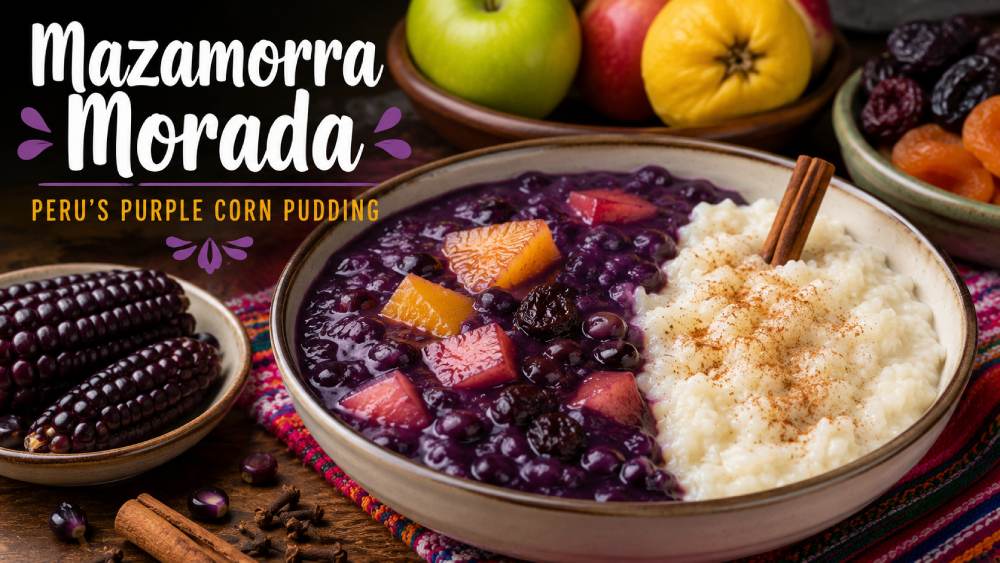
At its heart, mazamorra morada is a thick, spoonable purple corn pudding that sits somewhere between a fruit compote and a gelatin dessert, though it is really its own thing entirely. It is built around maíz morado, the deep violet corn native to the Andes, which is boiled until its color and earthy sweetness bleed out into the water. That gorgeous purple liquid then gets simmered with chunks of fruit, warm spices, a hit of lime, and a starch that thickens it into the wobbly, glossy consistency that makes the whole thing so satisfying to eat with a spoon. As a Peruvian dessert, it is comforting rather than fussy, the kind of treat that tastes like someone’s grandmother made it, because very often someone’s grandmother did.
The Story Behind This Beloved Peruvian Dessert
To understand why people search so hard for the best version, it helps to know that this dish carries real history. Purple corn has been cultivated in the Andes for thousands of years, long before the Spanish arrived, and the indigenous peoples of the region prized it for both its color and its flavor. Over the centuries, the corn made its way into drinks and puddings, and the modern form of mazamorra morada took shape during the colonial era when imported ingredients like cinnamon, cloves, and dried fruit blended with native staples. That mixing of worlds is exactly why traditional Peruvian food often tastes so layered and complex. Today, the dessert is especially associated with October in Lima, the month of religious processions, when street vendors and home cooks alike make enormous pots of it to share. So when you eat a bowl, you are tasting a small piece of a very long story.
Why “Best Mazamorra Morada Near Me” Is Such a Popular Search
Here is the funny thing about this craving: it tends to hit suddenly and specifically. You do not usually wake up wanting “a dessert.” You wake up wanting that one thing, the purple one, the one with the soft chunks of fruit and the cinnamon warmth. People search for the best mazamorra morada near them because the quality varies enormously from place to place, and once you have had a truly great bowl, the mediocre ones become genuinely disappointing. The search is also popular among the Peruvian diaspora, folks living far from home who are chasing a flavor that reminds them of family kitchens and Sunday lunches. And increasingly, curious eaters who have never tried it are searching too, drawn in by that unforgettable color and the promise of something they cannot find at the average bakery.
How to Actually Find the Best Mazamorra Morada Near You
Finding a great bowl takes a little detective work, but it is very doable. Start by looking specifically for Peruvian restaurants in your area rather than generic Latin American spots, because the dessert is a regional specialty and the best versions come from cooks who grew up with it. Search engines and map apps are your first stop, but do not just trust the star rating; dig into the reviews and look for people specifically praising the desserts, not just the lomo saltado or the ceviche. Peruvian bakeries, often called panaderías or dulcerías, are another excellent bet, and so are weekend cultural markets and food festivals where home cooks sell their specialties. If you live near a city with a sizable Peruvian community, ask around in local social media groups, because word of mouth will almost always lead you to a hidden gem that no algorithm has discovered yet.
What Makes a Great Mazamorra Morada Worth Seeking Out
Once you have a few candidates, it helps to know what separates a forgettable bowl from a memorable one. A great mazamorra morada should have a deep, genuine purple color that comes from real maíz morado, not from artificial dye or a watery shortcut. The texture is crucial: it should be thick enough to hold its shape on the spoon but still soft and yielding, never rubbery or gluey. You want to taste the fruit clearly, with bright pops of acidity cutting through the sweetness, and you should be able to detect the warm spices without them overwhelming everything else. Balance is the whole game here. The best versions taste fresh and homemade, with a slightly tart finish from the lime that keeps you coming back for another spoonful, while the weakest ones taste flat, overly sweet, and one-dimensional.
The Ingredients That Give This Purple Corn Pudding Its Signature Flavor
Part of what makes this purple corn pudding so distinctive is its ingredient list, which reads like a little tour of the Andes and beyond. The star is the dried purple corn, which provides both the color and a subtle earthy base note. From there, cooks add quince, pineapple, and apple for body and natural sweetness, along with dried fruits like prunes and apricots that soften as they simmer and add a deep, jammy richness. Cinnamon sticks and whole cloves bring the warmth, while a squeeze of fresh lime at the end provides that essential bright lift. The whole thing is thickened with sweet potato starch or cornstarch, and sweetened with sugar to taste. When all of these elements come together properly, the result is a dessert that feels both rustic and surprisingly sophisticated, which is exactly why it has earned its place among the most beloved examples of traditional Peruvian food.
Mazamorra Morada vs. Chicha Morada: Clearing Up the Confusion
This is the question I get asked more than any other, so let me settle it. Mazamorra morada and chicha morada start from the same place, that gorgeous boiled purple corn liquid, but they end up as completely different things. Chicha morada is a drink, a refreshing purple beverage that you sip cold, often alongside a meal, and it is loved across Peru for its sweet-tart flavor. Mazamorra morada, on the other hand, is a thickened dessert that you eat with a spoon. Many home cooks actually make both from the same batch of corn infusion, splitting it in two and turning one half into the drink and the other into the pudding. So if you find a spot that serves a wonderful chicha morada, there is a very good chance their mazamorra morada is excellent too, since the foundation is identical and the same care tends to carry over.
Pairing It With Arroz con Leche: The Classic “Combinado”
Here is a little insider tip that will make you look like you know exactly what you are doing. In Peru, mazamorra morada is very often served side by side with arroz con leche, the creamy cinnamon-scented rice pudding, in a beloved pairing called the combinado. The two are spooned into the same bowl right next to each other, and the contrast is pure magic: the deep purple, fruity tang of the mazamorra against the pale, milky sweetness of the rice pudding. The visual alone is striking, but the flavor combination is what keeps people ordering it. If you find a Peruvian restaurant or dessert shop that offers the combinado, order it without hesitation, because it is one of those things that tastes far greater than the sum of its parts and gives you the full experience in a single bowl.
Can’t Find It Nearby? Here’s How to Make It at Home
Let me be honest with you: depending on where you live, the nearest authentic bowl might genuinely be out of reach, and that is okay because this is a dessert you can absolutely make in your own kitchen. The one ingredient you cannot skip or swap is the dried purple corn, but the good news is that you can order it online fairly easily, sometimes as whole dried cobs and sometimes as loose kernels or even a ready-made mix. Once you have that, you boil the corn with cinnamon sticks, cloves, and the peels of pineapple and apple to extract maximum color and flavor, then strain it, add chopped fruit and sweetener, and thicken it with sweet potato starch dissolved in a little cold water. Finish with fresh lime juice, let it cool until it sets, and you have a homemade version that rivals what you would find at many restaurants. It takes a bit of patience, but the process is forgiving and the payoff is enormous.
A Quick Home Recipe Roadmap
If you want a more concrete starting point, here is the general flow without getting lost in exact measurements, since recipes vary from family to family. Begin by rinsing your dried purple corn and adding it to a large pot with plenty of water, the spices, and the fruit peels, then bring everything to a boil and let it simmer for about forty-five minutes until the liquid turns intensely purple. Strain out the solids and return the colored liquid to the pot, then stir in diced pineapple, apple, quince if you can find it, and softened dried fruit like prunes. Sweeten to taste, dissolve your starch in cold water, and stir it in slowly while the mixture simmers until it thickens to that signature spoonable texture. Pull it off the heat, add fresh lime juice, and let it cool. The pudding will continue to set as it cools, so resist the urge to over-thicken it on the stove.
Tips for Ordering Like a Local
When you do find a great spot, a few small habits will help you get the most out of the experience and signal that you know your stuff. First, ask whether the mazamorra morada is made fresh in-house, because the best places make it in batches and the texture is noticeably superior when it has not been sitting frozen for weeks. Do not be shy about asking for the combinado if it is not listed on the menu, since many places will happily serve it that way even when they do not advertise it. If you are visiting around October, ask whether they are doing anything special, because that month carries cultural significance and some cooks pull out their finest recipes. And finally, trust the spots that are busy with regulars who clearly come for the dessert specifically, because that kind of loyal crowd is the surest sign you have found something worth your time.
The Surprising Health Angle
People are often pleasantly surprised to learn that this indulgent-feeling dessert has a few things going for it nutritionally, though I would never call it a health food. Purple corn is rich in anthocyanins, the same antioxidant compounds that give blueberries and red cabbage their color, and these have been studied for various potential benefits. The dessert is also loaded with real fruit, which contributes fiber and vitamins, and because it is naturally thickened rather than relying on heavy cream or butter, it tends to feel lighter than many Western desserts of similar sweetness. That said, it does contain a fair amount of sugar, so it is best enjoyed as the treat it is meant to be. The point is simply that you can savor your purple corn pudding knowing it brings a little more to the table than empty calories alone.
Why This Dessert Deserves a Spot in Your Rotation
Beyond the search for the best mazamorra morada near you, I would gently encourage you to let this dish become a regular part of your dessert life rather than a one-time curiosity. It is genuinely different from anything else you are likely to be eating, it carries a rich cultural story, and it scratches an itch that ice cream and cake simply cannot reach. Once you have a reliable source or a recipe you trust, you will find yourself reaching for it whenever you want something that feels both comforting and a little special. It travels well to potlucks, it impresses guests who have never seen anything like it, and it connects you to a tradition that stretches back thousands of years. Few desserts can offer all of that at once.
FAQs
What is mazamorra morada made of?
It starts with dried purple corn boiled to release its color, then simmered with fruit like pineapple, apple, and quince, plus dried prunes, cinnamon, cloves, sugar, and a splash of lime. A starch such as sweet potato starch thickens it into its signature spoonable pudding.
Is mazamorra morada the same as chicha morada?
No, though they share the same purple corn base. Chicha morada is a chilled drink you sip, while mazamorra morada is a thick dessert you eat with a spoon. Many cooks make both from a single batch of the corn infusion.
Where can I find the best mazamorra morada near me?
Your best bets are dedicated Peruvian restaurants, panaderías, and weekend cultural markets. Read reviews for mentions of the desserts specifically, and ask local Peruvian community groups online, since word of mouth often points to the best homemade versions.
Can I make mazamorra morada at home?
Absolutely. The only ingredient you truly cannot substitute is dried purple corn, which you can order online. After that, you simply boil the corn with spices and fruit peels, strain, add fresh fruit and starch, sweeten, and finish with lime.
Is mazamorra morada good for you?
It is a treat, not a health food, but it does bring a few perks. Purple corn is rich in antioxidants called anthocyanins, and the dessert is loaded with real fruit and fiber. Just keep an eye on the sugar and enjoy it in moderation.
Conclusion
Whether you are chasing down the best mazamorra morada near you or rolling up your sleeves to make it at home, the reward is the same: a bowl of vibrant purple corn pudding that tastes like history, comfort, and craftsmanship all at once. This is a Peruvian dessert worth seeking out, the kind of traditional Peruvian food that turns first-time eaters into lifelong fans and reminds the homesick of family kitchens far away. Start by looking for dedicated Peruvian restaurants and bakeries, read the reviews with a sharp eye, and do not settle for a flat or overly sweet version when the real thing is so much better. And if the nearest authentic bowl is simply too far, remember that a bag of dried purple corn and a free afternoon can bring the flavors of the Andes right into your own home. However you get there, that first cool, tangy, cinnamon-warmed spoonful will be worth every bit of the search.