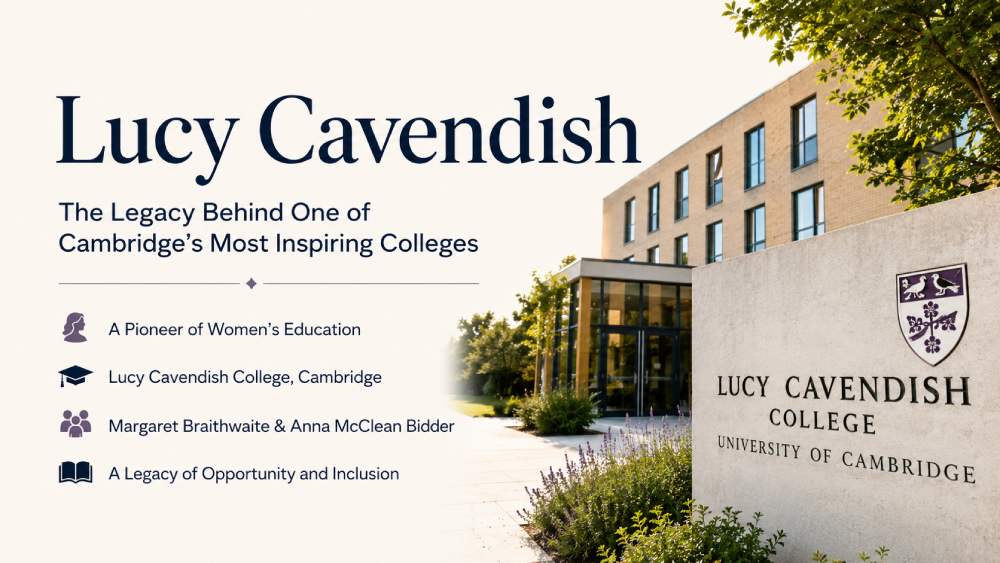
When people hear the name “Lucy Cavendish,” they often think of the respected college at the University of Cambridge. However, the story behind the name is far more meaningful than many realize. Lucy Cavendish was not simply a historical figure attached to an educational institution. She represented progress, opportunity, and the growing movement for women’s education in Britain during a time when women faced major barriers in academic life.
Today, Lucy Cavendish College stands as one of the most recognized colleges at Cambridge. It has built a reputation for inclusivity, academic excellence, and supporting students from diverse backgrounds. The college also carries the influence of important founders such as Margaret Braithwaite and Anna McClean Bidder, whose efforts helped shape its identity and mission.
The history of Lucy Cavendish is not only about education. It is also a story of determination, social change, and the belief that higher learning should be accessible to more people. Understanding this background helps explain why the college continues to attract students from around the world.
Who Was Lucy Cavendish?
Lucy Cavendish was born in 1841 and became known for her dedication to women’s education and social reform. She lived during a period when educational opportunities for women were extremely limited, especially at prestigious universities such as Cambridge and Oxford. Despite these challenges, she strongly believed that women deserved access to the same level of education as men.
She married Lord Frederick Cavendish, a British politician, and became Lady Frederick Cavendish. Although her husband’s tragic death in 1882 deeply affected her life, Lucy Cavendish continued to focus on charitable and educational causes. Her commitment to improving educational opportunities for women made her a respected figure in British society.
Lucy Cavendish became associated with several organizations that promoted female education. At a time when many people questioned whether women even belonged in universities, she supported initiatives that encouraged women to pursue academic excellence. Her influence helped inspire later educational reforms and opened doors for future generations of female students.
The naming of Lucy Cavendish College in her honor reflects the values she represented. The college continues to embody her vision of expanding access to education and supporting students who may not come from traditional academic backgrounds.
The Founding of Lucy Cavendish College
Lucy Cavendish College was officially founded in 1965 as a college for mature women students at the University of Cambridge. During this period, universities were beginning to modernize, but many barriers still existed for women and older students seeking higher education.
The establishment of the college was largely driven by educational leaders who believed Cambridge needed to become more accessible. Two important figures connected to the foundation of the college were Margaret Braithwaite and Anna McClean Bidder. Their contributions were essential in shaping the institution during its early years.
Margaret Braithwaite played a key role in creating opportunities for women who had previously missed the chance to attend university. She understood that many talented women could not pursue higher education earlier in life because of family responsibilities, financial limitations, or social expectations. Her work helped create a supportive academic environment specifically designed for mature students.
Anna McClean Bidder also made significant contributions to the development of the college. She was highly respected in academic circles and strongly supported women’s advancement in higher education. Her involvement brought credibility, intellectual leadership, and long-term vision to the institution.
The founders wanted Lucy Cavendish College to be different from traditional colleges. Instead of focusing only on younger students from privileged backgrounds, the college welcomed individuals with varied life experiences. This approach helped create a unique academic culture centered around inclusion and opportunity.
How Lucy Cavendish College Became Famous
Over the years, Lucy Cavendish College developed a strong reputation both inside and outside Cambridge. One of the main reasons for its success was its commitment to widening participation in higher education. The college actively encouraged applications from students who might not normally consider Cambridge a realistic option.
Unlike some older institutions known for exclusivity, Lucy Cavendish College built its identity around accessibility and support. This made it attractive to students from different countries, social classes, and educational backgrounds. As a result, the college became known for having a diverse and welcoming community.
Another reason for the college’s growing recognition was its academic performance. Students from Lucy Cavendish consistently achieved strong results across multiple subjects. The college demonstrated that providing opportunities to a broader range of students could lead to excellent academic outcomes.
In recent years, Lucy Cavendish College has undergone important changes. It originally admitted only women, but it later became a mixed-gender college. This transition reflected broader changes in society and higher education. While the college evolved, it continued to maintain its original focus on inclusion and equal opportunity.
Today, Lucy Cavendish College is admired for balancing tradition with modern values. It remains part of the historic University of Cambridge while also promoting innovation and diversity within higher education.
The Influence of Margaret Braithwaite and Anna McClean Bidder
The contributions of Margaret Braithwaite and Anna McClean Bidder deserve special recognition because their work shaped the direction of the college from the very beginning. Without their leadership and determination, Lucy Cavendish College might never have achieved its unique identity.
Margaret Braithwaite believed education should not be limited by age or gender. She understood that intelligence and ambition exist in people from all walks of life. Her efforts helped create pathways for mature women students who had often been ignored by traditional academic institutions.
Her leadership style focused on encouragement and practical support. Instead of simply promoting academic theory, she worked to build real educational opportunities. This approach helped establish the supportive environment that Lucy Cavendish College is still known for today.
Anna McClean Bidder brought a different but equally important strength to the institution. As a respected academic, she emphasized intellectual excellence and academic credibility. She helped ensure that the college would not only provide access but also maintain high educational standards.
Together, Margaret Braithwaite and Anna McClean Bidder created a foundation that combined compassion with academic ambition. Their shared vision helped transform Lucy Cavendish College into a respected institution within Cambridge University.
Student Life at Lucy Cavendish College
Student life at Lucy Cavendish College is often described as friendly, inclusive, and academically supportive. Many students choose the college because of its welcoming atmosphere and strong sense of community.
Unlike some larger colleges where students can feel anonymous, Lucy Cavendish offers a more personal environment. Students often build close relationships with tutors, classmates, and college staff. This supportive structure helps students adjust to the demands of Cambridge life.
The college also encourages participation in extracurricular activities. Students can join clubs, societies, sports teams, and cultural events throughout the year. These activities help create a balanced university experience that goes beyond academics alone.
Another important feature of student life is diversity. The college attracts students from many countries and educational backgrounds, creating a multicultural environment. This diversity allows students to learn from one another and develop broader perspectives.
Modern facilities, comfortable accommodation, and strong academic resources further enhance the student experience. Lucy Cavendish College continues to invest in its campus while preserving the traditions associated with Cambridge University.
Why Lucy Cavendish Still Matters Today
The story of Lucy Cavendish remains relevant because many of the issues connected to education and equality still exist today. Access to high-quality education continues to be influenced by financial background, social status, and opportunity.
Lucy Cavendish College represents the idea that universities should welcome talented students from all parts of society. Its history demonstrates how educational institutions can evolve and become more inclusive without sacrificing academic excellence.
The legacy of Lucy Cavendish, along with the work of Margaret Braithwaite and Anna McClean Bidder, continues to inspire modern educational reform. Their efforts helped challenge outdated beliefs about who belongs in higher education.
In a world where universities are increasingly expected to support diversity and inclusion, Lucy Cavendish College serves as an important example. It shows that educational success is not limited to one type of student or background.
FAQs
1. Who was Lucy Cavendish?
Lucy Cavendish was a British education supporter known for promoting women’s access to higher education.
2. What is Lucy Cavendish College famous for?
Lucy Cavendish College is famous for inclusivity, diversity, and supporting students from different backgrounds at Cambridge.
3. Who founded Lucy Cavendish College?
The college was founded with major contributions from Margaret Braithwaite and Anna McClean Bidder.
4. Is Lucy Cavendish College part of Cambridge University?
Yes, Lucy Cavendish College is an official constituent college of the University of Cambridge.
5. Why is Lucy Cavendish important today?
Lucy Cavendish remains important because her legacy supports equal access to quality education and academic opportunity.
Conclusion
Lucy Cavendish is far more than just the name of a Cambridge college. It represents a powerful legacy connected to women’s education, social progress, and equal opportunity. From the early contributions of Lucy Cavendish herself to the leadership of Margaret Braithwaite and Anna McClean Bidder, the story behind the institution is deeply inspiring.
Lucy Cavendish College continues to stand out because of its commitment to accessibility, diversity, and academic achievement. Its evolution over the years reflects broader changes within society and higher education.