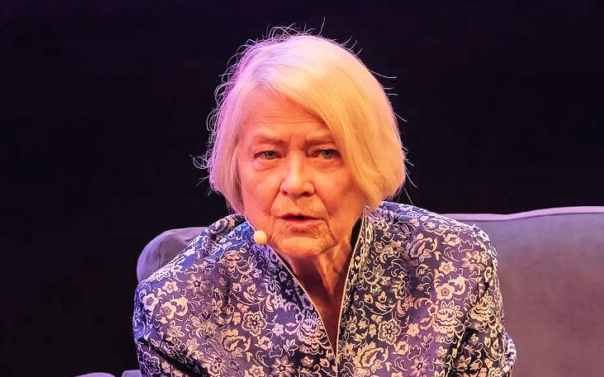
Kate Adie is a name that has become synonymous with courage, integrity, and excellence in British journalism. For decades, she stood at the forefront of some of the world’s most dangerous and defining events, reporting from war zones, disaster areas, and scenes of political upheaval with remarkable composure and authority. Her work transformed foreign correspondence in the United Kingdom and helped redefine the role of women in frontline reporting.
Early Life and Background of Kate Adie
Kate Adie was born on 19 September 1945 in Whitley Bay, Northumberland, England. She was adopted as an infant and raised in Sunderland in a supportive family environment that encouraged education and independence. Her upbringing played a significant role in shaping her self-confidence and resilience, qualities that would later define her professional life.
She attended Sunderland High School and later studied at Newcastle University, where she read Scandinavian Studies. While her academic background may not have pointed directly towards journalism, her curiosity about people, languages, and cultures laid a valuable foundation for her later career.
During her university years, Kate Adie developed a growing awareness of international affairs and public communication. These interests gradually evolved into a passion for journalism, although her route into broadcasting was not immediate or conventional.
The Beginning of Her BBC Career
Kate Adie joined the BBC in 1969, beginning in a relatively junior role as a station assistant at BBC Radio Durham. Like many aspiring journalists, she started behind the scenes, learning the mechanics of broadcasting before moving into editorial and reporting roles.
Her persistence and natural ability soon became evident. She progressed steadily through local radio and newsroom positions, earning respect for her intelligence, discipline, and sharp editorial instincts. At a time when women in broadcast journalism were still underrepresented, Kate Adie’s determination set her apart.
By the 1970s, she had begun appearing as a reporter on BBC television news, where her clear delivery and calm professionalism caught the attention of producers and audiences alike.
Breakthrough Moment: The Iranian Embassy Siege
One of the most defining moments in Kate Adie’s early career came in 1980 during the Iranian Embassy siege in London. Armed gunmen had taken hostages inside the embassy, and the nation watched anxiously as events unfolded.
Kate Adie was on the scene reporting live when the SAS launched its dramatic rescue operation. Her eyewitness coverage became one of the most memorable moments in British television journalism. She described events with extraordinary clarity while under immense pressure, demonstrating the courage and steadiness that would become her hallmark.
This broadcast elevated her profile nationally and established her as one of the BBC’s most trusted field correspondents.
Becoming BBC Chief News Correspondent
Kate Adie eventually rose to become BBC Chief News Correspondent, one of the most prestigious reporting roles in British broadcasting. In this capacity, she covered some of the most dangerous and historically significant conflicts of the late twentieth century.
Her assignments took her across the globe, including:
- The Gulf War
- The Bosnian War
- The Rwandan genocide
- The Tiananmen Square protests
- The Kosovo conflict
- The aftermath of natural disasters and humanitarian crises
Unlike studio presenters, Kate Adie worked directly in volatile environments where journalists often faced real physical danger. Yet she became known for remaining composed even in the most chaotic conditions.
Her reports did more than recount events. They conveyed human suffering, political complexity, and the emotional weight of history unfolding in real time.
Kate Adie as a War Correspondent
War reporting is among the most demanding forms of journalism, requiring not only technical skill but also emotional resilience and ethical clarity. Kate Adie excelled in this field because she approached conflict reporting with seriousness, empathy, and respect.
She did not sensationalise violence. Instead, she focused on explaining events in ways ordinary viewers could understand. Her reporting balanced urgency with dignity, ensuring that the human cost of war was never overshadowed by spectacle.
In conflict zones where danger was constant, Kate Adie often worked under threat of shelling, sniper fire, and unstable political conditions. Her willingness to go where stories were unfolding made her one of the most courageous journalists of her generation.
Breaking Barriers for Women in Journalism
When Kate Adie entered journalism, frontline war reporting was still heavily dominated by men. Female correspondents often faced scepticism, discrimination, and limited opportunities.
By excelling in the most demanding reporting environments, Kate Adie challenged outdated assumptions about women’s capabilities in journalism. She proved that authority, bravery, and journalistic excellence are not defined by gender.
Her success inspired countless women to pursue careers in foreign correspondence, investigative journalism, and broadcast news. Today, many female reporters working internationally regard Kate Adie as a pioneering figure who opened doors that had long been closed.
Reporting Style and Professional Reputation
One reason Kate Adie remains so admired is her distinctive reporting style. She combines authority with restraint, never allowing emotion to overpower fact. Her delivery is measured, intelligent, and deeply credible.
Colleagues and editors have long praised her for:
- Accuracy under pressure
- Exceptional preparation
- Calmness in dangerous situations
- Respectful treatment of sensitive stories
- Commitment to public-service journalism
In an era increasingly shaped by fast media cycles, her methodical and principled approach remains a model of journalistic integrity.
Life Beyond Frontline Television
After stepping down from her role as Chief News Correspondent in 2003, Kate Adie did not retire from journalism. Instead, she shifted towards radio broadcasting and writing.
She became widely known as the presenter of BBC Radio 4’s From Our Own Correspondent, a programme that features reflective dispatches from reporters around the world. Under her stewardship, the programme gained renewed popularity for its depth, intelligence, and literary quality.
This transition allowed her to continue shaping public understanding of international affairs while mentoring a new generation of correspondents.
Kate Adie as an Author
Kate Adie has also made a significant mark as an author. Her books offer rich insight into journalism, history, and the lives of women in public service.
Some of her best-known works include:
The Kindness of Strangers
Her autobiography, this book recounts her life, career, and experiences reporting from conflict zones. It offers a deeply personal look at the realities behind the headlines.
Into Danger
This work explores the lives of war correspondents and reflects on the psychological and ethical dimensions of reporting from battlefields.
Corsets to Camouflage
In this book, Kate Adie examines the changing roles of women in war over more than a century, highlighting overlooked contributions by female nurses, reporters, soldiers, and volunteers.
Her writing is admired for its clarity, intelligence, and historical sensitivity.
Awards and Recognition
Throughout her distinguished career, Kate Adie has received numerous honours in recognition of her contributions to journalism.
These include:
- Officer of the Order of the British Empire (OBE)
- Commander of the Order of the British Empire (CBE)
- BAFTA Fellowship for lifetime achievement
- Honorary degrees from several British universities
These accolades reflect not only her professional excellence but also her lasting influence on British public life.
Challenges and Personal Sacrifices
The glamour often associated with journalism rarely reflects its emotional cost. Kate Adie has spoken candidly about the pressures of war reporting, including exhaustion, trauma exposure, and the emotional burden of witnessing suffering.
Life on assignment often meant long periods away from home, unpredictable danger, and intense psychological strain. Yet she remained deeply committed to the principle that the public deserves truthful reporting from places where truth is hardest to obtain.
Her honesty about these challenges has contributed to wider conversations about mental health in journalism.
Influence on Modern Journalism
The influence of Kate Adie extends far beyond her own reporting career. Her standards continue to shape how journalism is taught, practised, and valued.
In today’s media environment, where misinformation spreads quickly and trust in institutions is often fragile, Kate Adie’s legacy is especially important. She represents a form of journalism grounded in:
- Verification over speculation
- Courage over convenience
- Public responsibility over personal fame
Young journalists still study her broadcasts as examples of field reporting done with precision and integrity.
Why Kate Adie Still Matters Today
Even years after leaving frontline television reporting, Kate Adie remains highly relevant. Her career raises enduring questions about truth, responsibility, and the role of journalists in democratic society.
At a time when news is increasingly shaped by speed and algorithms, her work reminds us of the value of patience, expertise, and firsthand witnessing. She represents journalism not as entertainment, but as public service.
Her example encourages audiences to demand better reporting and reminds reporters that credibility is earned through discipline and courage.
The Human Side of Kate Adie
Despite her public stature, Kate Adie has always maintained a reputation for modesty and professionalism. She is not known for self-promotion or celebrity culture. Instead, she has consistently allowed her work to speak for itself.
This humility has only strengthened public respect for her. She is admired not merely because she reported history, but because she did so with seriousness, humanity, and grace.
FAQs
Who is Kate Adie best known for being?
Kate Adie is best known as a British journalist and former BBC Chief News Correspondent recognised for her fearless war reporting.
What major event made Kate Adie famous?
Her live coverage of the Iranian Embassy siege in London in 1980 brought her national prominence.
Has Kate Adie retired from journalism?
She has stepped back from frontline television reporting but remains active through writing and radio broadcasting.
Conclusion
Kate Adie stands as one of the most respected figures in British journalism, not simply because she witnessed history, but because she reported it with unmatched courage and integrity. Her career has shaped the standards of war correspondence, expanded opportunities for women in journalism, and strengthened public trust in serious reporting.
Her legacy is not confined to archives or awards. It lives on in every journalist who enters difficult places to tell the truth, and in every viewer who understands world events more clearly because someone like Kate Adie was there to bear witness.