The Elderflower Collins is a beautifully balanced cocktail that captures the essence of modern mixology while remaining rooted in classic tradition. Combining the crisp botanical notes of gin with the delicate floral sweetness of elderflower, this drink offers a refreshing alternative to heavier, more spirit-forward cocktails. It is light, fragrant, and effortlessly sophisticated—qualities that make it especially appealing during warmer months.
At its core, the Elderflower Collins is a contemporary adaptation of the traditional Collins-style cocktail. It retains the structure of the classic formula—spirit, citrus, sugar, and carbonation—while introducing elderflower as a defining ingredient. This simple yet impactful twist transforms the drink into something far more aromatic and refined.
The Origins of Collins Cocktails
To fully appreciate the Elderflower Collins, it is important to understand the origins of the Collins family of cocktails. The classic Collins dates back to 19th-century London, where it became known for its refreshing combination of gin, lemon juice, sugar, and soda water. Served in a tall glass—now commonly referred to as a “Collins glass”—it quickly became a staple of British drinking culture.
The appeal of the original Collins lay in its simplicity. It was easy to make, refreshing to drink, and adaptable to different tastes. Over time, variations emerged, including the John Collins (often made with whisky) and other spirit-based interpretations.
The Elderflower Collins is a modern extension of this tradition. By incorporating elderflower, it introduces a distinctly contemporary flavour while preserving the structure that made the original Collins so enduring.
What Makes the Elderflower Collins Unique
The defining feature of the Elderflower Collins is its use of elderflower, typically in the form of a liqueur or cordial. Elderflower has a naturally sweet, floral aroma that pairs exceptionally well with citrus and botanical spirits. When combined with gin, it enhances the drink’s complexity without overpowering its refreshing character.
Unlike many cocktails that rely heavily on strong flavours or high alcohol content, the Elderflower Collins is subtle and balanced. Each ingredient plays a role:
- The gin provides a botanical backbone
- The elderflower adds floral sweetness
- The lemon juice introduces acidity
- The soda water brings lightness and effervescence
This harmony of flavours is what sets the Elderflower Collins apart. It is neither too sweet nor too sharp, making it accessible to a wide range of palates.
Ingredients and Their Roles
A well-made Elderflower Collins depends on the quality and balance of its ingredients. Each component contributes to the overall experience of the drink.
Gin
Gin is the foundation of the Elderflower Collins. Its botanical profile—often featuring juniper, citrus peel, and herbs—complements the floral notes of elderflower beautifully. Different styles of gin can subtly alter the character of the drink. A London dry gin will produce a crisp, classic result, while a more contemporary gin with floral or citrus-forward notes can enhance the drink’s aromatic qualities.
Elderflower Liqueur or Cordial
This is the signature ingredient. Elderflower liqueur offers a refined sweetness and delicate fragrance that elevates the cocktail. Cordial can also be used, particularly in homemade or non-alcoholic variations. The key is to achieve a balanced sweetness that does not overwhelm the other elements.
Fresh Lemon Juice
Freshly squeezed lemon juice is essential. It provides the acidity needed to balance the sweetness of the elderflower and the botanicals of the gin. Bottled juice lacks the brightness required for a well-crafted cocktail.
Sugar Syrup (Optional)
Depending on the sweetness of the elderflower liqueur, a small amount of sugar syrup may be added. This allows for fine-tuning of the drink’s balance.
Soda Water
Soda water gives the Elderflower Collins its signature lightness. It lifts the flavours and creates a refreshing, effervescent finish.
Garnish
A simple garnish, such as a lemon slice or an elderflower sprig, enhances both the visual appeal and the aroma of the drink.
How to Make an Elderflower Collins
Preparing an Elderflower Collins is straightforward, which is part of its charm. Despite its elegant flavour, it requires no advanced techniques or specialised equipment.
- Fill a tall glass with ice
- Add gin, elderflower liqueur, and fresh lemon juice
- Stir gently to combine
- Top with soda water
- Garnish with a slice of lemon or a floral element
The key to success lies in balance. Adjusting the proportions slightly can tailor the drink to individual preferences, whether one prefers it sweeter, sharper, or more spirit-forward.
The Flavour Profile Explained
The Elderflower Collins is often described as refreshing, floral, and lightly citrusy. However, its flavour profile is more nuanced than these simple descriptors suggest.
The first impression is typically the bright citrus note from the lemon juice, followed by the soft floral sweetness of the elderflower. The gin’s botanicals then emerge, adding depth and complexity. Finally, the soda water provides a clean, crisp finish that encourages another sip.
This layered experience is what makes the Elderflower Collins so satisfying. It is not a one-dimensional drink; rather, it evolves on the palate.
When and Where to Enjoy an Elderflower Collins
The Elderflower Collins is particularly well suited to warm weather. Its light and refreshing nature make it an ideal choice for summer afternoons, outdoor gatherings, and garden parties. However, its elegance also allows it to be served at more formal occasions.
It pairs well with light foods such as salads, seafood, and grilled vegetables. Its citrus and floral notes complement rather than compete with these dishes.
In social settings, the Elderflower Collins often serves as a welcoming drink. Its approachable flavour makes it suitable for guests with varying tastes, including those who may not typically enjoy stronger cocktails.
Variations of the Elderflower Collins
One of the strengths of the Elderflower Collins is its versatility. While the classic version is widely appreciated, there are numerous variations that allow for creative expression.
Non-Alcoholic Version
By replacing the gin with a non-alcoholic botanical spirit or omitting it altogether, and using elderflower cordial, one can create a refreshing alcohol-free alternative. This retains the drink’s floral and citrus character while making it accessible to all.
Fruit-Infused Variations
Adding fresh fruits such as berries, cucumber, or apple can introduce new dimensions of flavour. These ingredients can be muddled or used as garnishes.
Herbal Enhancements
Herbs like mint or basil can add freshness and complexity. A sprig of mint, for example, can transform the aroma of the drink.
Sparkling Wine Twist
Replacing soda water with sparkling wine creates a more indulgent version, suitable for celebratory occasions.
Each variation builds upon the foundation of the Elderflower Collins while offering a unique interpretation.
The Role of Presentation
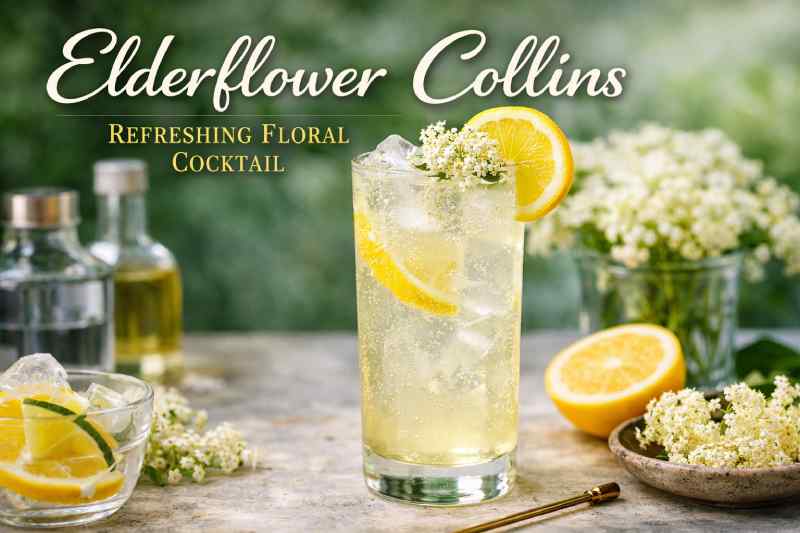
Presentation plays an important role in the enjoyment of the Elderflower Collins. The tall, clear glass showcases the drink’s light, sparkling appearance, while the garnish adds visual interest.
Ice should be clean and plentiful, as it helps maintain the drink’s temperature and dilution. A well-presented Elderflower Collins not only tastes better but also enhances the overall experience.
Why the Elderflower Collins Appeals to Modern Tastes
Modern drinkers often seek beverages that are lighter, more natural, and less overpowering. The Elderflower Collins aligns perfectly with these preferences. Its use of fresh ingredients and balanced flavours makes it feel both contemporary and timeless.
Additionally, the growing interest in botanical flavours has contributed to its popularity. Elderflower, with its delicate and distinctive aroma, fits seamlessly into this trend.
The drink also appeals to those who appreciate simplicity. It does not rely on elaborate techniques or obscure ingredients, making it accessible without sacrificing quality.
Tips for Perfecting the Elderflower Collins
Creating an exceptional Elderflower Collins requires attention to detail. While the recipe is simple, small adjustments can make a significant difference.
- Use high-quality gin and fresh ingredients
- Balance sweetness and acidity carefully
- Avoid over-stirring to preserve carbonation
- Serve immediately to maintain freshness
- Experiment with proportions to suit personal taste
These considerations ensure that each glass delivers the intended experience.
Common Mistakes to Avoid
Even a straightforward cocktail like the Elderflower Collins can be affected by common errors.
Using too much elderflower can result in an overly sweet drink that lacks balance. Similarly, insufficient lemon juice can make the cocktail taste flat. Poor-quality soda water may diminish the drink’s effervescence.
Another frequent mistake is neglecting presentation. A poorly garnished or diluted drink can detract from the overall enjoyment.
By avoiding these pitfalls, one can consistently produce a well-balanced and visually appealing cocktail.
The Cultural Significance of Elderflower
Elderflower has long been valued in European traditions for its aromatic qualities and culinary versatility. It has been used in syrups, teas, and desserts for centuries. Its inclusion in modern cocktails reflects a renewed appreciation for natural and botanical ingredients.
The Elderflower Collins can therefore be seen as part of a broader movement towards more refined and nature-inspired beverages.
FAQs
What does an Elderflower Collins taste like?
The Elderflower Collins has a light, refreshing flavour with floral sweetness, citrus brightness, and a crisp, fizzy finish. It is well balanced and not overly strong.
Can I make an Elderflower Collins without alcohol?
Yes, you can create a non-alcoholic version by using elderflower cordial, fresh lemon juice, and soda water, optionally with a botanical alcohol-free spirit.
Which gin works best for an Elderflower Collins?
A London dry gin is a reliable choice, but floral or citrus-forward gins can enhance the drink’s aromatic qualities depending on personal preference.
Conclusion
The Elderflower Collins stands as a perfect example of how a classic cocktail can be reimagined for modern tastes. By introducing the gentle, floral essence of elderflower into the traditional Collins framework, it creates a drink that is both familiar and refreshingly new.
Its appeal lies in its balance, simplicity, and elegance. It is easy to prepare, yet sophisticated in flavour, making it suitable for a wide range of occasions. Whether enjoyed on a warm afternoon or served as a welcoming drink at a gathering, it consistently delivers a pleasing and memorable experience.
As the appreciation for botanical and natural flavours continues to grow, the Elderflower Collins is likely to remain a favourite among both casual drinkers and cocktail enthusiasts. It is more than just a drink; it is a celebration of subtlety, freshness, and timeless craftsmanship.