Ellen Anderton is quickly becoming a notable name in the world of contemporary textile design. Known for her intricate embroidery, sculptural textiles, and environmentally inspired artwork, she represents a new generation of artists who merge traditional craftsmanship with modern innovation. Her work is not only visually striking but also deeply meaningful, often addressing themes such as climate change, inclusivity, and the human relationship with nature.
Early Life and Creative Foundations
The artistic journey of Ellen Anderton began with a strong curiosity about materials, textures, and visual storytelling. Like many textile artists, her interest in fabric and thread developed at a young age, where she experimented with colours, patterns, and handmade designs.
Growing up in the United Kingdom, she was surrounded by a culture that values both heritage craft and modern design. This combination played a key role in shaping her perspective. Her early exposure to art was not limited to traditional methods; she showed a willingness to explore and challenge boundaries from the beginning.
This foundation helped her develop a unique voice—one that would later define her work as both experimental and deeply personal.
Academic Journey and Professional Training
A significant turning point in Ellen Anderton’s career came when she pursued higher education in textile design. She studied at Nottingham Trent University, one of the UK’s leading institutions for creative disciplines. There, she refined her technical skills and explored the conceptual side of art.
During her academic years, she gained experience in:
- Digital embroidery techniques
- Surface design
- Fabric manipulation
- Mixed media applications
Her studies allowed her to combine traditional handcraft with advanced digital tools. This blend became a defining feature of her artistic identity. Graduating with first-class honours, she demonstrated both technical excellence and strong conceptual thinking.
It was during this period that Ellen Anderton began to develop her signature approach—creating pieces that are not only visually compelling but also physically engaging.
Artistic Style and Visual Language
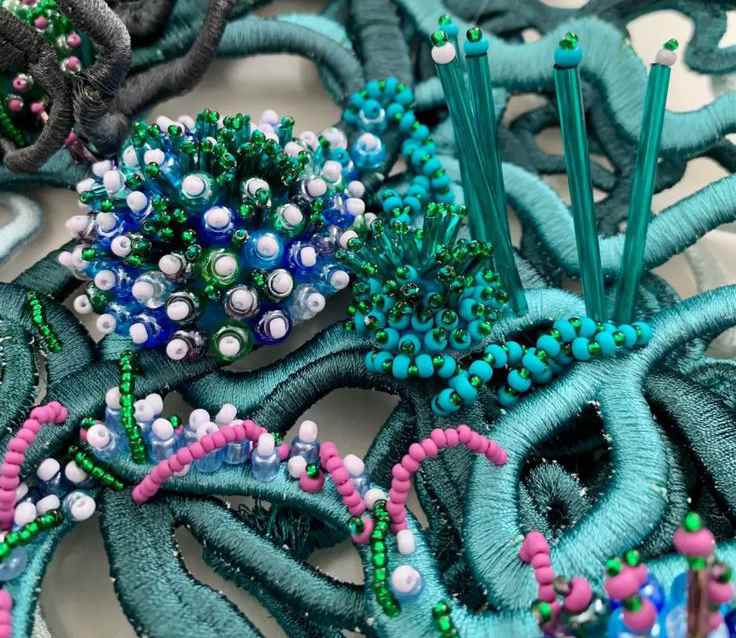
One of the most striking aspects of Ellen Anderton’s work is her ability to transform flat textiles into three-dimensional forms. Her embroidery goes beyond decoration; it becomes sculptural, immersive, and expressive.
Use of Texture and Depth
Texture plays a central role in her creations. Rather than relying on flat patterns, she builds layers using thread, fabric, and embellishments. This results in artwork that feels alive, almost organic in structure.
Her pieces often include:
- Raised embroidery surfaces
- Layered stitching techniques
- Beads and additional materials
- Complex thread patterns
These elements combine to create depth and movement, making each piece visually dynamic.
Inspiration from Nature
Nature is a recurring theme in her work, particularly marine environments. Coral reefs, underwater ecosystems, and ocean textures frequently appear as inspiration.
Through her art, Ellen Anderton captures:
- The delicate beauty of coral structures
- The fluidity of underwater life
- The fragility of natural ecosystems
Her work often reflects both admiration and concern, highlighting environmental changes while celebrating natural forms.
Environmental Awareness in Her Work
A defining feature of Ellen Anderton’s artistic practice is her commitment to environmental themes. Her work often addresses the impact of climate change, particularly on marine ecosystems.
Coral Bleaching and Ocean Health
One of her most recognised projects explored coral bleaching—a phenomenon caused by rising ocean temperatures. Through intricate embroidery, she depicted both healthy and damaged coral structures.
This contrast serves as a visual reminder of environmental decline. By translating scientific and ecological concerns into textile form, she makes these issues more accessible and emotionally engaging.
Art as a Medium for Awareness
Rather than presenting data or statistics, Ellen Anderton uses visual storytelling. Her work invites viewers to connect emotionally with environmental issues.
This approach is effective because:
- It simplifies complex topics
- It encourages reflection
- It creates a lasting impression
Her art becomes a bridge between science and human experience, making environmental concerns more relatable.
Inclusivity and Accessibility in Textile Art
Another important aspect of Ellen Anderton’s work is her focus on inclusivity. She aims to create art that can be experienced not only visually but also through touch.
Tactile Engagement
Her use of raised surfaces and textured elements allows viewers to physically interact with her pieces. This is particularly meaningful for individuals with visual impairments.
By designing tactile artworks, she challenges traditional ideas about how art should be experienced. She demonstrates that art can be inclusive without compromising creativity.
Personal Influence
This commitment to accessibility is influenced by her personal experiences and awareness of visual impairment within her family. It adds a deeply human dimension to her work.
Ellen Anderton does not treat inclusivity as an afterthought—it is a core part of her artistic philosophy.
Techniques and Materials
The technical process behind Ellen Anderton’s work is both complex and innovative. She combines digital precision with handmade detail, resulting in pieces that are both structured and expressive.
Digital Embroidery
She often begins with digital embroidery, using specialised machines to create base patterns. This allows for:
- Precision in design
- Consistency in structure
- Efficient layering
Digital tools provide a foundation, but they are only the starting point.
Hand Stitching and Finishing
After the initial stage, she enhances each piece by hand. This includes:
- Adding intricate details
- Creating texture through stitching
- Incorporating beads and embellishments
This combination of machine and handwork creates a balance between control and creativity.
Mixed Media Approach
Her willingness to experiment with materials sets her apart. She does not limit herself to traditional textiles. Instead, she incorporates various elements to achieve the desired effect.
This approach allows Ellen Anderton to push the boundaries of textile art, transforming it into a multidisciplinary practice.
Recognition and Achievements
Ellen Anderton gained wider recognition when her work was featured in prestigious embroidery competitions. One of her most notable achievements was being awarded third place in a respected international embroidery prize in 2022.
This recognition highlighted:
- Her technical skill
- Her innovative approach
- Her ability to convey meaningful themes
Such achievements have helped establish her as a promising talent in the textile art community.
Professional Development and Future Potential
Following her academic success, Ellen Anderton has continued to develop her career as a textile artist and designer. She has explored opportunities in both creative practice and education.
Teaching and Knowledge Sharing
In addition to creating art, she has shown an interest in teaching. Sharing knowledge and inspiring others is an important part of her journey.
By teaching, she contributes to the next generation of designers, encouraging them to explore both traditional and modern techniques.
Expanding Creative Horizons
As her career progresses, there is significant potential for Ellen Anderton to expand into:
- Exhibitions and galleries
- Collaborative projects
- Sustainable design initiatives
Her work already demonstrates the versatility needed to succeed in multiple areas of the creative industry.
Why Her Work Matters Today
In today’s world, art is often expected to do more than simply look appealing. It is increasingly seen as a tool for communication, awareness, and change.
Ellen Anderton’s work aligns perfectly with this shift.
Bridging Art and Purpose
She successfully combines:
- Aesthetic beauty
- Technical innovation
- Social and environmental awareness
This combination makes her work relevant and impactful.
Inspiring Modern Audiences
Modern audiences are drawn to art that tells a story and reflects real-world issues. Her work resonates because it is both visually engaging and intellectually meaningful.
Ellen Anderton represents a new wave of artists who are not afraid to address important topics through their work.
FAQs
What is Ellen Anderton known for?
Ellen Anderton is known for her 3D textile artworks and embroidery designs, particularly those inspired by marine environments and environmental themes.
Where did Ellen Anderton study?
She studied Textile Design at Nottingham Trent University, where she developed both technical and conceptual skills.
What themes are common in her work?
Her work often focuses on nature, ocean ecosystems, climate change, and inclusivity in art.
What makes her embroidery unique?
Her embroidery stands out due to its sculptural quality, layered textures, and combination of digital and hand techniques.
Does she focus on accessibility in art?
Yes, she creates tactile artworks that can be experienced through touch, making her work more inclusive.
Conclusion
Ellen Anderton is an exciting and emerging figure in contemporary textile art. Her ability to merge traditional embroidery with modern technology, while addressing important environmental and social themes, sets her apart from many of her peers.