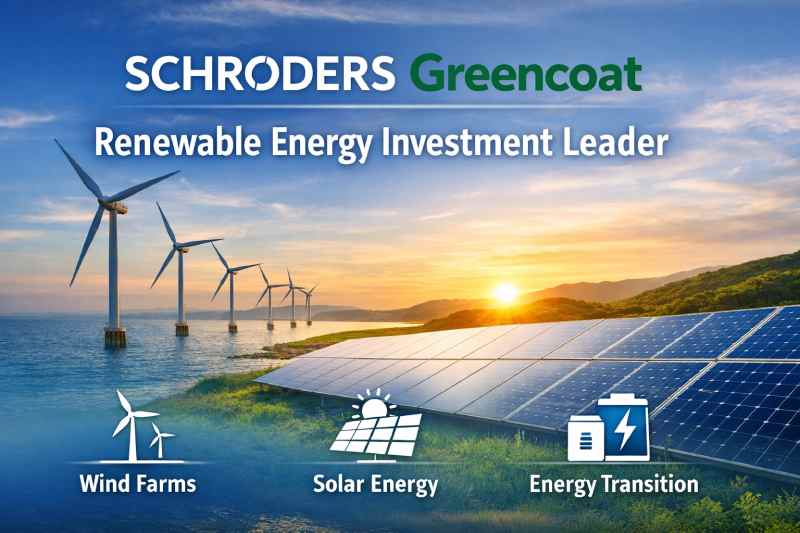
The global transition to cleaner energy has accelerated rapidly over the past decade, creating new opportunities for investors and infrastructure developers. Among the organisations at the forefront of this transformation is Schroders Greencoat, a specialised investment manager focused on renewable energy infrastructure and energy transition assets. The firm has built a strong reputation for managing wind, solar, and other renewable energy projects while delivering stable returns for long-term investors.
As governments around the world push for net-zero carbon targets and energy security becomes an increasingly urgent concern, renewable infrastructure has become one of the most important investment sectors of the modern economy. Within this evolving landscape, Schroders Greencoat has emerged as a major player helping to finance and manage the infrastructure needed to support a cleaner energy system.
Understanding Schroders Greencoat
Schroders Greencoat is a renewable energy infrastructure investment manager that operates as part of Schroders Capital, the private markets division of the global asset management company Schroders. The organisation specialises in investing in renewable energy assets such as wind farms, solar parks, and other infrastructure that contributes to the global transition away from fossil fuels.
The company manages investments on behalf of institutional investors including pension funds, insurance companies, and sovereign wealth funds. Its focus is on acquiring and managing operational renewable energy assets that generate consistent revenue through electricity sales and long-term power agreements.
By combining investment expertise with operational management of renewable energy projects, the firm provides investors with access to infrastructure assets that offer long-term income and inflation-linked returns.
The Origins and Evolution of the Business
The story of Schroders Greencoat began in 2009 with the founding of Greencoat Capital in London. At the time, renewable energy infrastructure was still considered a niche investment sector, yet the founders recognised the potential for large-scale capital deployment in clean energy projects.
Over the years, Greencoat Capital built a strong reputation for developing and managing renewable infrastructure funds, particularly in the wind energy sector. Its flagship investment vehicle, Greencoat UK Wind, became one of the most prominent renewable energy funds listed on the London Stock Exchange.
The business entered a new phase when global asset manager Schroders acquired a majority stake in the company. Following the acquisition, the firm was rebranded as Schroders Greencoat, combining Greencoat’s renewable infrastructure expertise with Schroders’ global investment capabilities.
This partnership significantly expanded the company’s reach, allowing it to attract larger institutional investors and broaden its investment footprint across Europe and North America.
Investment Strategy and Core Focus
The primary goal of Schroders Greencoat is to generate stable and predictable returns for investors by investing in renewable energy infrastructure with long-term operational performance.
Its strategy is built around several key principles.
Long-Term Infrastructure Assets
Renewable energy projects often operate for decades, making them well suited for investors seeking stable income streams. The firm focuses on acquiring assets that have long operational lifespans and predictable cash flows.
Operational Renewable Projects
Rather than investing heavily in early-stage development, the company often acquires projects that are already producing electricity. This approach reduces construction risk and ensures immediate revenue generation.
Diversification Across Technologies
Although wind energy has historically been the largest area of investment, the firm has expanded into solar power, energy storage, and other energy transition infrastructure.
Geographic Expansion
While the United Kingdom remains an important market, the company has broadened its investments across Europe and the United States.
This diversified strategy helps ensure resilience against market fluctuations and regulatory changes.
Wind Energy Investments
Wind energy forms the backbone of many renewable infrastructure portfolios, and it remains a key area of focus for Schroders Greencoat.
Wind farms convert natural wind resources into electricity that is supplied to national power grids. Because wind energy production has become increasingly efficient and cost-effective, it is now one of the most competitive forms of renewable electricity generation.
The firm has invested in numerous wind projects across the UK and Europe, both onshore and offshore. These projects contribute significantly to national renewable energy targets and help reduce dependence on fossil fuels.
Wind assets are particularly attractive to investors because they often operate under long-term power purchase agreements that provide predictable income over many years.
Solar Energy and Expanding Renewable Technologies
Although wind energy has historically dominated renewable infrastructure portfolios, solar energy has rapidly grown in importance. Solar photovoltaic projects generate electricity by converting sunlight into power using photovoltaic panels.
Recognising the growing role of solar power in the global energy mix, Schroders Greencoat has expanded its investments into solar energy infrastructure across multiple markets.
Solar projects offer several advantages, including lower operational costs and the ability to deploy projects at a wide range of scales, from large solar parks to distributed energy systems.
Beyond wind and solar, the company has also explored other energy transition investments such as battery storage systems and renewable heat infrastructure.
These technologies are essential for supporting the integration of renewable energy into electricity grids, particularly as intermittent energy sources like wind and solar become more dominant.
The Importance of Renewable Infrastructure
Renewable infrastructure investment has become increasingly important for both environmental and economic reasons.
First, renewable energy projects reduce greenhouse gas emissions by replacing fossil fuel power generation. This contributes directly to global climate targets and national decarbonisation strategies.
Second, renewable infrastructure improves energy security by reducing reliance on imported fossil fuels. Many countries are now prioritising domestic renewable energy production as a way to protect against energy supply disruptions.
Third, renewable energy investments create jobs and stimulate economic development through the construction and maintenance of energy infrastructure.
Organisations like Schroders Greencoat play a critical role in financing these projects, bridging the gap between capital markets and large-scale energy infrastructure development.
Investment Vehicles and Funds
Renewable infrastructure investments are typically managed through specialised funds or listed investment companies.
These vehicles allow institutional and retail investors to gain exposure to renewable energy projects without directly owning infrastructure assets themselves.
Funds managed by Schroders Greencoat typically generate returns through electricity sales, government-backed renewable energy incentives, and long-term energy supply agreements.
Because many renewable energy contracts include inflation-linked revenue mechanisms, these investments can provide protection against rising inflation.
This combination of stable income and long-term asset value makes renewable infrastructure particularly attractive for pension funds and long-term investors.
Global Expansion and Market Presence
Although the United Kingdom remains a central market for the firm, Schroders Greencoat has expanded its operations internationally.
Europe has become a major focus due to strong policy support for renewable energy and ambitious climate goals. Countries across the continent are rapidly expanding renewable electricity capacity, creating significant investment opportunities.
The United States also represents a growing market for renewable infrastructure, particularly as federal and state governments introduce new incentives for clean energy development.
By investing across multiple regions, the firm can take advantage of diverse regulatory environments and renewable resource conditions.
Challenges in the Renewable Energy Sector
Despite strong growth, the renewable infrastructure sector faces several challenges that investors must consider.
Interest Rate Pressure
Higher interest rates can affect infrastructure valuations, as renewable projects often rely on long-term financing.
Energy Price Volatility
Electricity prices fluctuate based on supply and demand conditions, which can influence revenue from energy generation.
Regulatory Changes
Government policies and subsidy schemes play a major role in renewable energy economics, meaning regulatory shifts can impact investment returns.
Despite these challenges, long-term demand for renewable energy infrastructure remains strong as countries accelerate their decarbonisation plans.
The Role of Institutional Investors
Institutional investors have become increasingly important in funding renewable infrastructure.
Pension funds, insurance companies, and sovereign wealth funds are particularly attracted to renewable assets because they offer predictable cash flows that match long-term liabilities.
By managing large renewable infrastructure portfolios, Schroders Greencoat provides institutional investors with access to energy transition opportunities that would otherwise be difficult to access directly.
This partnership between asset managers and institutional investors has helped unlock billions of pounds in funding for renewable energy projects.
Sustainability and Environmental Impact
Beyond financial returns, renewable energy infrastructure investments also deliver environmental benefits.
Projects managed by Schroders Greencoat contribute to the reduction of carbon emissions by replacing electricity generated from fossil fuels.
Wind and solar energy projects produce electricity without direct greenhouse gas emissions, helping countries move closer to their climate targets.
In addition, renewable infrastructure can improve air quality, reduce environmental pollution, and support sustainable economic growth.
For many investors, the environmental impact of these investments is just as important as the financial returns they generate.
The Future of Renewable Infrastructure
The renewable energy sector is expected to grow dramatically over the coming decades. Governments worldwide are investing heavily in renewable infrastructure as part of broader energy transition strategies.
Wind power, solar energy, battery storage, and other clean technologies are likely to play an increasingly important role in global electricity systems.
Within this rapidly evolving market, organisations such as Schroders Greencoat are positioned to remain key players by providing capital and expertise to support the development and operation of renewable infrastructure.
As technology improves and energy markets evolve, renewable infrastructure investments are likely to become even more central to global financial markets.
FAQs
What does Schroders Greencoat specialise in?
Schroders Greencoat specialises in investing in renewable energy infrastructure such as wind farms, solar energy projects, and energy transition assets that generate long-term income for investors.
Is Schroders Greencoat part of Schroders?
Yes. Schroders Greencoat operates as part of Schroders Capital, the private markets division of the global asset management company Schroders.
Why do investors invest in renewable infrastructure?
Renewable infrastructure offers stable income, long-term contracts, and potential protection against inflation, making it attractive for institutional investors such as pension funds.
What types of renewable energy projects does the firm invest in?
The firm invests primarily in wind and solar energy projects, while also exploring technologies such as battery storage and other energy transition infrastructure.
How does renewable infrastructure generate revenue?
Renewable energy projects earn revenue through electricity sales, long-term power purchase agreements, and government-supported renewable energy schemes.
Conclusion
Schroders Greencoat has become one of the most influential investment managers in the renewable energy infrastructure sector. Through its expertise in managing wind, solar, and energy transition assets, the firm has helped channel significant investment into projects that support the global shift toward clean energy.
As governments and investors continue to prioritise sustainability and energy security, renewable infrastructure will remain a key component of the global energy system. With its established track record and growing international presence, Schroders Greencoat is likely to play an increasingly important role in financing the renewable energy projects that will power the future.