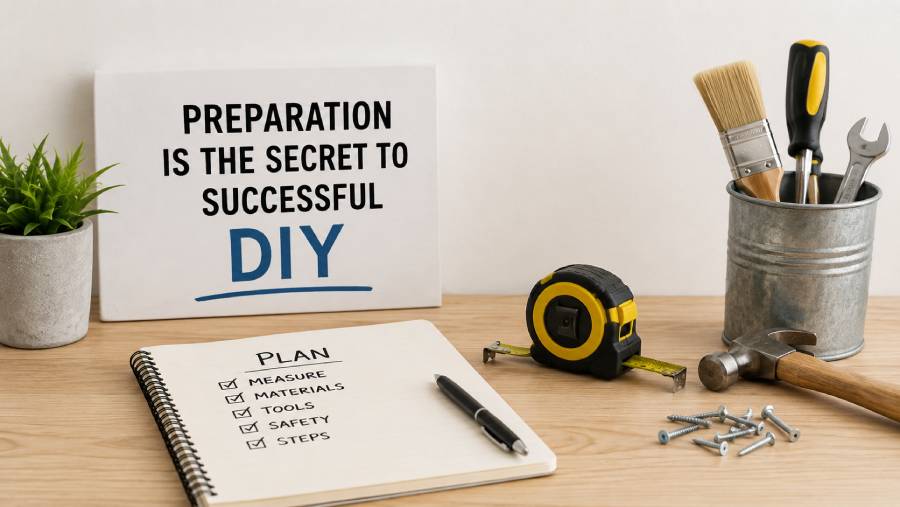
DIY projects can be exciting opportunities to improve your home, express creativity, and develop new skills. Whether you are building furniture, updating a room, or making small repairs, the results can be incredibly rewarding. However, many DIY attempts become stressful because people rush into the work without proper preparation. Taking time to plan, organize, and gather the right resources is often the difference between a frustrating experience and a successful project.
Planning Creates a Clear Path Forward
Every successful DIY project starts with a clear plan. Before picking up any tools, it is important to understand what you want to achieve, how long the project may take, and what steps are involved. A detailed plan helps prevent mistakes and ensures you are prepared for each stage of the process.
Consider creating a checklist of materials, tools, and tasks before beginning. Measuring spaces accurately, reviewing instructions, and thinking through potential challenges can save valuable time later. Good preparation allows you to work confidently instead of constantly stopping to solve unexpected problems.
Choosing the Right Materials Matters
The quality of your materials can have a major impact on the final result. Using reliable fixings, hardware, and supplies helps create projects that are stronger, safer, and more durable. Small details, such as selecting the correct screws, nails, or fasteners, can make a significant difference in how well your finished work holds together.
Organizing your supplies before starting also makes the process smoother. Having everything ready means you can focus on completing the project rather than making repeated trips to find missing items. Trusted suppliers such as Tradefix Direct can help DIY enthusiasts access the products they need to complete jobs effectively.
Preparation Helps Avoid Costly Mistakes
One of the biggest advantages of planning ahead is reducing the chance of expensive errors. A rushed approach can lead to wasted materials, incorrect measurements, or damage that requires additional repairs. Spending extra time preparing allows you to identify possible issues before they become bigger problems.
For example, checking measurements twice before cutting materials or confirming that you have the right tools available can prevent unnecessary setbacks. Preparation may feel like it slows down the process, but it often helps you finish faster by avoiding interruptions.
Safety Starts Before the Work Begins
A successful DIY project should always include safety planning. Wearing appropriate protective equipment, understanding how to use tools correctly, and creating a clean workspace are essential steps. A cluttered or poorly prepared area can increase the risk of accidents.
Before starting, make sure your workspace has enough lighting, your tools are in good condition, and you understand the instructions for any equipment you are using. Good preparation protects both you and the quality of your work.
Confidence Comes From Being Ready
Preparation does more than improve practical results; it also builds confidence. When you know you have the right tools, materials, and plan, you can approach your project with a more positive mindset. This confidence encourages you to take on more challenging tasks and continue improving your DIY abilities.
Many successful DIYers develop their skills through careful preparation and learning from each project. Every completed job becomes an opportunity to gain experience and discover better ways to work.
Conclusion
Preparation is the foundation of successful DIY. While creativity and effort are important, careful planning, quality materials, and attention to detail help ensure better outcomes. By taking time to prepare before starting, you can reduce stress, avoid mistakes, and enjoy the satisfaction of completing a project that lasts.