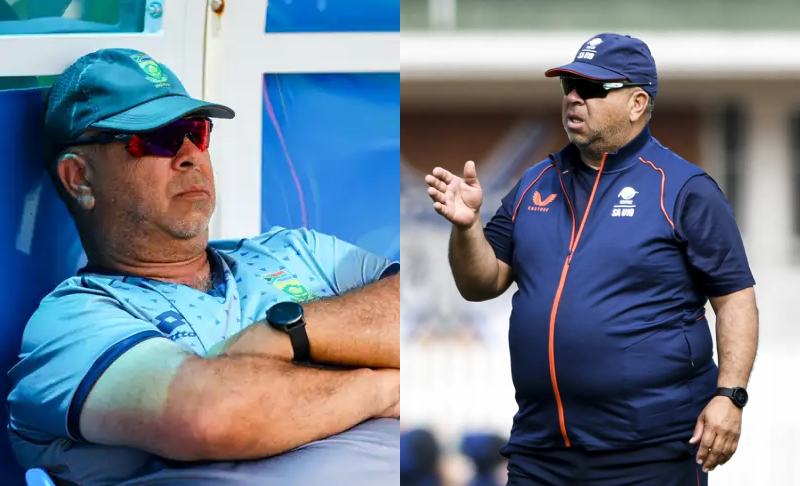
There are coaches who manage teams, and then there are coaches who reshape an entire cricketing culture. Shukri Conrad belongs firmly in the second category. In a relatively short space of time, the man from the Cape Flats has gone from being a respected behind-the-scenes operator to one of the most talked-about figures in world cricket. He did it by trusting his gut, backing players nobody else would, and carrying a family legacy that stretches back generations. To understand why his story resonates so deeply, you have to start where he started: in a modest Lansdowne home, with a father who would have walked through fire for the game.
Who Is Shukri Conrad, Really?
Shukri Conrad was born on 2 April 1967 in Lansdowne, a suburb tucked into Cape Town’s Cape Flats. That detail matters more than it might appear at first glance, because under apartheid the Cape Flats was designated as a residential zone for so-called Coloured South Africans, and that geography shaped everything about how Conrad encountered cricket. He didn’t learn the game in pristine academies with manicured nets. He learned it on dusty streets, using drain covers as wickets and his imagination as a coach. That grounding gave him something a lot of polished cricketing minds never develop, which is an instinct for the human side of the sport. He understands what it takes for a kid with no resources to fall in love with cricket, and that empathy has become one of his sharpest coaching tools.
The Cricketing Bloodline Behind the Man
If you want to know why cricket runs so deep in Conrad, you simply have to look at his family tree. This wasn’t a household where cricket was a hobby; it was practically the family language. His father played, his grandfather played, and even his uncles on his mother’s side carried the game in their bones. Conrad himself has spoken about how the sport was woven into the very rhythm of his neighbourhood, where families gathered, aunties watched from the stoep, and every weekend revolved around the next match. When a person grows up surrounded by that kind of devotion, the game stops being something you choose and becomes something you simply are. That inheritance is the foundation on which his entire career has been built.
Dickie Conrad: The Father Who Started It All
You cannot tell the Shukri Conrad story without telling the Dickie Conrad story first, because the two are inseparable. Sedick Conrad, known to everyone simply as “Dickie” or “Ta Dickie,” was a genuinely gifted cricketer in his own right, an opening batsman who starred in the SACOS league and earned a reputation as one of the most technically correct batters of colour ever to take guard. He was a late bloomer who only started club cricket at eighteen, having previously preferred swimming at Kalk Bay over donning the whites, but once the bat became more important than the swimming trunks, there was no looking back. Dickie is also remembered for a quietly defiant act during the apartheid era, when he broke the law forbidding people of colour from entering cricket establishments by sneaking into Newlands to watch a match, an act that got him banned at the time but never dimmed his love for the game. He was, by his son’s own account, both his biggest fan and his biggest critic, and that combination clearly forged something durable in Shukri.
A Father’s Dream Fulfilled at Last
When Shukri was appointed Proteas Test coach, the first person he wanted to tell was his father, and the moment has become one of the most touching anecdotes in recent South African cricket. Dickie Conrad reportedly broke down in tears when he heard the news, overwhelmed that his son had reached the pinnacle of a game they had both given their lives to. There is a family motto that Shukri loves to repeat, the idea that the game will look after you if you look after it, and you can hear in that sentiment the influence of a father who treated cricket with something close to reverence. Dickie carried a simple dream for his boy, telling him plainly that he just wanted to see him beat Australia one day. The poignancy of that wish would only become fully apparent later, when life and timing conspired in the most bittersweet way imaginable.
The Playing Years and the Quiet Pivot to Coaching
Before he was a coach, Shukri Conrad was a cricketer, though his playing career unfolded in the fractured landscape of segregated South African sport. He made his debut for Western Province in December 1985, aged just eighteen, during a period when matches in the non-white competitions were not even classed as first-class, with that recognition only granted retrospectively. As a right-handed all-rounder, he had his moments, including a memorable final outing in the competition where he posted a half-century and picked up a useful bowling haul. But the senior ranks of integrated provincial cricket never quite opened up for him as a player, and rather than dwell on what might have been, Conrad pivoted toward coaching. It turned out to be the smartest move he ever made, because the qualities that defined him, his cricketing brain, his people skills, and his refusal to follow the crowd, were always better suited to the dugout than the crease.
Building a Coaching Résumé Brick by Brick
Conrad didn’t parachute into the Proteas job; he earned it over decades of unglamorous, foundational work. He cut his teeth in the domestic system, coaching both the Cape Cobras and the Highveld Lions during South Africa’s franchise era, and collected four titles along the way, three of them in white-ball formats. He also spent time abroad, taking charge of Uganda’s national side around 2010 and 2011, an experience that broadened his understanding of cricket beyond the well-resourced South African setup. Perhaps most importantly, he joined the Cricket South Africa National Academy and later worked extensively with the SA Under-19s, which kept him plugged into the needs of the modern young player. By the time the senior national job came calling, there was almost nobody in the country with a more complete grasp of the entire cricketing pipeline, from raw schoolboy talent to seasoned international.
The Bold Calls That Defined His Reign
What truly separates Conrad from the pack is his willingness to make decisions that invite criticism. When he took over the Test side, he immediately made two seismic calls: he installed Temba Bavuma as captain, stripping Dean Elgar of the role, and he recalled Aiden Markram from what many had assumed was Test cricket exile. Plenty of pundits raised eyebrows. Plenty more were ready to pounce if it went wrong. But Conrad has a knack for backing his convictions and being proven right, and both of those decisions became cornerstones of the team’s success. Markram in particular repaid that faith in spectacular fashion. Conrad himself described these moves as “simple decisions,” which tells you everything about a man who sees clearly while others second-guess. His left-field choices have repeatedly been met with disdain right up until the moment they pay off, which is the surest sign of a coach operating on a different wavelength.
Conquering the World Test Championship
The crowning achievement of Conrad’s tenure came at the most sacred venue in the sport. Under his guidance, South Africa stitched together a remarkable run of form, winning a long sequence of Tests and qualifying for the 2023 to 2025 World Test Championship Final at Lord’s. Once there, against the old enemy Australia, the Proteas pulled off a famous victory, with Temba Bavuma lifting the ICC mace and a nation finally shedding its long-standing reputation for stumbling at the final hurdle. For a team and a fanbase that had endured decades of near-misses and painful chokes, this was catharsis on the grandest scale. Conrad had taken a side many considered to be in transition and turned them, against the odds, into the best red-ball team in the world. It was the kind of triumph that rewrites legacies, and it placed him firmly among the most accomplished coaches South Africa has ever produced.
A Bittersweet Triumph at Lord’s
Here is where the story turns deeply human. Just two months before that glorious afternoon at Lord’s, Dickie Conrad passed away in March 2025. The father who had wept with joy at his son’s appointment, the man whose lifelong wish was to see Shukri beat Australia, did not live to witness the moment in person. When the Proteas lifted the mace, the symbolism was almost too perfect, falling as it did around Father’s Day, and it was impossible not to feel that Dickie was somehow present in spirit, smiling down from above. Conrad took a quiet moment of reflection during the emotional peak of the match, and his thoughts were clearly with the man who had shaped him. The grief made the victory heavier and more meaningful all at once. In fulfilling his father’s dream just weeks after losing him, Shukri turned a sporting result into something approaching a tribute.
Expanding His Empire to All Three Formats
Success, as it tends to, brought more responsibility. In a significant restructuring of South African cricket, Conrad was handed control of the white-ball sides in addition to his Test duties, expanding his role to cover all three formats through to the home ODI World Cup in 2027. He succeeded Rob Walter, who had resigned, and the decision effectively ended South Africa’s experiment with splitting the head coaching role. It was a strong vote of confidence, built on the foundation he had laid in the Test arena, and it reflected the belief within Cricket South Africa that his identity-driven approach could translate across formats. Conrad embraced the challenge, expressing genuine honour at being trusted to lead the national team in every format, though he has also been candid about the realities of the modern calendar, openly questioning the value of certain understrength series squeezed between major tournaments and franchise leagues.
The Family Man Behind the Coach
For all his cricketing intensity, Conrad is at his core a family man, and the people closest to him keep him grounded. A practising Muslim, he is married to his wife Warda, and the two of them have raised a close-knit family that he speaks about with obvious warmth. His children, Ameera, Azraa, and Saeed, represent the next chapter of a Conrad clan that has cricket flowing through its veins, and you sense that the values Dickie instilled in Shukri are the same ones being passed along again. He has often described his wife as one of his biggest supporters, sitting right alongside his late father in that regard, and it is clear that the stability of home life has been a quiet engine behind his professional risk-taking. When you watch Conrad make a brave selection call without flinching, it helps to remember that he has a secure base to return to, with Warda, Ameera, Azraa, and Saeed reminding him of what actually matters.
Why His Story Matters Beyond the Boundary
Conrad’s significance reaches well past wins and losses, because he represents a powerful idea about possibility. He is acutely aware that a kid from Lansdowne, or Mitchells Plain, or Wynberg, or Grassy Park can grow up to wear the green and gold and stand on a balcony at Lord’s. He talks passionately about giving young South Africans a clear line of sight from a dusty backstreet to the summit of the sport, and about celebrating local heroes so that the next generation idolises Kagiso Rabada and Ryan Rickelton rather than only foreign stars. In that sense, his coaching is also a kind of social mission, rooted in the inequalities he witnessed firsthand under apartheid. He carries the memory of his father’s quiet defiance at Newlands and channels it into building pathways for players who, in another era, might never have been given a chance.
FAQs
Who is Shukri Conrad’s father, Dickie Conrad?
Dickie Conrad (full name Sedick Conrad) was a hugely talented opening batsman who shone in the SACOS league and was widely regarded as one of the most technically correct batters of colour of his generation. He’s also remembered for defying apartheid-era restrictions by sneaking into Newlands, and he remained Shukri’s biggest fan and harshest critic until his passing in March 2025.
Did Shukri Conrad win the World Test Championship?
Yes. Shukri Conrad coached South Africa to victory in the 2023–2025 World Test Championship Final at Lord’s, beating Australia to lift the ICC mace. It was a landmark moment that finally shed the Proteas’ long-standing reputation for faltering on the biggest stage.
Is Shukri Conrad married and does he have children?
Shukri Conrad is married to his wife, Warda, and the couple have three children: Ameera, Azraa, and Saeed. A practising Muslim, he often credits his close-knit family as the steady foundation behind his bold coaching decisions.
Conclusion
Shukri Conrad’s journey is one of those rare sporting tales that satisfies on every level. It has the technical brilliance of a coaching mastermind who isn’t afraid to zig when everyone else zags, the emotional weight of a son fulfilling his late father’s dream, and the broader social resonance of a man lifting others up as he climbs. The thread running through all of it is family, and specifically the towering influence of Dickie Conrad, whose love for the game became the inheritance that powered everything his son achieved. From the streets of the Cape Flats to the mace at Lord’s, Conrad has proven that imagination, conviction, and a deep sense of where you come from can take you further than any amount of privilege. With his role now spanning all three formats and a World Cup on the horizon in 2027, his story is far from finished. But whatever comes next, he has already secured his place as a coach who didn’t just win matches; he changed what South African cricket believes about itself, and he did it while honouring the father, the wife in Warda, and the children in Ameera, Azraa, and Saeed who make the whole pursuit worthwhile.