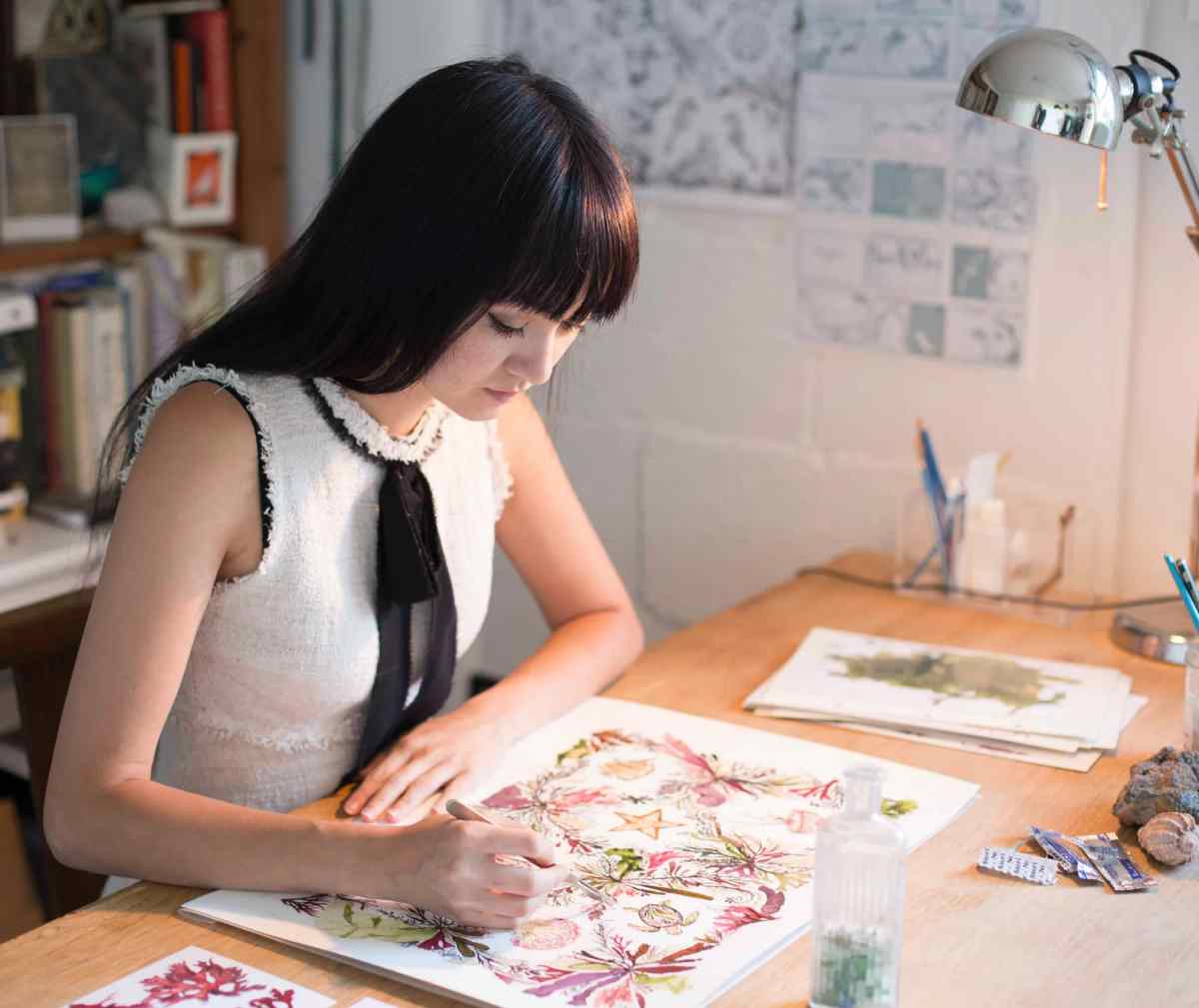
In a world increasingly driven by digital speed and mass production, helen ahpornsiri stands out for her devotion to slowness, precision, and the quiet beauty of the natural world. A British artist celebrated for her intricate botanical illustrations, helen ahpornsiri creates striking images of animals and landscapes using carefully arranged plant specimens rather than ink or paint. Her work is instantly recognisable, combining scientific curiosity with poetic sensitivity.
Early Life and Influences
Helen ahpornsiri grew up in the United Kingdom with a strong connection to the outdoors. From an early age, she developed an interest in wildlife, drawing, and collecting small treasures from nature. Leaves, petals, seed heads, and grasses were not merely background scenery; they became materials, textures, and potential forms.
Her childhood fascination with both art and science shaped her later practice. Unlike artists who draw inspiration solely from visual beauty, helen ahpornsiri’s work reveals a deep engagement with ecology and the natural sciences. The structure of a feather, the curve of a fox’s spine, or the layered complexity of a forest floor all become part of her visual vocabulary.
After formal art training, she began experimenting with collage and alternative materials. This experimentation ultimately led her to develop the distinctive botanical collage technique for which she is now widely known.
The Signature Technique of Helen Ahpornsiri
Drawing Without Ink
What makes helen ahpornsiri exceptional is her refusal to rely on traditional drawing materials. Instead of pen, graphite, or paint, she constructs images entirely from pressed flowers, leaves, grasses, and other plant fragments.
Each piece begins with careful observation. She studies her subject — often birds, mammals, or woodland scenes — in detail. Rather than sketching directly onto paper, helen ahpornsiri gathers and presses botanical elements that match the tonal and textural qualities required for the final image.
A feather might be composed of slender grass blades. The shadow beneath an animal’s body may be created from darker dried leaves. Subtle shifts in colour are achieved through variations in petals and seed heads.
The result is an image that, at first glance, appears drawn in ink. On closer inspection, the viewer realises it is entirely constructed from natural materials.
Precision and Patience
The process demands extraordinary patience. Each plant fragment must be carefully selected, trimmed, and positioned with fine tools. There is little room for error. Once placed, a delicate petal cannot easily be repositioned without damage.
Helen ahpornsiri’s practice reflects a discipline more commonly associated with scientific illustration. Her compositions are anatomically accurate and structurally coherent. Yet they also possess a softness and warmth that transcend strict documentation.
The combination of scientific precision and artistic interpretation gives her work both credibility and emotional resonance.
Nature as Material and Subject
Sustainability and Ethical Sourcing
A key aspect of helen ahpornsiri’s practice is sustainability. She does not harvest rare species or damage ecosystems in pursuit of art. Instead, she uses responsibly sourced or foraged plant materials, often collected from gardens or fallen natural debris.
This mindful approach reinforces the themes embedded within her art. The materials themselves speak to fragility, impermanence, and ecological balance.
By transforming discarded or seasonal plant matter into lasting artwork, helen ahpornsiri highlights the cyclical nature of life and decay.
A Dialogue Between Art and Ecology
Her work encourages viewers to look more closely at the natural world. When one realises that a detailed fox or owl is constructed from leaves and grasses, it becomes impossible not to reconsider the intricacy of nature’s own designs.
Helen ahpornsiri’s art fosters ecological awareness without overt messaging. Rather than preaching about conservation, she invites contemplation. The delicacy of her materials reminds audiences of nature’s vulnerability.
In an age of climate anxiety and environmental degradation, this quiet reverence carries significant weight.
Publishing and Recognition
Illustrated Books
Helen ahpornsiri’s talent has found a natural home in illustrated publishing. Her artwork has been featured in nature-themed books aimed at both children and adults. These publications often explore wildlife, natural history, and the beauty of ecosystems.
Her ability to merge scientific accuracy with visual elegance makes her particularly well suited to educational contexts. Teachers and parents appreciate the way her images spark curiosity about plants and animals.
Through publishing, helen ahpornsiri’s work reaches audiences far beyond galleries and exhibitions.
Exhibitions and Public Response
Her original artworks have been exhibited in galleries and art spaces across the United Kingdom. Visitors frequently remark on the unexpected detail and the surprise of discovering plant fragments upon close inspection.
This moment of discovery is central to the experience of helen ahpornsiri’s art. What appears at first to be monochrome illustration reveals itself as intricate botanical collage, rewarding attentive viewing.
Critical reception has praised her originality and craftsmanship. In a crowded field of contemporary illustrators, helen ahpornsiri’s technique is genuinely distinctive.
The Aesthetic Language of Helen Ahpornsiri
Monochrome Elegance
Many of helen ahpornsiri’s works appear monochromatic from a distance. She often favours neutral tones — browns, greys, soft greens — derived from dried plant material.
This restrained palette enhances the illusion of ink drawing while preserving the natural character of the materials. It also lends her work a timeless quality, reminiscent of vintage scientific engravings.
Texture and Depth
Unlike flat printed images, helen ahpornsiri’s collages possess subtle texture. Even when reproduced in books, a sense of layered depth remains visible.
The interplay between thin grasses, curled petals, and sturdy leaves creates a tactile dimension. This physicality strengthens the connection between subject and medium.
An owl made from leaves is not merely a representation of nature; it is literally composed of it.
Artistic Philosophy
Slowness in a Fast World
Helen ahpornsiri’s practice embodies slowness. Each piece requires hours, sometimes days, of meticulous assembly. This deliberate pace contrasts sharply with digital illustration, where revisions can be made instantly.
Her commitment to manual craftsmanship speaks to a broader cultural longing for authenticity and tactility. Viewers often describe her work as calming or meditative.
In this sense, helen ahpornsiri’s art functions not only as visual representation but also as quiet resistance against disposable culture.
Bridging Science and Imagination
Another defining aspect of helen ahpornsiri’s philosophy is the blending of scientific observation with imaginative interpretation. While her subjects are anatomically accurate, the medium transforms them into something dreamlike.
The viewer is invited to see animals and landscapes anew. A stag composed of leaves suggests the inseparability of creature and habitat. A bird built from petals appears both fragile and resilient.
Through this interplay, helen ahpornsiri deepens our understanding of ecological interdependence.
Impact on Contemporary Illustration
Helen ahpornsiri has influenced a growing interest in sustainable and nature-based art practices. While few replicate her exact technique, many illustrators cite her work as inspiration for exploring alternative materials.
Her success demonstrates that innovation need not rely on technology. Sometimes originality arises from returning to basic elements and reimagining their possibilities.
By elevating botanical collage to a refined art form, helen ahpornsiri has expanded the boundaries of illustration.
Educational Value and Audience Appeal
Inspiring Young Artists
Teachers frequently use helen ahpornsiri’s work to encourage creative experimentation. Children are fascinated by the idea of drawing with leaves and petals.
Her art offers a practical demonstration of how limitations can inspire creativity. Without traditional drawing tools, new possibilities emerge.
Engaging Adult Viewers
For adult audiences, helen ahpornsiri’s work evokes nostalgia for nature and a desire for reconnection. In urban environments where daily contact with wildlife may be limited, her art serves as a reminder of the intricate ecosystems that sustain life.
The sophistication of her technique ensures that her appeal extends beyond novelty. It is craftsmanship, not gimmickry, that sustains interest.
Challenges of the Medium
Working with organic materials presents unique challenges. Plant fragments fade, curl, or become brittle over time. Helen ahpornsiri must carefully preserve and protect her work to maintain its integrity.
Archival techniques and controlled environments are essential. This fragility mirrors the themes within her art, reinforcing the transient nature of organic life.
Despite these challenges, helen ahpornsiri continues to refine her methods, balancing durability with authenticity.
Frequently Asked Questions About Helen Ahpornsiri
Who is helen ahpornsiri?
Helen ahpornsiri is a British artist known for creating detailed wildlife and botanical illustrations using pressed flowers, leaves, and natural plant materials instead of traditional drawing tools.
What makes helen ahpornsiri’s artwork unique?
Her artwork is distinctive because each image is constructed entirely from real plant fragments, carefully arranged to form animals and landscapes with remarkable precision.
Does helen ahpornsiri use paint or ink?
No. Helen ahpornsiri’s signature technique avoids paint and ink altogether. She relies exclusively on botanical materials to build her compositions.
Where can helen ahpornsiri’s work be seen?
Her artwork appears in illustrated books, exhibitions, and selected gallery spaces within the United Kingdom, as well as in print publications focusing on nature and art.
Is helen ahpornsiri’s art environmentally focused?
Yes. While not overtly political, her art celebrates the natural world and encourages environmental awareness through sustainable materials and ecological themes.
Conclusion
Helen ahpornsiri has established herself as one of the most distinctive voices in contemporary British illustration. Through meticulous botanical collage, she transforms leaves, petals, and grasses into breathtaking images of wildlife and landscapes.
Her work bridges art and science, craftsmanship and imagination, fragility and endurance. In doing so, helen ahpornsiri invites viewers to slow down, look closely, and rediscover the beauty embedded in the natural world.