In the world of infrastructure automation, clarity and consistency are everything. When managing configurations at scale, even small differences in syntax or behaviour can lead to significant consequences. This is where EPP ERB becomes an essential topic for anyone working with Puppet. Whether you are maintaining legacy systems or building modern infrastructure, understanding how these templating systems function—and how they differ—can greatly improve your workflow.
Understanding the Basics of EPP ERB
Before diving into technical comparisons, it is important to understand what the phrase EPP ERB actually represents. It is not a single tool or framework, but rather a comparison between two templating systems used within Puppet:
- EPP (Embedded Puppet) – the modern, Puppet-native templating language
- ERB (Embedded Ruby) – the older, Ruby-based templating approach
When people refer to EPP ERB, they are usually discussing the transition from older Puppet practices to newer, more structured methods.
What is ERB?
The Origins of ERB
ERB, short for Embedded Ruby, is a templating system that allows developers to embed Ruby code within text files. It was widely used in earlier versions of Puppet, especially before Puppet 4 introduced a more integrated alternative.
How ERB Works
ERB templates rely on Ruby syntax. Variables are accessed using instance variables, typically prefixed with an @ symbol. Ruby logic is embedded directly within the template, allowing for loops, conditionals, and complex expressions.
Advantages of ERB
- Flexibility due to full Ruby support
- Familiarity for developers with a Ruby background
- Powerful logic handling within templates
Limitations of ERB
Despite its flexibility, ERB comes with several drawbacks:
- Tight coupling with Ruby, making it less intuitive for Puppet-focused users
- Reduced readability when templates become complex
- Potential security concerns due to unrestricted Ruby execution
These limitations are a key reason why discussions around EPP ERB often focus on moving away from ERB.
What is EPP?
Introduction to EPP
EPP, or Embedded Puppet, was introduced in Puppet 4 as a safer and more consistent templating solution. Unlike ERB, EPP uses Puppet’s own language syntax, making it easier to read and maintain within Puppet manifests.
How EPP Works
EPP templates integrate seamlessly with Puppet code. Variables are declared and passed explicitly, and the syntax aligns closely with Puppet’s declarative style.
Advantages of EPP
- Improved security by limiting arbitrary code execution
- Consistent syntax with Puppet manifests
- Better readability and maintainability
- Explicit parameter handling
Why EPP Replaced ERB
The transition from ERB to EPP reflects a broader shift towards safer, more predictable infrastructure management. In the context of EPP ERB, EPP represents the evolution of best practices in Puppet templating.
Key Differences Between EPP and ERB
Syntax and Language
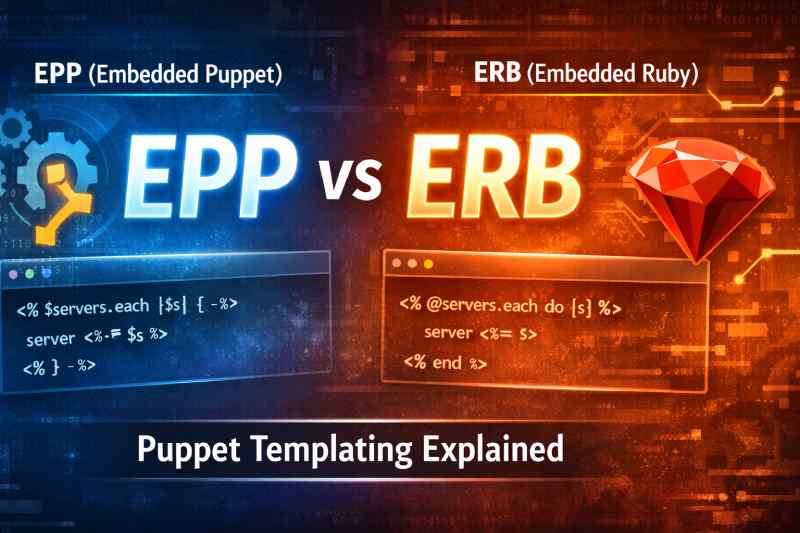
One of the most noticeable differences in EPP ERB is the syntax:
- ERB uses Ruby syntax and instance variables
- EPP uses Puppet syntax and standard variables
This distinction alone can significantly impact how templates are written and understood.
Security Considerations
Security is a major factor when comparing EPP ERB. ERB allows arbitrary Ruby code, which can introduce vulnerabilities if not carefully managed. EPP, on the other hand, restricts execution to Puppet’s controlled environment.
Maintainability
EPP templates are generally easier to maintain because they follow the same conventions as Puppet code. This consistency reduces cognitive load and makes collaboration smoother.
Performance
While performance differences are usually minor, EPP tends to be more efficient in Puppet environments due to its native integration.
Learning Curve
For teams already familiar with Puppet, EPP is easier to learn. ERB may require additional knowledge of Ruby, which can slow down onboarding.
When to Use ERB
Although EPP is the modern standard, ERB still has its place in certain scenarios:
Legacy Systems
Many organisations continue to use older Puppet versions where ERB is deeply embedded. Rewriting everything at once may not be practical.
Complex Ruby Logic
In rare cases, templates may rely on advanced Ruby logic that is difficult to replicate in EPP.
Gradual Migration
Some teams adopt a phased approach, maintaining ERB templates while gradually introducing EPP.
In discussions about EPP ERB, these use cases highlight why ERB has not completely disappeared.
When to Use EPP
Modern Puppet Environments
If you are using Puppet 4 or later, EPP should be your default choice.
Security-Focused Deployments
EPP’s controlled execution environment makes it ideal for organisations with strict security requirements.
Team Collaboration
Because EPP aligns with Puppet syntax, it is easier for teams to collaborate without needing deep Ruby knowledge.
Migrating from ERB to EPP
Assessing Existing Templates
The first step in any migration is understanding your current templates. Identify which ERB templates are still in use and evaluate their complexity.
Refactoring Logic
Some ERB templates rely heavily on Ruby logic. These may need to be simplified or restructured when converting to EPP.
Testing Thoroughly
Migration should always be accompanied by rigorous testing. Ensure that your new EPP templates produce the same output as the original ERB versions.
Gradual Implementation
A phased approach often works best. Replace critical templates first, then move on to less important ones.
The process of moving from ERB to EPP is a central theme in any discussion of EPP ERB, as it reflects the evolution of Puppet practices.
Common Mistakes to Avoid
Mixing Syntax
One of the most common errors is mixing ERB and EPP syntax within the same template. This can lead to confusion and unexpected behaviour.
Ignoring Parameter Passing
EPP requires explicit parameter passing. Failing to define parameters properly can result in errors.
Overcomplicating Templates
Whether using ERB or EPP, simplicity is key. Avoid embedding too much logic in templates; instead, keep logic within Puppet manifests.
Skipping Documentation
Clear documentation is essential, especially when transitioning between ERB and EPP.
Real-World Use Cases
Configuration File Generation
Both ERB and EPP are commonly used to generate configuration files such as web server settings or application configs.
Dynamic Infrastructure
Templates allow you to adapt configurations based on environment variables, making them ideal for dynamic infrastructure setups.
Multi-Environment Deployments
In organisations with multiple environments—development, staging, production—templating ensures consistency while allowing for variation.
These use cases demonstrate why understanding EPP ERB is valuable for DevOps professionals.
Best Practices for Puppet Templating
Keep Templates Clean
Avoid clutter and keep your templates focused on presentation rather than logic.
Use Parameters Effectively
Pass only the data you need, and keep your parameter list well organised.
Maintain Consistency
Choose a standard—preferably EPP—and stick to it across your codebase.
Review Regularly
Regular code reviews help ensure that templates remain efficient and secure.
The Future of EPP and ERB
The future of Puppet templating clearly leans towards EPP. As more organisations upgrade their infrastructure, the reliance on ERB continues to decline. However, ERB will likely remain relevant in legacy systems for years to come.
Understanding EPP ERB is therefore not just about current practices, but also about managing the transition from old to new.
FAQs
What does EPP ERB mean in Puppet?
EPP ERB refers to the comparison between Embedded Puppet and Embedded Ruby templating systems used in Puppet for generating configuration files.
Is EPP better than ERB?
In most modern use cases, EPP is considered better due to its security, consistency, and alignment with Puppet syntax.
Can ERB still be used today?
Yes, ERB can still be used, especially in legacy systems, but it is generally recommended to migrate to EPP.
How difficult is it to convert ERB to EPP?
The difficulty depends on the complexity of your templates. Simple templates are easy to convert, while complex ones may require careful refactoring.
Do I need Ruby knowledge to use EPP?
No, EPP uses Puppet syntax, so you do not need Ruby knowledge to work with it.
Conclusion
The concept of EPP ERB highlights an important evolution in Puppet templating. While ERB laid the foundation with its flexibility and power, it also introduced complexity and security concerns. EPP, on the other hand, offers a cleaner, safer, and more consistent approach that aligns with modern DevOps practices.
For anyone working with Puppet today, embracing EPP is not just a recommendation—it is a strategic decision that improves maintainability, security, and collaboration. At the same time, understanding ERB remains valuable for maintaining legacy systems and ensuring a smooth transition.