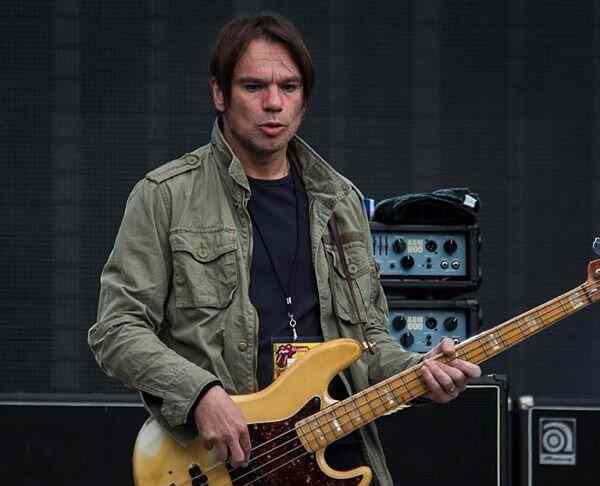
Few bass players of the 1990s British music scene left as distinctive a mark as Damon Minchella. At a time when Britpop dominated charts, headlines and festival stages, he quietly anchored one of the era’s most enduring bands with melodic intelligence and understated flair. While frontmen often command the spotlight, the role of a bassist in defining a band’s identity can be just as crucial. In that respect, Damon Minchella stands as one of the unsung architects of the Britpop sound.
Early Life and Musical Roots
Growing Up in Liverpool
Born on 1 June 1969 in Liverpool, England, Damon Minchella grew up in a city steeped in musical heritage. Liverpool’s cultural landscape, shaped profoundly by The Beatles and a strong working-class creative tradition, nurtured generations of musicians. For a young aspiring player, the city offered both inspiration and healthy competition.
Music was more than entertainment in Liverpool; it was a rite of passage. Surrounded by record collections, local bands and an environment where songwriting felt accessible rather than mythical, he gravitated towards the bass guitar at an early age.
Discovering the Bass
Unlike the flamboyance often associated with lead guitarists, the bass appealed through its structural importance. It provided rhythm, groove and harmonic foundation. Damon Minchella developed a style that balanced melodic sensitivity with solid rhythmic support — a combination that would later define his contribution to Britpop.
Influences ranged from classic rock and soul to mod revival sounds. The melodic basslines of players such as Paul McCartney and John Entwistle subtly informed his approach, though he never imitated outright. Instead, he absorbed technique and tone, then forged his own musical identity.
Rise with Ocean Colour Scene
Formation and Early Struggles
Ocean Colour Scene emerged in the early 1990s, navigating a changing British music landscape. Initially experimenting with a baggier, psychedelic sound, the band gradually refined its identity. By the mid-1990s, as Britpop exploded into mainstream consciousness, they found their moment.
As a founding member and bassist, Damon Minchella played a pivotal role in shaping the band’s evolution. The chemistry between band members — particularly Simon Fowler and Steve Cradock — allowed for musical interplay that was both dynamic and cohesive.
Breakthrough with Moseley Shoals
The 1996 album Moseley Shoals marked a turning point. Featuring hits such as “The Riverboat Song” and “The Day We Caught the Train”, it captured the spirit of its time while retaining a classic British rock sensibility.
The basslines on the record were never showy, yet they were essential. Damon Minchella’s playing provided groove without excess, reinforcing the band’s mod-influenced style. His work ensured that even radio-friendly singles retained depth and musical integrity.
Touring the Britpop Era
The mid-to-late 1990s were defined by relentless touring. Festival appearances, chart success and media attention created a whirlwind existence. For many musicians of the era, the pace proved overwhelming.
During this period, Damon Minchella demonstrated both resilience and adaptability. Night after night, his performance remained tight and consistent — a crucial factor in sustaining the band’s reputation as a formidable live act.
Collaborations Beyond the Band
Working with Paul Weller
One of the most significant associations in his career has been with Paul Weller. As a respected figure in British music, Weller recognised talent when he saw it. Collaborating with such an established artist expanded musical horizons and deepened professional credibility.
Damon Minchella’s bass work complemented Weller’s songwriting, blending mod revival energy with contemporary rock nuance. These sessions highlighted his versatility beyond the confines of one band identity.
Session Work and The Who
He also performed with The Who at high-profile events, including Live 8 in 2005. Sharing a stage connected to rock royalty underscored both technical ability and professional trust.
Such opportunities are not granted lightly. They require reliability, musical intelligence and the capacity to step into demanding environments seamlessly — qualities consistently associated with Damon Minchella.
Creative Philosophy and Playing Style
Understated Yet Memorable
The hallmark of his playing lies in restraint. Rather than dominating arrangements, he enhances them. This approach aligns with classic British rock tradition, where musical cohesion outweighs individual flamboyance.
Basslines often act as the glue between drums and melody. In Ocean Colour Scene’s catalogue, the subtle propulsion and melodic undercurrents frequently owe much to his instincts.
Musical Discipline
Colleagues and collaborators often describe Damon Minchella as disciplined and thoughtful. His bass tone typically balances warmth with clarity, avoiding muddiness while maintaining depth.
That discipline extends to songwriting contributions. Even when not in the spotlight, structural input can significantly influence arrangement and pacing.
Departure and Reflection
Leaving Ocean Colour Scene
In the early 2000s, Damon Minchella departed from Ocean Colour Scene. The reasons were complex, involving personal and professional considerations common within long-standing bands.
Departures can be emotionally charged, especially when a group shares formative years and collective success. However, his exit did not diminish his contribution to the band’s legacy.
Autobiography and Honesty
Years later, he published an autobiography offering candid reflections on the Britpop era, the pressures of touring and the realities behind fame. Such retrospection provides valuable historical context for a period often romanticised.
Through honest storytelling, Damon Minchella demonstrated that musicians are not merely chart statistics but individuals navigating intense creative and personal landscapes.
Academic and Educational Work
Beyond performing, he embraced roles in music education, sharing industry knowledge with aspiring artists. Teaching allows experienced musicians to pass on practical insights that textbooks rarely capture.
Damon Minchella’s transition into academia reflects maturity and a desire to nurture future talent. It also illustrates that a music career need not follow a single trajectory.
Cultural Impact and Legacy
Contribution to Britpop History
Britpop is often associated with high-profile rivalries and charismatic frontmen. Yet its sound relied on rhythm sections that grounded anthems in groove and structure.
Damon Minchella’s work during the 1990s helped define the sonic backbone of a movement that shaped British identity in music. His basslines remain woven into tracks that continue to receive radio play decades later.
Influence on Modern Musicians
Contemporary bassists frequently cite 1990s British rock as formative listening. The melodic yet disciplined style he embodied serves as a model for players who value substance over spectacle.
Personal Dimensions
Italian Heritage and Identity
His Italian heritage adds a nuanced layer to his identity within British music culture. Balancing cultural roots with local influences, Damon Minchella represents the diverse tapestry of modern Britain.
Football and Community
Like many Liverpudlians, football culture intersects with music and community life. This connection reinforces the grounded, relatable quality often attributed to him.
FAQs
Who is Damon Minchella best known for?
He is best known as the founding bassist of Ocean Colour Scene during the height of the Britpop era.
Did Damon Minchella play with other major artists?
Yes, he collaborated with Paul Weller and performed with The Who at significant events.
When did Damon Minchella leave Ocean Colour Scene?
He left the band in the early 2000s after contributing to its most commercially successful period.
Has Damon Minchella written a book?
Yes, he authored an autobiography reflecting on his career, Britpop experiences and personal journey.
What is distinctive about Damon Minchella’s bass style?
His playing is melodic yet restrained, prioritising groove, structure and musical cohesion over showmanship.
Conclusion
Damon Minchella remains an integral figure in the story of Britpop. While not always positioned centre stage, his contribution to Ocean Colour Scene and British rock more broadly is undeniable. Through disciplined musicianship, thoughtful collaboration and later reflection, he exemplifies the enduring value of substance in an industry often captivated by spectacle.