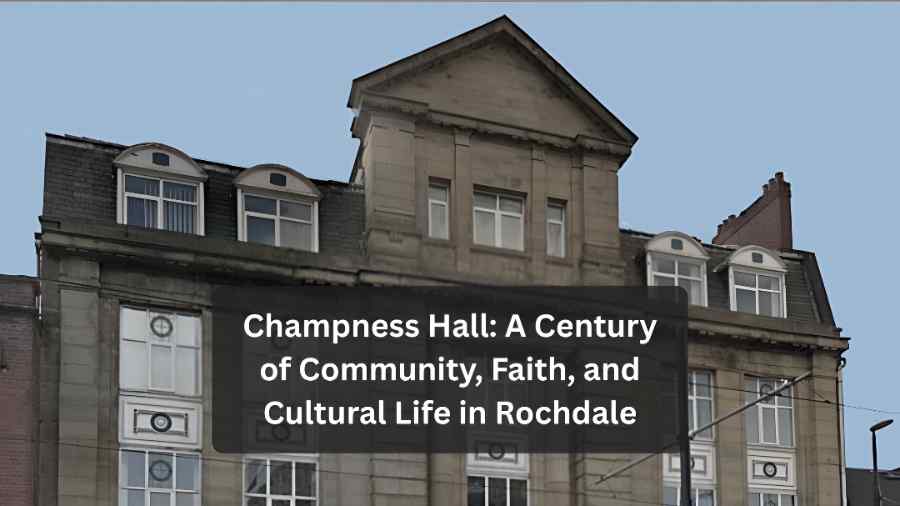
Champness Hall stands as one of Rochdale’s most distinctive and historically rich buildings. For nearly a century, it has played a central role in the social, cultural, and spiritual life of the town. More than just bricks and mortar, Champness Hall represents a vision of community service, inclusion, and civic responsibility that continues to resonate today. From its origins in the early twentieth century to its modern revival as a multi-purpose community venue, the hall tells a story deeply woven into Rochdale’s local identity.
The Origins of Champness Hall
The story of Champness Hall begins with the Methodist movement in Rochdale, a town shaped by industrial growth, social reform, and strong traditions of civic engagement. The hall takes its name from Thomas Champness, a prominent Methodist minister of the nineteenth century known for his commitment to lay training, outreach, and practical Christianity. His work emphasised faith expressed through service, education, and support for ordinary people.
By the early 1920s, local Methodist leaders recognised the need for a large, modern building that could serve not only as a place of worship but also as a centre for community life. Rochdale was expanding, and there was growing awareness that churches needed to engage with wider social needs rather than exist in isolation. Champness Hall was conceived as a bold response to this challenge.
The building officially opened in 1925, marked by civic pride and public celebration. From the outset, it was intended to be welcoming, accessible, and useful to the whole community, regardless of religious background.
A Vision Beyond a Traditional Church
Unlike many religious buildings of its time, Champness Hall was never designed to function solely as a church. Its founders imagined a space that could host education, cultural events, social gatherings, and charitable activities alongside worship. This inclusive vision was forward-thinking and aligned with broader social movements of the period that sought to address poverty, isolation, and inequality.
The hall provided rooms for meetings, classes, and youth activities, creating opportunities for learning and connection. It was also used for exhibitions, concerts, and public talks, making it a lively and relevant space within the town. This approach helped Champness Hall become a trusted and familiar part of everyday life in Rochdale.
Architectural Character and Design
Architecturally, Champness Hall reflects both practicality and ambition. Designed to accommodate large gatherings, the main auditorium was originally capable of seating a substantial audience, making it one of the most impressive indoor venues in the area at the time of its construction.
The building incorporates elements associated with early twentieth-century design, including clean lines, large windows, and a sense of openness. These features allowed natural light to flood the interior, creating a welcoming atmosphere rather than an austere or intimidating one. The emphasis on space and visibility reinforced the hall’s role as a place for shared experience and collective participation.
Over the years, while parts of the building have naturally aged, its core structure has remained strong. Restoration efforts in recent decades have focused on preserving its character while ensuring it remains safe and functional for modern use.
Champness Hall as a Cultural Venue
One of the most significant aspects of Champness Hall’s history is its role as a cultural venue. Throughout the twentieth century, it hosted a wide range of events that reflected changing tastes and social trends. Music performances, theatre productions, lectures, and community celebrations all found a home within its walls.
The hall became known as a place where people could come together to experience culture locally, without needing to travel to larger cities. This accessibility was especially important for working families, young people, and older residents who valued affordable and nearby entertainment.
Its reputation as a performance space added to Rochdale’s cultural landscape and contributed to the town’s sense of pride and identity.
Social Impact and Community Support
Beyond entertainment, Champness Hall has long been associated with social support and outreach. In its early years, it offered practical help to those in need, reflecting Methodist values of compassion and service. Activities included support for the homeless, educational opportunities for children, and safe spaces for young people.
These efforts strengthened bonds within the community and helped position the hall as a place of trust and care. People did not simply attend events there; they relied on it as a source of stability and support during times of economic difficulty and social change.
This legacy of service continues to influence how the hall is used and perceived today.
Challenges and Periods of Decline
Like many historic community buildings, Champness Hall faced significant challenges in the late twentieth and early twenty-first centuries. Changes in religious attendance, funding difficulties, and the rising cost of maintenance placed increasing strain on the building and those responsible for it.
At times, the future of the hall appeared uncertain. There were concerns about deterioration and even the possibility of permanent closure. Such challenges are common for large heritage buildings, particularly those not designed with modern commercial use in mind.
However, the story of Champness Hall did not end in decline. Instead, it became an example of how community determination and local leadership can revive a valued institution.
Restoration and Revival
In recent years, dedicated volunteers, trustees, and supporters have worked tirelessly to restore and revitalise Champness Hall. Their efforts focused not only on repairing the physical structure but also on reimagining how the building could serve contemporary needs.
Through fundraising, partnerships, and careful planning, the hall has been transformed into a flexible, multi-use space capable of hosting a wide range of activities. Modern safety standards and accessibility requirements have been addressed while preserving the hall’s historic character.
This revival has allowed Champness Hall to reconnect with the community and once again become a place of activity, creativity, and shared purpose.
Champness Hall in the Present Day
Today, Champness Hall operates as a vibrant community venue with a diverse programme of events. It is used for sports activities, dance classes, meetings, performances, and private functions. This variety reflects the original vision of the hall as a space for everyone, adaptable to changing times.
The building also continues to house a faith community, maintaining its spiritual roots while embracing openness and inclusion. Worship services and faith-based activities coexist alongside secular events, demonstrating that tradition and modern community life can complement each other.
This balance is one of Champness Hall’s greatest strengths, allowing it to remain relevant without losing its identity.
Heritage and Local Identity
Champness Hall is more than a functional building; it is a symbol of Rochdale’s heritage. Its long history mirrors broader social changes, from industrial expansion to modern regeneration. The hall stands as a reminder of the town’s commitment to collective wellbeing, education, and cultural expression.
Heritage recognition, including commemorative plaques, helps ensure that the story of the hall and its namesake is not forgotten. Such recognition encourages appreciation of local history and fosters a sense of continuity between past and present generations.
For many residents, Champness Hall represents memories of performances attended, meetings held, or milestones celebrated, making it deeply personal as well as historically significant.
The Broader Significance of Community Halls
The story of Champness Hall highlights the enduring importance of community halls in British society. These spaces provide opportunities for connection, creativity, and support that cannot be easily replaced by digital alternatives. They offer physical places where people from different backgrounds can meet, share experiences, and build relationships.
In an era where social isolation is a growing concern, venues like Champness Hall play a crucial role in fostering belonging and participation. Their survival depends on recognition of their value and continued community engagement.
Champness Hall serves as an example of how heritage buildings can adapt and thrive when supported by collective effort and clear purpose.
Conclusion
Champness Hall is a remarkable example of how a single building can reflect the values, challenges, and aspirations of a community over time. From its origins as an ambitious Methodist project to its current role as a restored and active community venue, it has consistently embodied principles of inclusion, service, and shared experience.
Its history demonstrates that spaces designed with people in mind can endure far beyond their original context. Through careful preservation and thoughtful adaptation, Champness Hall continues to serve Rochdale, honouring its past while contributing meaningfully to the present and future.