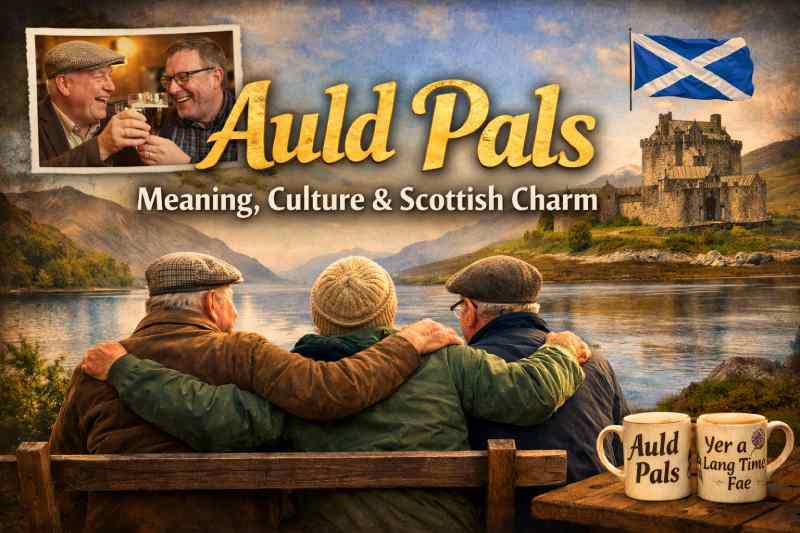
The phrase Auld Pals carries warmth that reaches far beyond its simple meaning. Rooted in Scots language and Scottish culture, it evokes memories of long friendships, shared laughter, and a sense of belonging that cannot be manufactured or forced. Whether spoken in a Glasgow pub, printed on a greeting card, or used to title a live theatre tour, auld pals represents something deeply human: the bond between people who have stood the test of time together.
In modern usage, auld pals can refer to childhood friends reunited after decades, workmates who became lifelong companions, or fictional characters whose on-screen friendship feels real enough to belong to our own lives. Yet beneath its cultural popularity lies a linguistic heritage that connects the phrase to Scotland’s rich history and identity.
The Meaning of Auld Pals
At its most basic level, auld pals means “old friends.” The word “auld” is Scots for “old,” and “pals” simply means friends or companions. But the phrase conveys more than age or duration. It implies familiarity, loyalty, shared history, and mutual understanding.
Unlike the neutral term “old friends,” auld pals carries emotional texture. It feels warmer, more personal, and slightly nostalgic. The sound of the phrase alone has a softness that reflects affection rather than formality.
In everyday conversation, someone might say, “We’re just auld pals catching up,” suggesting ease, comfort, and history that needs no explanation. It is friendship stripped of performance or pretence.
The Scots Language and Its Influence
To fully appreciate auld pals, it helps to understand the Scots language. Scots developed alongside English but evolved independently in Scotland. It retains distinct vocabulary, pronunciation, and grammar shaped by Old English, Norse, French, and Gaelic influences.
The word “auld” appears in many traditional Scots phrases, including “Auld Lang Syne,” famously associated with Hogmanay and New Year celebrations. The preservation of words like auld reflects a broader effort to maintain cultural identity in Scotland.
Scots is not simply slang; it is a recognised linguistic tradition with centuries of literature, poetry, and song. When people use a phrase like auld pals, they participate in that cultural lineage, whether consciously or not.
Auld Pals in Scottish Popular Culture
In recent years, the phrase gained renewed visibility through live theatre tours featuring cast members from the beloved Scottish sitcom Still Game. These shows, often titled “Auld Pals: An Evening with the Stars of Still Game,” celebrate not only the characters but the enduring friendships that viewers have come to cherish.
Still Game and the Spirit of Auld Pals
The television series Still Game, created by Ford Kiernan and Greg Hemphill, centres on two ageing friends navigating life in a fictional Glasgow housing scheme. The series captured everyday humour, resilience, and camaraderie in a way that resonated deeply with audiences.
The core friendship in Still Game reflects the very essence of auld pals. It portrays loyalty despite arguments, affection despite teasing, and support without grand gestures. The show’s popularity demonstrates how universal the theme of enduring friendship truly is.
When cast members reunite on stage under the banner of auld pals, the title becomes symbolic. It represents both the fictional friendships and the real-life bonds among actors and fans alike.
The Emotional Power of Long-Standing Friendships
Friendships that endure over time develop unique qualities. Auld pals know each other’s history, flaws, and quirks. There is little need for explanation or impression management. Conversations flow naturally because shared context fills the gaps.
Shared History Creates Depth
Psychologists often note that long-term friendships provide emotional stability. Research suggests that strong social bonds are associated with lower stress levels and improved mental wellbeing. When people reconnect with auld pals, they often experience a sense of grounding and continuity.
These friendships act as living archives. They remind us who we were and how far we have come. Auld pals can recount stories from childhood, school days, or early careers that others cannot.
Nostalgia and Identity
Nostalgia is not merely sentimental longing. Studies have shown that nostalgic reflection can increase feelings of social connectedness and optimism. When someone describes meeting up with auld pals, it often triggers positive reflection on shared memories.
The phrase itself contains nostalgia. “Auld” sounds rooted in tradition, while “pals” feels informal and affectionate. Together, they form a phrase that invites reflection rather than formality.
Auld Pals in Modern Commerce and Branding
The phrase has also found its way into merchandise and branding. Scottish-themed gift shops often sell mugs, cards, and keepsakes featuring the words auld pals. These items celebrate friendship in a culturally specific yet universally relatable way.
In marketing, phrases tied to heritage often evoke trust and authenticity. Auld pals works well because it feels genuine rather than commercial. It reflects real relationships rather than invented slogans.
Businesses connected to theatre tours and entertainment events use the phrase to attract audiences seeking nostalgia and connection. The success of live reunion shows demonstrates that audiences are drawn to stories and performances celebrating enduring bonds.
The Cultural Context of Friendship in Scotland
Scottish culture places strong emphasis on loyalty and straightforwardness. Humour often masks deep affection, and teasing is frequently a sign of closeness. The concept of auld pals fits naturally within this framework.
Community and Shared Experience
Historically, many Scottish communities were tightly knit, particularly in industrial towns and housing schemes. People grew up together, worked together, and socialised together. Such environments naturally produced auld pals who remained connected across decades.
Even as modern mobility disperses communities, the emotional imprint of those early bonds remains strong.
Language as Cultural Memory
When people use Scots phrases like auld pals, they reinforce cultural memory. Language acts as a bridge between past and present. Even individuals who do not speak Scots fluently may still use familiar phrases tied to tradition.
In this way, auld pals serves both as a linguistic expression and as a cultural emblem.
Why Auld Pals Resonates Beyond Scotland
Although the phrase originates in Scotland, its meaning is universally understood. Every culture values enduring friendship. The distinctive wording simply adds charm and authenticity.
In an era of digital connections and social media acquaintances, the idea of auld pals feels reassuringly solid. It implies depth over breadth, quality over quantity.
Modern life often fragments social circles through relocation, career shifts, and changing lifestyles. Reconnecting with auld pals offers continuity amid change.
The Psychology of Reconnecting with Auld Pals
Reunions with long-standing friends often trigger powerful emotional responses. Familiar voices, shared jokes, and remembered routines can instantly collapse years of distance.
Comfort and Security
Long-term friendships provide a sense of psychological safety. Auld pals tend to accept one another without judgement. This acceptance reduces social anxiety and encourages authenticity.
Laughter as Social Glue
Shared humour is a defining feature of many enduring friendships. Laughter strengthens bonds and releases endorphins, reinforcing positive associations. When auld pals meet, humour often surfaces effortlessly because shared references require no explanation.
The Linguistic Beauty of the Phrase
From a purely phonetic perspective, auld pals has a pleasing rhythm. The soft consonants and rounded vowel sounds contribute to its warmth. It sounds less formal than “old friends” and more intimate than “companions.”
Language influences perception. Words carry emotional undertones shaped by culture and usage. The Scots flavour of auld pals adds character that a standard English equivalent lacks.
Auld Pals in Literature and Storytelling
While the phrase itself may not dominate literary canon, the theme of enduring friendship has been central to storytelling for centuries. From classic Scottish poetry to contemporary drama, the idea of friends weathering time and adversity remains compelling.
Storytelling often relies on the dynamic between auld pals because such relationships provide emotional depth and humour. Writers use long-standing friendships to explore loyalty, regret, forgiveness, and shared growth.
The Enduring Appeal of Auld Pals in Live Entertainment
The success of stage tours celebrating beloved television characters demonstrates the enduring appeal of familiar friendships. Audiences attend not only for comedy but for the comfort of revisiting relationships that feel authentic.
When performers share anecdotes and behind-the-scenes stories, the atmosphere often resembles a gathering of auld pals rather than a formal production. This sense of familiarity strengthens audience engagement.
FAQs
What does auld pals mean in simple terms
Auld pals means old friends, particularly those who have shared many years of experiences together.
Is auld pals formal Scots language
It is a Scots phrase rooted in traditional vocabulary, commonly used in informal and cultural contexts.
Why is the phrase popular in Scotland
It reflects Scotland’s emphasis on loyalty, humour, and long-standing friendships within close-knit communities.
Is auld pals connected to Still Game
Yes, the phrase has been used in live theatre tours featuring cast members from Still Game, highlighting themes of enduring friendship.
Can people outside Scotland use the phrase
Absolutely. While it originates in Scots, its meaning is widely understood and appreciated beyond Scotland.
Conclusion
Auld pals is more than a charming Scots phrase. It captures the essence of friendship shaped by time, shared memories, and unwavering loyalty. Rooted in linguistic heritage yet alive in modern culture, the phrase bridges generations and communities.
In a world that often prioritises speed and novelty, the idea of auld pals reminds us of something steady and enduring. It speaks of laughter that echoes across decades, stories told countless times yet never losing their warmth, and companionship that requires no explanation.