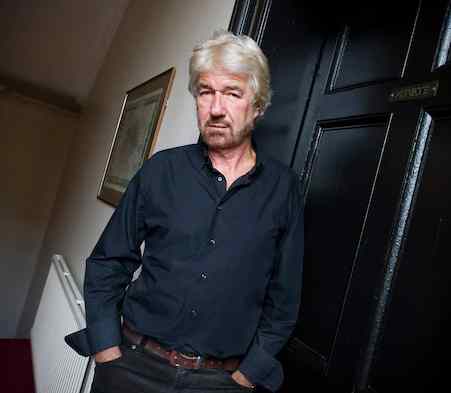
Few writers have captured the humour, heartbreak and hard-won hope of ordinary British lives quite like Willy Russell. Emerging from a working-class background in Merseyside, he transformed personal experience into powerful drama that continues to resonate across generations. His plays and musicals are not only entertaining; they are deeply humane explorations of class, education, identity and aspiration.
Early Life and Background
Born William Russell on 23 August 1947 in Whiston, Lancashire, willy russell grew up in a working-class family in the Liverpool area. He left school at fifteen with modest qualifications, a common path for many young people of his generation and background. Before he became a playwright, he trained as a women’s hairdresser and later returned to education to qualify as a teacher.
That early experience of limited opportunity would later become a central theme in his writing. The tension between intellectual ambition and social expectation, between inherited circumstance and self-determination, runs through much of his work. The authenticity in his characters stems from lived experience rather than detached observation.
While teaching, he began writing drama for school productions. What started as a practical exercise soon revealed a remarkable natural gift. His early plays showed wit, warmth and an acute ear for regional speech, elements that would become hallmarks of willy russell’s style.
Breakthrough in Theatre
Educating Rita
The breakthrough came in 1980 with Educating Rita. The play centres on a working-class hairdresser who seeks personal growth through Open University studies, guided by a disillusioned lecturer. The story is simple, yet its emotional and intellectual depth is considerable.
In Educating Rita, willy russell examines education not merely as academic attainment but as liberation. Rita’s journey is about more than passing exams; it is about finding her voice, challenging expectations and redefining her identity. The relationship between Rita and Frank is layered with humour, tension and mutual transformation.
The play’s success was immediate. It transferred to the West End and later became a highly successful film in 1983, starring Julie Walters and Michael Caine. The screenplay, also written by willy russell, earned an Academy Award nomination, bringing international recognition.
Blood Brothers
If Educating Rita established his reputation, Blood Brothers cemented it. First staged in 1983 and later reworked into a full-scale musical, the story follows twin brothers separated at birth and raised in starkly different social environments.
Through the tragic arc of Mickey and Edward, willy russell delivers a searing critique of class division in Britain. The nature versus nurture debate is woven into a gripping narrative that balances humour with devastating inevitability. Songs such as “Tell Me It’s Not True” remain emotionally powerful decades after their debut.
Blood Brothers became one of the longest-running musicals in West End history. Its enduring appeal lies in its universality. Though rooted in Liverpool, the themes of inequality, fate and missed opportunity transcend geography.
Shirley Valentine
Another landmark work, Shirley Valentine, premiered in 1986. Written as a one-woman play, it tells the story of a middle-aged Liverpool housewife who rediscovers herself during a trip to Greece.
The monologue format allows intimate access to Shirley’s inner life. With sharp humour and quiet poignancy, willy russell captures the frustration of domestic routine and the yearning for change. The play was later adapted into a film, again achieving critical and commercial success.
Together, these three works define the core of willy russell’s theatrical legacy: strong central characters, regional authenticity, social commentary and emotional accessibility.
Recurring Themes in His Work
Class and Social Mobility
Class division is arguably the most consistent theme in the writing of willy russell. Rather than presenting abstract theory, he dramatises lived consequences. His characters feel the weight of social structure in their education, employment and relationships.
In Blood Brothers, the contrast between the twins’ upbringings exposes systemic inequality. In Educating Rita, the university becomes both a gateway and a cultural battleground. Social mobility is portrayed as possible, yet never simple or cost-free.
Education and Self-Discovery
Education, for willy russell, is transformative but complex. Rita’s academic journey opens doors but also creates emotional distance from her former life. The playwright understands that learning can be liberating and destabilising at the same time.
This nuanced approach prevents his work from becoming didactic. Instead of preaching, he dramatises the emotional consequences of change.
Identity and Voice
A recurring question in willy russell’s plays is: who am I, and who am I allowed to be? His protagonists often struggle between societal expectation and personal desire. Shirley seeks a life beyond domestic confinement. Rita seeks intellectual fulfilment. Mickey seeks dignity in a system stacked against him.
Their journeys are not heroic in a grand sense; they are intimate, recognisable and profoundly human.
Style and Dramatic Technique
One of the defining features of willy russell’s writing is his ear for dialogue. His characters speak in authentic regional voices, particularly the rhythms of Liverpool speech. This authenticity gives his work warmth and immediacy.
Humour plays a crucial role. Even in tragic narratives, comedy provides relief and realism. The laughter in his plays never feels forced; it arises naturally from character and situation.
Structurally, he favours clear storytelling. The plots are accessible, yet layered with thematic depth. Songs in Blood Brothers serve both narrative and emotional functions, reinforcing key ideas without overwhelming the drama.
Impact on British Theatre
The contribution of willy russell to modern British theatre cannot be overstated. At a time when theatre was often perceived as elitist, he brought working-class stories to the mainstream stage. His success demonstrated that audiences were eager for narratives reflecting ordinary lives.
His plays are widely studied in secondary schools and universities across the United Kingdom. Teachers value their thematic richness and approachable language. Students often connect deeply with characters who feel real rather than remote.
Beyond education, revivals of his work continue to draw large audiences. Productions of Blood Brothers tour regularly, while Educating Rita remains a favourite for both professional companies and amateur dramatics groups.
Work Beyond the Stage
Although primarily known for theatre, willy russell has also written for television and published prose. His novel The Wrong Boy, released in 2000, explores adolescence and creativity through the fictional diary of a teenage drummer.
He has also released music albums, reflecting his longstanding interest in songwriting. This musical sensibility undoubtedly shaped the emotional texture of Blood Brothers.
Awards and Recognition
Over the course of his career, willy russell has received numerous honours, including major theatre awards and academic recognition. His screenplay for Educating Rita earned an Oscar nomination, highlighting his ability to translate stage success to the screen.
He has also received honorary degrees from several universities, acknowledging both his artistic achievements and his influence on education and culture.
Enduring Cultural Relevance
What keeps the work of willy russell relevant decades after its premiere? The answer lies in emotional truth. Economic inequality, educational aspiration and questions of identity remain pressing issues in Britain today.
Audiences still see themselves in Rita’s ambition, Mickey’s frustration and Shirley’s quiet rebellion. The social landscape may evolve, but the human longing for dignity and opportunity endures.
Moreover, his balanced portrayal of humour and tragedy mirrors real life. He avoids caricature. Even flawed characters are treated with compassion.
FAQs
What is willy russell best known for?
He is best known for the plays Educating Rita, Blood Brothers and Shirley Valentine, all of which achieved major success in the West End and internationally.
When was willy russell born?
He was born on 23 August 1947 in Whiston, Lancashire, and grew up in the Liverpool area.
What themes does willy russell explore in his plays?
His work frequently addresses class division, social mobility, education, identity and personal transformation within working-class communities.
Is willy russell still influential today?
Yes. His plays remain widely performed and studied in schools across the UK, and Blood Brothers continues to be revived in major productions.
Did willy russell write for film as well?
Yes. He adapted Educating Rita and Shirley Valentine for the screen, with Educating Rita earning him an Academy Award nomination for Best Adapted Screenplay.
Conclusion
The legacy of willy russell rests not merely on awards or long-running productions, but on connection. He gave voice to communities often under-represented on the national stage. Through sharp dialogue, memorable characters and unflinching social insight, he transformed everyday stories into enduring drama.
In capturing the humour and hardship of working-class Britain, willy russell created works that are both specific and universal. His plays continue to move, challenge and inspire audiences, ensuring his place as one of the most significant dramatists of modern British theatre.