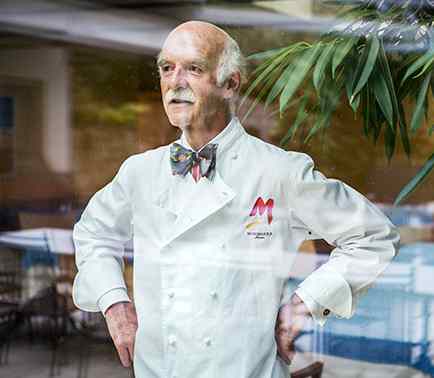
Anton Mosimann is widely regarded as one of the most influential chefs to have shaped modern British gastronomy. With a career spanning more than five decades, he has not only earned Michelin stars and royal recognition but has also pioneered a culinary philosophy that continues to inspire chefs across the world. From his Swiss upbringing to his celebrated London dining club, Anton Mosimann built a legacy founded on precision, discipline, elegance and innovation.
Early Life and Swiss Foundations
Childhood in Switzerland
Anton Mosimann was born on 23 February 1947 in Solothurn, Switzerland. He grew up in Nidau, where his parents ran a restaurant. The rhythm of kitchen life shaped his early years. While other children played outside, he observed suppliers, watched dishes being prepared, and absorbed the discipline required to run a professional kitchen.
His upbringing instilled three enduring values: respect for ingredients, technical excellence, and hospitality without compromise. These principles would later define his culinary identity.
Apprenticeship and Training
At just fifteen years old, he began his formal apprenticeship as a chef. Swiss culinary training is famously rigorous, and he embraced the discipline wholeheartedly. By the age of twenty-five, he had earned his Chef de Cuisine diploma, an achievement considered exceptional at such a young age.
Before settling in Britain, he worked in prestigious establishments across Europe, North America and Asia. These formative years gave Anton Mosimann international exposure and broadened his understanding of ingredients, techniques and cultural dining traditions.
Rise to Prominence in London
The Dorchester Era
In 1975, at the age of twenty-eight, he was appointed Maitre Chef des Cuisines at The Dorchester in London. This marked a turning point. Under his leadership, the restaurant achieved two Michelin stars — a remarkable feat and one that placed him among the culinary elite.
At The Dorchester, Anton Mosimann refined his approach to fine dining. He focused on clarity of flavour rather than excessive richness, favouring seasonal produce and elegant presentation. His menus reflected confidence without flamboyance, and diners quickly recognised his distinctive style.
A New Culinary Philosophy
During this period, he developed what he called “cuisine naturelle”. This philosophy eliminated added fats and alcohol, relying instead on the natural quality and freshness of ingredients to create depth and balance. It was revolutionary at a time when classical French cooking dominated luxury dining.
Rather than masking flavours with butter or cream, Anton Mosimann sought purity. Vegetables retained their brightness, meats were treated with precision, and sauces were light yet expressive. The approach appealed to health-conscious diners while maintaining the standards of haute cuisine.
Cuisine Naturelle Explained
The Core Principles
Cuisine naturelle is built on several guiding principles:
- No added fat in cooking
- No alcohol in preparation
- Emphasis on natural flavours
- Seasonal, high-quality ingredients
- Elegant yet restrained presentation
The philosophy demonstrated that refinement does not require heaviness. Anton Mosimann proved that flavour intensity can be achieved through technique, reduction and timing rather than excess.
Influence on Modern Dining
Today, lighter cooking styles and ingredient-led menus are commonplace in top restaurants. However, when Anton Mosimann introduced his philosophy, it challenged convention. His approach anticipated the modern focus on wellness, sustainability and ingredient provenance long before these became industry buzzwords.
Establishing Mosimann’s Private Dining Club
A Bold Entrepreneurial Move
In 1988, he left The Dorchester to establish Mosimann’s, a private dining club in Belgravia. Housed in a converted 19th-century Presbyterian church, the venue offered exclusivity, privacy and culinary excellence.
Unlike traditional restaurants, membership granted access to refined dining experiences tailored to individual preferences. This model combined fine cuisine with an intimate club atmosphere.
Reputation and Clientele
Mosimann’s quickly became a favourite among royalty, politicians, diplomats and international celebrities. The club has hosted countless high-profile events, reinforcing the reputation of Anton Mosimann as a chef trusted at the highest levels.
His attention to detail extended beyond the plate. Service, ambience and personal relationships were integral to the experience. Guests were not merely customers; they were welcomed into a culinary institution.
Royal Connections and State Occasions
One of the most distinguished aspects of Anton Mosimann’s career is his longstanding association with the British Royal Family.
He has catered for multiple royal occasions, including weddings and official events. His ability to deliver precision under immense scrutiny demonstrates both professionalism and discretion. Preparing food for state banquets demands meticulous planning, flawless execution and diplomatic sensitivity.
Such trust is not easily earned. It reflects decades of consistent excellence and integrity.
Television, Publications and Public Recognition
Media Presence
Beyond the kitchen, Anton Mosimann became a familiar face through television appearances and cookery demonstrations. His calm authority and articulate explanations helped popularise refined cooking techniques among wider audiences.
He shared not only recipes but philosophy, explaining why balance and natural flavour matter.
Cookbooks and Educational Work
He has authored several cookbooks, each reflecting his culinary ethos. These publications offer insight into his disciplined methods while remaining accessible to ambitious home cooks.
Additionally, his influence extends into culinary education. His personal collection of culinary artefacts and memorabilia was donated to a Swiss culinary academy, forming a museum dedicated to gastronomy and his life’s work.
Leadership Style and Kitchen Discipline
Precision and Standards
Those who trained under Anton Mosimann often speak of his exacting standards. Kitchens under his command operated with military precision. Timing, cleanliness and presentation were non-negotiable.
Yet discipline was paired with mentorship. He believed that excellence must be taught and sustained through example.
Mentoring Future Chefs
Many chefs who worked in his kitchens have gone on to establish successful careers of their own. His emphasis on fundamentals — knife skills, ingredient respect and organisational discipline — provided a foundation that transcended culinary trends.
Business Acumen and Brand Development
Anton Mosimann was not solely a chef; he was also a strategic entrepreneur. Expanding from fine dining into event catering, consultancy and culinary academies, he built a brand synonymous with trust and quality.
His red chef’s hat became a visual signature. Branding in hospitality is often overlooked, yet he understood its importance decades ago.
Mosimann’s Party Service further extended his reach, bringing high-level catering to global events, from sporting tournaments to diplomatic gatherings.
Legacy in British Gastronomy
The contribution of Anton Mosimann to British dining cannot be overstated. When he arrived, the UK culinary scene was still emerging from a reputation for conservatism. Through refinement and innovation, he elevated expectations.
His two Michelin stars at a London hotel restaurant set new standards. His lighter philosophy influenced menu development across the country. His private club model demonstrated that exclusivity could coexist with warmth.
Today’s generation of British chefs operates in an environment shaped in part by his groundwork.
Awards and Honours
In 2004, he was appointed Officer of the Order of the British Empire (OBE) for services to tourism and the food industry. This honour symbolised national recognition of his contribution to British culture.
He has also received numerous international accolades celebrating both his culinary mastery and his role as an ambassador of Swiss gastronomy abroad.
The Personal Side
Behind the professional achievements lies a disciplined yet personable individual. Anton Mosimann is known for immaculate presentation, from his tailored suits to his trademark red chef’s hat.
He values punctuality, courtesy and long-term relationships. Colleagues often describe him as demanding but fair — a perfectionist who expects the best because he gives the best.
The Relevance of His Philosophy Today
In an era focused on sustainability, seasonal sourcing and mindful eating, the principles championed by Anton Mosimann feel remarkably contemporary.
Cuisine naturelle aligns with current trends favouring ingredient transparency and reduced reliance on heavy fats. His foresight illustrates how true innovation often precedes mainstream adoption by decades.
Chefs today who highlight natural flavour and nutritional awareness are, knowingly or not, echoing ideas he championed years ago.
FAQs
Who is Anton Mosimann?
Anton Mosimann is a Swiss-born chef who built his career in Britain, earning Michelin stars and founding a prestigious private dining club in London.
What is cuisine naturelle?
Cuisine naturelle is a cooking philosophy developed by Anton Mosimann that avoids added fats and alcohol, focusing instead on the natural taste of high-quality ingredients.
Did Anton Mosimann cook for the Royal Family?
Yes, Anton Mosimann has catered for multiple royal events and state occasions, earning long-standing trust within royal circles.
Where is Mosimann’s located?
Mosimann’s is a private dining club located in Belgravia, London, established in 1988.
What honours has Anton Mosimann received?
Anton Mosimann was appointed OBE in 2004 for his services to tourism and the culinary industry.
Conclusion
Anton Mosimann stands as one of the defining figures of modern British fine dining. From his disciplined Swiss training to his Michelin-starred achievements in London, he combined technical mastery with visionary thinking. His philosophy of cuisine naturelle reshaped expectations around flavour and health, while his private dining club introduced a refined model of exclusivity and service.
More than a chef, he is a cultural bridge between Swiss precision and British hospitality. His influence remains visible in contemporary culinary practice, educational institutions and luxury event catering. In a profession often driven by trends, Anton Mosimann represents something rarer: enduring excellence built on principle, innovation and unwavering standards.