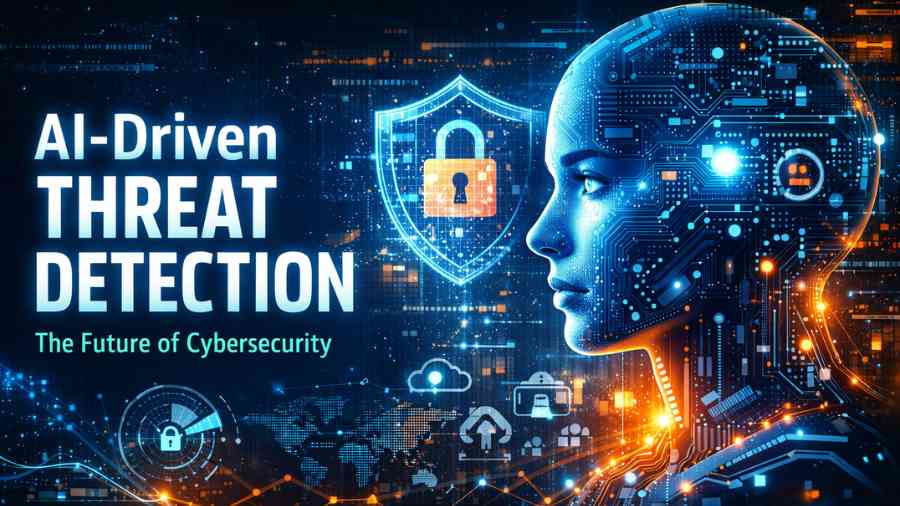
Explore how AI-driven security is shaping the future of threat detection, improving response times, and protecting organizations from evolving cyber risks.
Introduction to AI-Driven Threat Detection
The landscape of cyber threats is changing rapidly. Traditional security tools often struggle to keep up with new attack methods. Artificial intelligence (AI) is transforming how organizations detect and respond to threats, making security systems smarter and faster.
AI is not just about automating existing security processes. It brings new capabilities, such as learning from previous incidents and adapting to new tactics used by attackers. This learning ability helps organizations stay ahead in the ongoing battle against cybercrime.
How AI Improves Threat Detection
AI systems can analyze large data sets quickly to spot unusual patterns. This helps identify threats that might be missed by human analysts. With scalable AI security for cloud protection, organizations can adapt to new risks in real time. AI can also automate responses, reducing the time it takes to contain attacks.
AI can sort through network traffic, user behavior, and system logs to identify early warning signs of an attack. By doing this, it reduces the pressure on security teams, allowing them to focus on more complex investigations. AI-powered threat detection also means fewer false alarms, making it easier for teams to respond to real dangers.
Benefits of AI-Driven Security
One of the main advantages of AI in security is speed. AI can process information more quickly than humans, enabling earlier detection of threats. This quick action helps prevent damage and data loss. According to the U.S. Department of Homeland Security, utilising AI in cybersecurity can enhance the accuracy of threat identification and minimise false positives.
Another benefit is AI’s ability to learn from past incidents. As AI systems are exposed to more threats, they become better at recognizing new ones. This continuous learning makes AI a valuable tool in fighting evolving cyber risks. Organizations also benefit from AI’s ability to monitor large and complex IT environments, which would be impossible for people to manage alone.
AI and the Evolution of Malware Detection
Malware is becoming more complex and harder to detect. AI can recognize new forms of malware by studying their behavior, even if the code has never been seen before. This approach is more effective than relying on known signatures. Research from MIT shows that AI-based tools can catch threats that slip past traditional defenses.
Modern malware often uses techniques like polymorphism, where the code changes each time it runs. AI can detect these subtle changes by focusing on how the malware acts, instead of just looking for known patterns. This approach helps organizations protect themselves from zero-day attacks and other emerging threats.
Challenges and Considerations
While AI offers many benefits, it is not without challenges. Attackers can try to trick AI models or use AI for their own harmful purposes. It is important for organizations to regularly update their AI systems and train staff to spot suspicious activity. The National Institute of Standards and Technology provides guidance on managing risks related to AI in cybersecurity.
Another challenge is the quality of data used to train AI models. Poor or biased data can lead to mistakes in threat detection. Organizations must ensure their data is accurate and up-to-date. Privacy is also a major concern, as AI systems often process large amounts of sensitive information. Following best practices and regulations, such as those from the European Union Agency for Cybersecurity, can help address these issues.
The Role of AI in Cloud Security
With more businesses moving to the cloud, protecting data in these environments is critical. AI tools can monitor cloud activity and detect threats across different platforms. AI-driven solutions help organizations secure their cloud resources, even as threats evolve.
Cloud security is challenging because resources are often spread across different locations and providers. AI can track access, monitor user behavior, and flag unusual activity in real time. This makes it easier for organizations to spot and respond to attacks before they cause harm. The U.S. Cybersecurity and Infrastructure Security Agency highlights the importance of AI in protecting cloud systems.
AI and Automated Incident Response
AI is not only used for detecting threats but also for responding to them. Automated incident response systems can take action when a threat is found, such as blocking suspicious activity or isolating affected systems. This automation reduces the time needed to contain an attack and limits potential damage.
By handling common threats automatically, AI allows security experts to focus on more advanced attacks. It also ensures that responses are consistent and based on best practices. However, organizations should review automated actions regularly to avoid mistakes and adjust their response plans as needed.
AI in Identity and Access Management
AI is also used to improve identity and access management (IAM). By analyzing user behavior, AI can spot when someone is trying to access sensitive information without permission. It can flag unusual logins, such as attempts from new locations or devices, and trigger additional security checks.
AI-powered IAM helps prevent unauthorized access and reduces the risk of insider threats. These systems can adapt to changing user patterns, making them more effective than static rules. The use of AI in IAM is becoming more common as organizations adopt remote work and cloud services.
Looking Ahead: The Future of AI-Driven Threat Detection
AI will continue to change how organizations defend against cyber threats. As AI models improve, they will become better at predicting attacks before they happen. Organizations that use AI-driven protection will be better prepared for future risks.
New developments in AI, such as explainable AI, will help security teams understand how decisions are made. This transparency will build trust and make it easier to improve AI models. Ongoing research from universities and government agencies supports the growth of AI in cybersecurity, ensuring that new solutions are safe and effective.
Conclusion
AI-driven protection is redefining the future of threat detection. By processing vast amounts of data and learning from new threats, AI can help organizations stay ahead of attackers. As technology advances, AI will play an even greater role in creating secure digital environments. Security teams should combine AI with other tools and expert knowledge to build a strong defense against evolving cyber risks.
FAQ
How does AI detect cyber threats?
AI detects cyber threats by analyzing large volumes of data for unusual patterns or behaviors that may indicate an attack. It uses machine learning models to spot threats in real time.
Is AI better than traditional security methods?
AI offers faster and more accurate detection than many traditional methods. It can identify new and unknown threats, but should be combined with other security measures for best results.
Can AI protect against all types of cyber attacks?
While AI improves threat detection, no system is perfect. AI can identify many types of attacks, but organizations still need a layered approach to security.