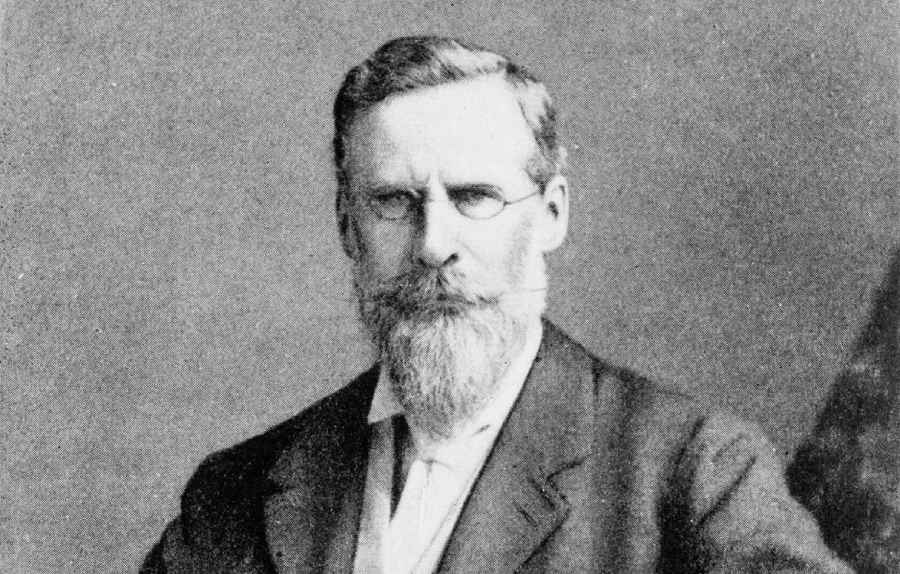
William Crookes stands among the most influential scientific figures of the nineteenth century, a man whose curiosity and experimental brilliance helped bridge the gap between classical chemistry and modern physics. The name William Crookes is closely associated with groundbreaking discoveries in spectroscopy, vacuum technology, and early atomic research. His work not only advanced scientific understanding in his own time but also laid the foundation for future breakthroughs, including the discovery of the electron and the development of plasma physics.
What makes William Crookes particularly fascinating is the breadth of his contributions. He was not confined to one discipline; instead, he moved fluidly between chemistry and physics, often pioneering entirely new methods of investigation. His experiments were bold, his interpretations sometimes controversial, and his legacy undeniably profound.
Early Life and Education
William Crookes was born on 17 June 1832 in London, England, into a relatively large family. From a young age, he displayed a strong interest in science, particularly chemistry. His formal education began at the Royal College of Chemistry in London, where he studied under the renowned German chemist August Wilhelm von Hofmann.
Under Hofmann’s guidance, William Crookes developed a solid foundation in experimental chemistry. He quickly distinguished himself as a capable and meticulous researcher. His early exposure to laboratory work shaped his scientific approach, which was always rooted in careful observation and hands-on experimentation.
Unlike many scientists of his time, William Crookes did not limit himself to academic theory. He believed that science should be practical, observable, and verifiable. This philosophy would define his entire career.
Discovery of Thallium
One of the earliest and most significant achievements of William Crookes was the discovery of the element thallium in 1861. This discovery was made using a relatively new technique at the time—spectroscopy.
Spectroscopy involves analysing the light emitted or absorbed by substances to identify their composition. While examining the spectrum of selenium compounds, William Crookes noticed a bright green line that did not correspond to any known element. Recognising the importance of this observation, he conducted further experiments and successfully isolated the new element.
He named it “thallium,” derived from the Greek word “thallos,” meaning green shoot, referencing the distinctive green spectral line.
This discovery was significant for several reasons. First, it demonstrated the power of spectroscopy as a tool for chemical analysis. Second, it reinforced the idea that new elements could be discovered through careful observation of light spectra. Finally, it established William Crookes as a leading figure in the scientific community.
The Crookes Tube and Cathode Rays
Perhaps the most famous invention associated with William Crookes is the Crookes tube. Developed in the 1870s, this device was an early form of vacuum tube used to study electrical discharges in low-pressure gases.
The Crookes tube consisted of a glass tube from which most of the air had been removed, with electrodes at either end. When a high voltage was applied, mysterious rays appeared to travel from the cathode (negative electrode) to the anode (positive electrode).
William Crookes referred to these as “cathode rays” and conducted extensive experiments to understand their properties. He observed that these rays travelled in straight lines, cast shadows, and caused certain materials to glow when struck.
At the time, the nature of cathode rays was not fully understood. However, William Crookes proposed that they were streams of particles, which he described as “radiant matter.” Although his interpretation was not entirely accurate by modern standards, it was remarkably close to the truth.
Later, in 1897, J. J. Thomson would use similar experiments to discover the electron, confirming that cathode rays were indeed streams of negatively charged particles. In this sense, the work of William Crookes directly contributed to one of the most important discoveries in physics.
Radiant Matter and the Fourth State
William Crookes introduced the concept of “radiant matter” to describe the behaviour of particles in a near-vacuum. He believed that this state of matter was distinct from solids, liquids, and gases, effectively proposing a fourth state of matter.
Today, this concept is recognised as plasma, a state in which gas becomes ionised and conducts electricity. Plasma is now known to be the most common state of matter in the universe, found in stars, lightning, and even certain industrial processes.
Although William Crookes did not fully understand plasma in the modern sense, his experiments were among the earliest to explore this phenomenon. His willingness to propose new ideas, even when they challenged existing theories, demonstrates his innovative mindset.
The Crookes Radiometer
Another well-known invention by William Crookes is the radiometer, often seen as a decorative scientific instrument. It consists of a glass bulb containing a partial vacuum, with a set of vanes mounted on a spindle. Each vane is black on one side and white on the other.
When exposed to light, the vanes begin to spin. Initially, William Crookes believed that this motion was caused by light pressure. However, later research showed that the effect is actually due to thermal transpiration—a phenomenon related to temperature differences in the gas inside the bulb.
Despite the initial misunderstanding, the radiometer remains an important device in demonstrating energy transfer and the interaction between light and matter. It also reflects William Crookes’ ability to design experiments that captured complex physical processes in simple, observable ways.
Contributions to Spectroscopy and Analytical Chemistry
Beyond his discovery of thallium, William Crookes made significant contributions to spectroscopy and analytical chemistry. He developed improved techniques for detecting and measuring trace elements, enhancing the precision of chemical analysis.
His work helped establish spectroscopy as a fundamental tool in both chemistry and astronomy. By analysing spectral lines, scientists could identify elements in distant stars and galaxies, expanding our understanding of the universe.
William Crookes’ contributions in this area highlight his role as a pioneer of modern scientific instrumentation. He was not only interested in theoretical concepts but also in the tools needed to explore them.
Work on Radioactivity
In the later stages of his career, William Crookes turned his attention to radioactivity, a newly emerging field of study. He developed an instrument called the spinthariscope, which allowed observers to see individual flashes of light produced by radioactive decay.
This device made the invisible world of atomic particles visible to the human eye, capturing the imagination of both scientists and the public. It also contributed to the growing understanding of atomic structure and nuclear processes.
William Crookes’ work in radioactivity placed him at the forefront of one of the most exciting scientific developments of his time. Although he did not make the major discoveries associated with figures like Marie Curie, his contributions were nonetheless important.
Role in the Scientific Community
William Crookes was not only a researcher but also an active participant in the scientific community. He served as the president of the Royal Society from 1913 to 1915, one of the most prestigious positions in British science.
He was also the founder and editor of the journal Chemical News, which provided a platform for scientists to share their findings. Through this role, William Crookes helped shape the direction of scientific research and communication.
His influence extended beyond his own work, as he supported and promoted the efforts of other scientists. This collaborative spirit was essential in advancing science during a period of rapid discovery.
Controversial Interests in Spiritualism
One of the more unusual aspects of William Crookes’ life was his interest in spiritualism. During the late nineteenth century, many intellectuals were intrigued by the possibility of communicating with the spirit world.
William Crookes conducted experiments with mediums and claimed to observe phenomena that suggested the existence of psychic forces. These claims were met with scepticism and criticism from the scientific community.
While this aspect of his work is often viewed as controversial, it also reflects the broader cultural context of the time. Science was still exploring the boundaries of the unknown, and not all investigations led to reliable conclusions.
It is important to recognise that William Crookes’ reputation as a scientist rests primarily on his rigorous experimental work, rather than his more speculative pursuits.
Practical Contributions to Society
William Crookes was also concerned with practical issues, particularly those related to agriculture and food supply. In a famous address, he warned of an impending global food shortage due to the depletion of natural nitrogen sources.
He advocated for the development of synthetic fertilisers, which would later become a cornerstone of modern agriculture. His insights were remarkably forward-thinking and demonstrated his ability to apply scientific knowledge to real-world problems.
This aspect of William Crookes’ work highlights his broader vision of science as a tool for improving human life.
Legacy and Impact
The legacy of William Crookes is vast and multifaceted. His discoveries and inventions have had a lasting impact on both chemistry and physics. From the identification of thallium to the development of the Crookes tube, his work has influenced generations of scientists.
His experiments with cathode rays paved the way for the discovery of the electron, a fundamental particle that underpins modern physics. His exploration of radiant matter contributed to the understanding of plasma, a state of matter that plays a crucial role in both natural and technological processes.
William Crookes also helped establish new methods of scientific investigation, particularly in spectroscopy and vacuum technology. These methods continue to be used in research laboratories around the world.
Perhaps most importantly, William Crookes exemplified the spirit of scientific inquiry. He was not afraid to challenge existing ideas, explore new concepts, and push the boundaries of knowledge.
FAQs
What is William Crookes best known for?
William Crookes is best known for discovering the element thallium and inventing the Crookes tube, which played a key role in the study of cathode rays and the eventual discovery of the electron.
How did William Crookes discover thallium?
William Crookes discovered thallium using spectroscopy by identifying a unique green spectral line that did not match any known element at the time.
What is the Crookes tube used for?
The Crookes tube was used to study electrical discharges in low-pressure gases and to investigate the properties of cathode rays, which are now known to be streams of electrons.
Did William Crookes contribute to modern physics?
Yes, William Crookes made significant contributions to modern physics, particularly through his work on cathode rays, vacuum technology, and the concept of radiant matter.
Why is William Crookes associated with plasma?
William Crookes proposed the idea of a “fourth state of matter,” which is now understood as plasma, making him an early contributor to the study of this state.
Conclusion
William Crookes was a remarkable scientist whose work helped shape the transition from classical science to the modern understanding of matter and energy. His discoveries, inventions, and ideas have left a lasting imprint on both chemistry and physics.
From the identification of thallium to the exploration of cathode rays, William Crookes demonstrated an exceptional ability to observe, experiment, and innovate. Even when his ideas were not entirely accurate, they often pointed in the right direction, inspiring further research and discovery.