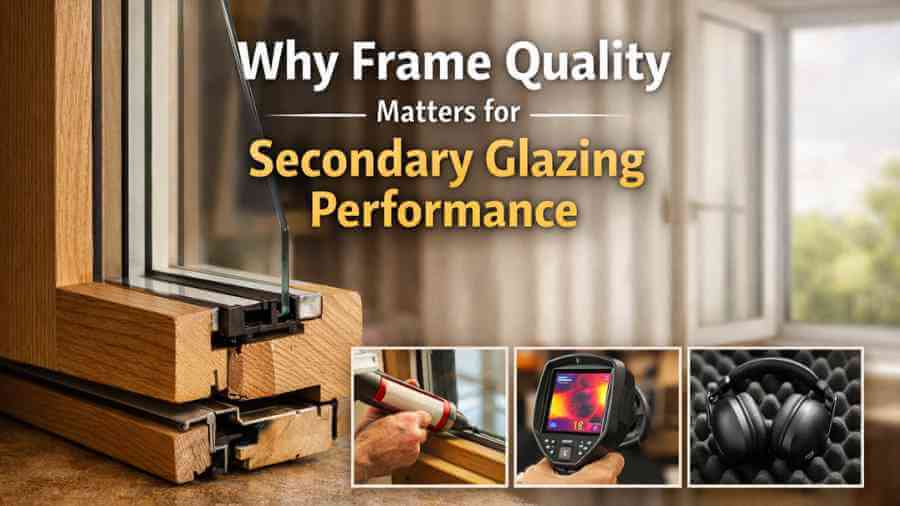
Why does the quality of the secondary glazing frame have such a big impact on performance?
Frame quality directly influences how well a secondary glazing system performs in terms of insulation, acoustics, durability and long-term reliability — and poor-quality frames can dramatically undermine the benefits the glazing is supposed to deliver.
Secondary glazing isn’t just about the glass itself — it’s a complete system. While the sealed gap and the glass type help reduce heat loss and noise, the frame plays a starring role in ensuring those benefits actually work in real-world conditions. A well-designed, precisely manufactured frame ensures airtight seals, precise fit, smooth operation and longevity — all essential for high performance.
What the frame actually does
Most people think secondary glazing performance comes mainly from the glass, but the frame has several critical jobs:
- Holding the glazing securely in place without stress or distortion
- Creating airtight seals that minimise draughts and heat loss
- Supporting smooth operation (sliding, hinged or lift-out)
- Preventing thermal bridging and moisture ingress
If the frame isn’t up to standard, even the best glazing unit can fail to deliver on comfort, efficiency or acoustic reduction.
Why precision manufacturing matters
Secondary glazing frame must be made to exact tolerances — especially in older homes where original window openings can be irregular. Poorly cut or warped frames compromise sealing, create gaps and increase air leakage. High-quality joinery uses precision machinery and skilled craftsmen to ensure every frame fits the reveal perfectly, making a real difference to insulation and acoustic performance.
Materials and build quality influence long-term performance
Frame materials vary widely — from low-grade plastics and aluminium to premium timber and engineered solutions. Each has pros and cons, but quality is non-negotiable. A few key points:
- Timber frames offer natural insulation, excellent durability and finish options that complement traditional interiors. When crafted well, they outperform many alternative systems.
- High-quality aluminium can provide a durable, slimline option but must be specified carefully to avoid thermal bridging.
- Low-cost frames can warp, corrode or expand with temperature changes, leading to problems that negate the benefits of the glazing itself.
Seal and gasket quality: the unsung heroes
Frame performance also comes down to gaskets, seals and weather-stripping — elements often understated in cheaper systems. These components seal the gap between the frame and the original window, preventing draughts, stopping moisture ingress and dampening sound transmission. Poor seals lead to condensation, chilly spots and reduced acoustic control, no matter how good the glass is.
Frame design impacts acoustic and thermal performance
The shape, depth and air gap supported by the frame influence both how well sound is reduced and how effectively heat is retained. Larger, well-sealed air gaps deliver better acoustic insulation, but only if the frame maintains rigidity and air-tightness. That’s why design precision and material quality matter — they determine how far the system can go in improving performance.
Practical indicators of good frame quality
- Frames that fit snugly without forcing
- No visible gaps or uneven edges
- Smooth movement in sliding or hinged systems
- Excellent sealing around all edges
- Durable materials resistant to moisture and temperature change
Frames that meet these criteria contribute to a glazing system that performs well year after year.
FAQs
- How much difference does frame quality make to energy efficiency?
A high-quality frame dramatically improves insulation by reducing draughts and thermal bridging, often more than upgrades to glass alone. - Will poor-quality frames affect noise reduction?
Yes — gaps and weak seals significantly degrade acoustic performance, even with thick or laminated glass. - Are timber frames better than aluminium?
Both can perform well when specified correctly, but premium timber frames offer natural insulation and aesthetic benefits that suit homes with period character. - Can I fit secondary glazing frames myself?
DIY installation increases the risk of poor fit and compromised performance. Professional surveying and installation ensure correct frame alignment and sealing. - How long should a good secondary glazing frame last?
With quality materials and craftsmanship, a secondary glazing frame can last for decades with minimal maintenance.
If you want secondary glazing that truly delivers comfort, performance and lasting value, contact H&C Joinery — where frame quality and expert installation make all the difference.