Cities around the world are constantly evolving. With rising populations, expanding infrastructure, and increasing demand for housing and transportation, urban environments often struggle to provide enough recreational space for residents. One concept that has emerged to address this challenge is the Urban Playground.
An Urban Playground is far more than a traditional park filled with swings and slides. It represents a creative approach to designing interactive spaces where people can relax, play, and connect within the busy landscape of a city. These spaces transform unused corners of urban environments into vibrant locations that encourage movement, imagination, and social interaction.
The Meaning Behind the Urban Playground Concept
An Urban Playground refers to a recreational area intentionally designed within a city to provide opportunities for play, exploration, and social engagement. Unlike conventional playgrounds that primarily serve children, these spaces often accommodate people of all ages.
Urban playgrounds may appear in public squares, parks, pedestrian zones, schoolyards, waterfronts, or even beneath elevated roads and bridges. The key goal is to introduce elements of play and creativity into environments that might otherwise feel purely functional.
The concept reflects a broader shift in how cities view public space. Instead of separating play areas from everyday urban life, designers now integrate them directly into the city’s fabric. This allows residents and visitors to experience moments of enjoyment even in dense metropolitan settings.
Why Cities Are Investing in Urban Play Spaces
Rapid urbanisation has created many challenges for communities. As cities grow, green areas often shrink and open spaces become limited. The introduction of thoughtfully designed play environments helps restore balance to urban living.
Encouraging Physical Activity
Urban residents frequently lead busy and sedentary lifestyles. Safe and accessible play areas encourage children and adults to move more, climb, run, and interact with their surroundings. Physical activity in outdoor environments contributes significantly to overall health.
Supporting Mental Wellbeing
Urban life can sometimes feel overwhelming due to noise, traffic, and crowded streets. Interactive play spaces provide moments of relief where people can unwind and reconnect with their sense of curiosity and creativity.
Strengthening Community Connections
Shared public spaces help communities form stronger relationships. Families gather while children play, neighbours meet during casual visits, and visitors engage with the local culture. These environments encourage social interaction in ways that digital communication cannot replicate.
Enhancing Urban Identity
Creative play areas often become landmarks within cities. Their unique designs and colourful structures contribute to a city’s identity and can even attract visitors interested in architecture and urban design.
Design Principles Behind Successful Urban Playgrounds
Designing engaging public play spaces requires careful planning and thoughtful creativity. Urban planners often focus on several important principles when developing these environments.
Integration with the Surrounding City
Successful play spaces feel naturally connected to the surrounding environment. Rather than isolating them behind fences, designers incorporate them into pedestrian routes, plazas, or community parks.
Creative and Artistic Elements
Modern play environments often resemble works of public art. Sculptural climbing frames, imaginative tunnels, colourful installations, and interactive lighting can transform a simple space into an engaging landscape of exploration.
Inclusive and Accessible Design
A well-designed play area welcomes people of different ages and abilities. Accessibility features such as ramps, sensory equipment, and adaptable play structures ensure that everyone can participate.
Safety and Durability
Public play spaces must prioritise safety while maintaining an exciting experience. Durable materials, soft landing surfaces, and thoughtful layouts help minimise risks while allowing children to explore freely.
The Evolution of Playground Design in Cities
Traditional playgrounds once consisted mainly of standard equipment such as swings, slides, and climbing frames placed on simple surfaces. While these features remain popular, modern urban design has expanded the possibilities.
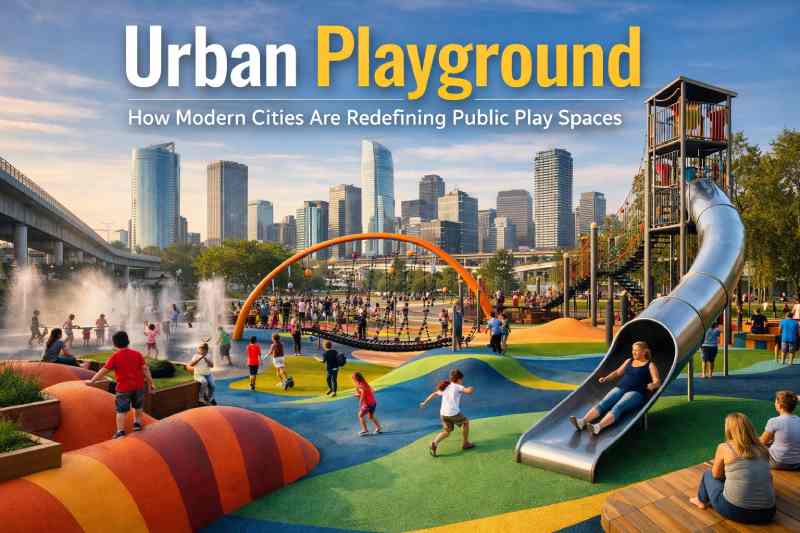
The concept of the Urban Playground emerged from a desire to create more engaging environments. Designers began experimenting with landscapes rather than individual pieces of equipment. Hills, tunnels, climbing walls, rope structures, and water features now form part of many contemporary playground designs.
This evolution reflects a deeper understanding of how children interact with their surroundings. Instead of limiting play to specific structures, modern playgrounds encourage open-ended exploration where imagination leads the experience.
Transforming Underused Spaces into Play Areas
One of the most exciting aspects of modern city design is the transformation of neglected spaces into lively public environments.
Urban playgrounds frequently appear in locations that were once overlooked or unused. Examples include:
Spaces Beneath Bridges and Flyovers
Large transport structures often leave empty areas beneath them. These spaces can be converted into sports courts, climbing structures, and interactive play zones that serve nearby communities.
Rooftop Play Areas
In densely populated cities where land is scarce, rooftops of public buildings or residential complexes sometimes become safe and imaginative play areas.
Revitalised Public Squares
Many cities redesign old plazas by adding colourful installations, seating areas, and play equipment. These improvements attract families and transform quiet spaces into lively gathering spots.
Schoolyards Shared with Communities
Schools increasingly open their playgrounds to neighbourhood residents outside school hours. This approach maximises the use of available space while strengthening community relationships.
How Urban Playgrounds Support Child Development
Play is essential for children’s physical, cognitive, and emotional development. Urban playgrounds offer valuable opportunities for learning and growth.
Physical Development
Climbing structures, balance beams, and obstacle courses help children develop strength, coordination, and confidence in their physical abilities.
Creative Thinking
Open-ended play environments allow children to invent games, explore different possibilities, and express their imagination freely.
Social Skills
Playing with others teaches children how to communicate, cooperate, and solve problems together. These interactions help build empathy and emotional intelligence.
Risk Awareness
Carefully designed play environments allow children to experience manageable levels of challenge. Learning how to navigate small risks helps them build resilience and independence.
The Role of Landscape and Nature in Urban Play
Many contemporary playground designs include natural elements to balance the urban environment.
Trees, plants, water features, and natural materials such as wood and stone introduce organic textures that contrast with surrounding buildings and roads. These elements create calming environments while encouraging exploration.
Natural play environments also provide educational opportunities. Children can learn about plants, insects, and environmental sustainability while engaging in outdoor activities.
Technology and Innovation in Urban Playground Design
As cities continue to innovate, technology is beginning to influence playground design as well.
Some modern installations include interactive lighting systems, motion-activated features, and sound elements that respond to movement. These features create immersive experiences that combine play with creativity and digital innovation.
However, many designers remain careful not to overuse technology. The goal is to maintain the simplicity and freedom of traditional play while enhancing engagement through thoughtful design.
Urban Playgrounds as Cultural and Artistic Spaces
Play environments increasingly serve as platforms for artistic expression. Many installations are designed by architects, artists, and designers who collaborate to create visually striking structures.
These spaces often feature bold colours, unusual shapes, and imaginative themes. They become attractions not only for children but also for photographers, tourists, and design enthusiasts.
Public art combined with interactive play encourages residents to view their city in new and exciting ways.
The Future of Urban Play Spaces
As cities continue to grow, the need for creative recreational environments will only increase. Future urban playgrounds are likely to emphasise sustainability, inclusivity, and adaptability.
Designers are exploring materials that are environmentally friendly and long-lasting. They are also focusing on flexible spaces that can serve multiple purposes, such as community events, performances, and relaxation.
Urban planners increasingly recognise that playful public spaces are not luxuries but essential components of healthy cities.
FAQs
What is an Urban Playground?
An Urban Playground is a recreational play space located within a city environment. It is designed to encourage physical activity, creativity, and social interaction among residents and visitors.
Who can use an Urban Playground?
Although many features are designed for children, these spaces often welcome people of all ages. Families, teenagers, and adults can enjoy relaxation areas, interactive installations, and social spaces.
Why are Urban Playgrounds important for cities?
They improve quality of life by encouraging outdoor activity, strengthening community relationships, and transforming unused urban spaces into vibrant public environments.
How are modern playgrounds different from traditional ones?
Modern designs often include artistic structures, landscape elements, and interactive features rather than only standard equipment such as swings and slides.
Can Urban Playgrounds support environmental sustainability?
Yes. Many designs incorporate green spaces, natural materials, and environmentally friendly construction methods to promote sustainable urban development.
Conclusion
Urban environments are constantly adapting to meet the needs of growing populations. Amid the busy streets and towering buildings, people still require spaces where they can relax, play, and connect with others.
The Urban Playground represents a creative response to this challenge. By transforming everyday city spaces into environments of exploration and enjoyment, these innovative play areas bring life, colour, and community spirit into urban landscapes.