Choosing finance for a used car can be confusing because you’re trying to balance cost, flexibility, and long-term value. Personal Contract Purchase (PCP) is popular since it offers lower monthly payments and clear end-of-agreement choices that help you stay in control of your budget.
Many drivers compare it with traditional loans because they want a simple way to upgrade without feeling tied down. Read ahead to understand how PCP works for used cars and what benefits and drawbacks you should weigh up.
How PCP Works for Used Cars
Personal Contract Purchase (PCP) spreads the cost of a used car in fixed monthly payments over several years, depending on your individual agreement. Once you select your car and sign the agreement, you will start to pay instalments based on the car’s expected value at the end of the term. An important distinction is that you’re paying for its depreciation, not the total value.
The Benefit of Choice
At the end of the agreement, you will have the option to pay for the rest of the car’s value (balloon payment) and own it outright, switch to another car and sign a new agreement, or simply return the car. These options help buyers who want flexibility because they can adjust their choice if their budget or lifestyle changes.
This makes PCP popular since it gives you more control at the end of the agreement while still keeping monthly costs lower than Hire Purchase (HP). Many buyers find a PCP loan for used cars attractive because it lets them choose what happens next without pressure.
In addition, used cars tend to hold their value better today since reliability has improved across most brands, so PCP is now more practical than it once was.
The Pros of Using PCP for Used Cars
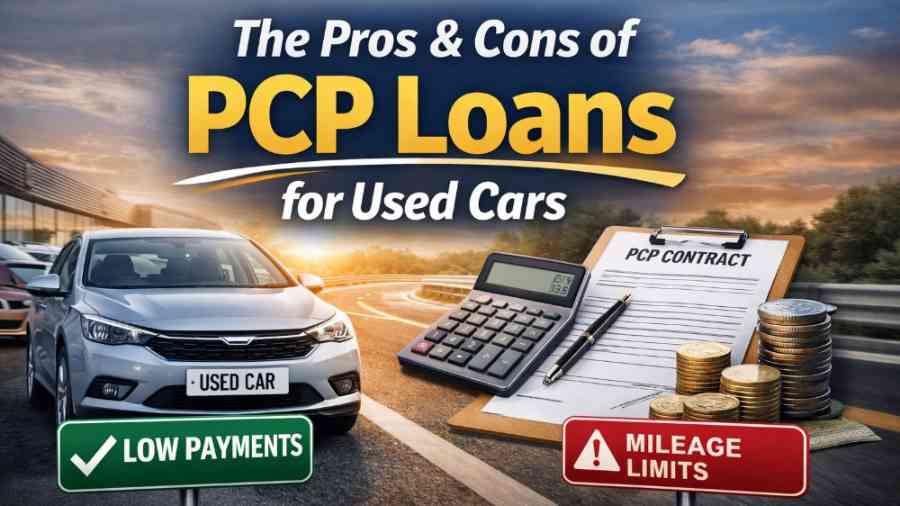
Lower payments are one clear benefit because PCP usually gives you smaller monthly instalments than a standard loan and this helps you stretch your budget. You’re not paying off the full value of the car during the agreement so you can choose a better model without feeling under pressure each month. Many buyers welcome this since used cars keep rising in price as demand stays high year after year.
As we mentioned above, another strong benefit is flexibility at the end because you can return the car, keep it, or trade it in. This structure supports drivers who don’t want long-term ownership or who like driving different, newer models every few years. You’re also free to reassess your situation at the end because your budget and priorities may have changed.
The Cons of Using PCP for Used Cars
Mileage and condition rules can be restrictive because PCP agreements set clear limits. If you go over the mileage or return the car with excess wear then charges may apply. This is important for commuters and frequent travellers because underestimating mileage is common and it could increase costs down the line.
Another drawback is that you might not build equity during the agreement because you’re not repaying the full car value. Used vehicles can lose value quickly due to age or market shifts and this reduces the likelihood of positive equity at trade-in. If outright ownership is your priority then PCP might not be the best match for you.
Wrapping Up
PCP works well if you value lower payments and flexibility because it helps you stay in control of your upgrade cycle while keeping monthly costs manageable. You still need to think carefully about mileage, condition expectations, and whether long-term ownership matters to you.
By weighing both sides, you’ll be better equipped to choose a finance option that supports your everyday driving needs and avoids unexpected costs later.