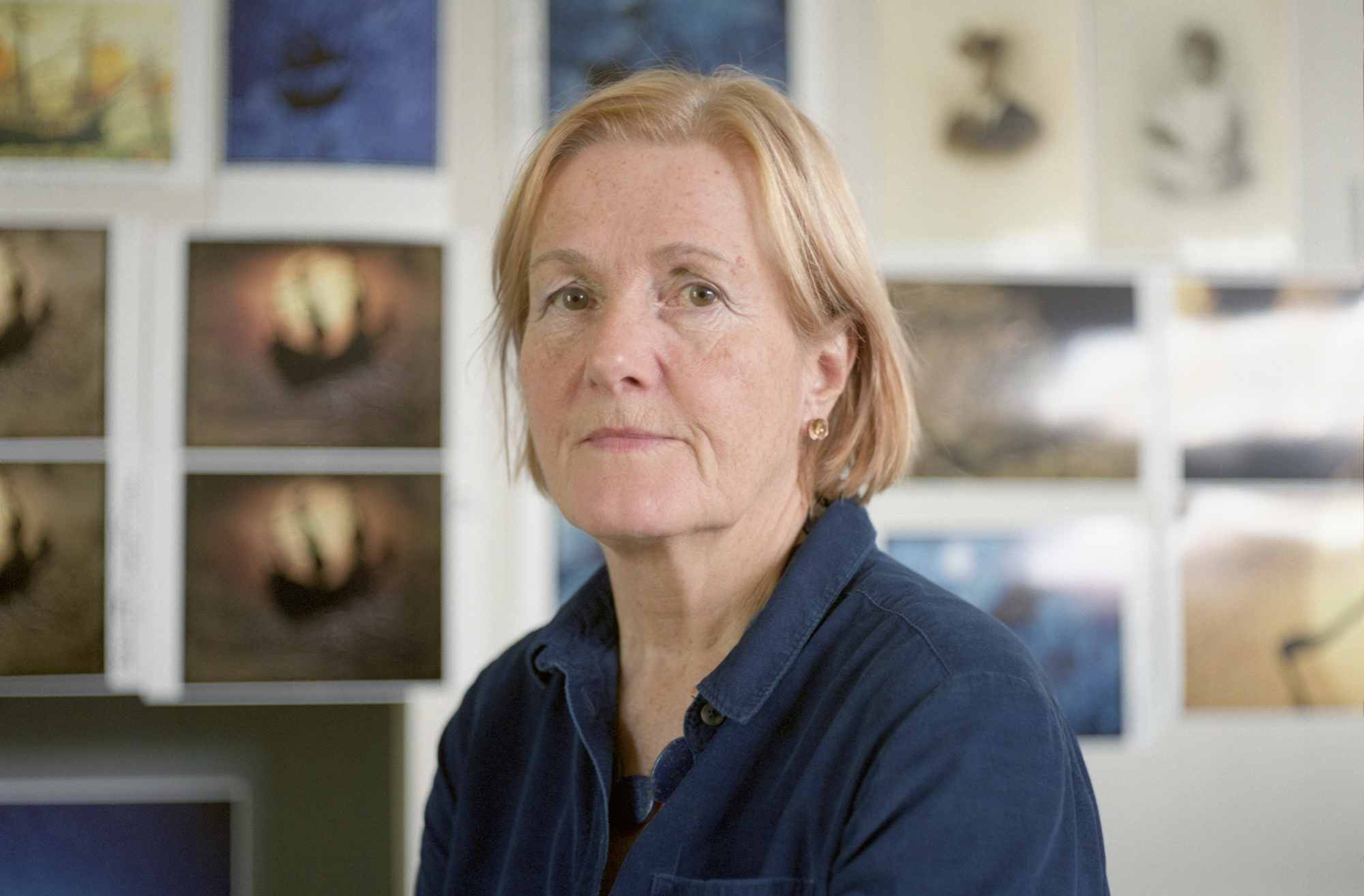
The world of contemporary photography has been shaped by many creative minds, yet few have challenged the medium in the way Susan Derges has. Known for her experimental approach and deep engagement with natural landscapes, she has redefined what photography can be. Rather than relying solely on a traditional camera, she allows nature itself to participate in the image-making process.
Her work combines art, science, and environment, producing images that appear both mysterious and deeply connected to the natural world. Through innovative photograms created directly in rivers, forests, and coastal areas, she has introduced a unique artistic language that continues to inspire photographers and visual artists around the globe.
Early Life and Artistic Influences
Susan Derges was born in London in 1955 and grew up during a period when British art was undergoing significant change. The cultural atmosphere of the 1960s and 1970s encouraged experimentation, and this environment played a role in shaping her creative outlook.
During her early years, she showed a strong interest in visual arts and creative expression. Rather than immediately focusing on photography, she initially pursued painting. Painting allowed her to explore colour, composition, and abstract thinking, which later influenced the visual qualities of her photographic work.
She studied at the Chelsea School of Art in London before continuing her education at the Slade School of Fine Art. Both institutions were well known for encouraging innovation and interdisciplinary thinking. These experiences helped her develop a strong conceptual approach that later became central to her artistic identity.
While painting remained her primary medium during these years, she gradually became curious about photography as a tool for exploring the relationship between light, movement, and natural forms.
Transition from Painting to Photography
The shift from painting to photography marked a turning point in her creative journey. While traditional photography offered new possibilities, it also presented limitations. Using a camera often placed a physical distance between the artist and the subject.
Rather than accepting these limitations, Susan Derges began to experiment with ways to remove the camera from the process entirely. This exploration eventually led her to the technique of photograms.
Photograms involve placing objects directly onto light-sensitive photographic paper and exposing them to light. The objects block or shape the light, creating images without the need for a camera lens.
Although photograms had been used by earlier modernist artists, she expanded the technique beyond the confines of the darkroom. Instead of carefully arranging objects indoors, she started using entire landscapes as part of the creative process.
This bold step laid the foundation for the distinctive style that would later define her career.
Discovering the Power of Nature in Photography
One of the most remarkable aspects of her work is the way she collaborates with natural forces. Rather than controlling every detail of the image, she allows elements such as water, moonlight, wind, and vegetation to influence the final result.
This approach transforms photography into a dialogue between artist and environment. Instead of simply capturing nature, the environment becomes an active participant in the creation of the image.
This philosophy distinguishes Susan Derges from many contemporary photographers who rely heavily on technology and digital manipulation. Her work emphasises physical interaction with the landscape and the unpredictable beauty of natural processes.
By embracing chance and natural movement, she produces images that feel organic and alive.
The River Photograms
Among her most celebrated works are the river photograms created during the 1990s. These images were produced in an extraordinary way.
At night, she would place large sheets of photographic paper directly into the shallow water of rivers. Plants, stones, and currents moved naturally across the surface of the paper while the scene was briefly illuminated by moonlight or controlled flashes of light.
The resulting images captured delicate patterns formed by flowing water and submerged vegetation. The photographs appeared almost abstract, yet they contained unmistakable traces of the natural world.
This series attracted international attention because it demonstrated an entirely new way of creating photographic imagery.
The river photograms remain some of the most iconic works associated with Susan Derges and are frequently discussed in exhibitions and academic studies of contemporary photography.
Exploring Scientific and Natural Phenomena
Another defining feature of her artistic practice is the exploration of scientific ideas. She often draws inspiration from natural phenomena that reveal hidden patterns within the world around us.
These interests include:
Sound and Vibration
Early in her career, she experimented with visualising sound vibrations. By exposing photographic materials to sound waves, she created patterns that represented the physical movement of energy.
Biological Growth
Some projects focused on organic processes such as the development of frogspawn or the intricate structures found in plants and marine life.
Celestial Cycles
The movement of the moon and the rhythm of tides have also influenced her work. These themes reflect the connection between Earth’s natural systems and human perception.
Through these explorations, Susan Derges demonstrates how art can reveal unseen aspects of nature.
Living and Working in the Devon Landscape
For many years, the artist has lived near Dartmoor in Devon. This region of southwest England is known for its dramatic moorlands, rivers, and changing weather patterns.
The landscape provides an ideal environment for her experimental photographic techniques. The rivers, streams, and tidal areas surrounding Dartmoor have become essential components of her artistic practice.
Living close to these natural settings allows her to observe subtle seasonal changes and respond to them creatively. The environment becomes both a studio and a collaborator.
Many of her most striking images were created in these locations, where water, light, and vegetation interact in constantly shifting ways.
Artistic Philosophy and Creative Approach
The philosophy behind her work centres on the relationship between humans and the natural world. Rather than presenting nature as something distant or decorative, she seeks to immerse the viewer within it.
This perspective encourages a deeper awareness of environmental processes and the beauty of natural forms.
The work of Susan Derges also reflects a sense of patience and contemplation. Many of her images require careful preparation and an openness to unpredictable outcomes.
Unlike fast-paced digital photography, her approach often involves waiting for the right natural conditions—moonlight reflecting on water, the movement of currents, or the presence of particular plant forms.
This slower, more thoughtful method allows the final images to capture moments that feel timeless and meditative.
Exhibitions and International Recognition
Over the years, her photographs have been exhibited in major galleries and museums across Europe, North America, and Asia.
Her work has appeared in institutions such as:
- The Victoria and Albert Museum in London
- The Metropolitan Museum of Art in New York
- The Art Institute of Chicago
These exhibitions have introduced her work to a global audience and highlighted the significance of her experimental techniques.
Collectors and curators often recognise her images for their poetic quality and innovative use of photographic materials.
Through these exhibitions, Susan Derges has gained a reputation as one of the most influential figures in contemporary photographic art.
Influence on Contemporary Photography
The impact of her work extends far beyond individual exhibitions. Many younger artists have drawn inspiration from her approach to camera-less photography and environmental image-making.
Her work helped revive interest in photograms during the late twentieth century, encouraging photographers to explore alternative methods outside conventional digital techniques.
In academic settings, her images are frequently discussed as examples of how art can engage with ecological awareness and scientific observation.
The creative legacy of Susan Derges continues to shape conversations about the future of photography and the relationship between art and nature.
The Lasting Significance of Her Work
The significance of her work lies not only in the images themselves but also in the ideas they represent.
Her photographs remind viewers that nature is not merely a subject to be documented. Instead, it is a dynamic force capable of shaping artistic expression.
By allowing rivers, plants, and natural light to leave their marks on photographic paper, she has created a form of visual storytelling that blends science, philosophy, and environmental awareness.
Through decades of experimentation, Susan Derges has expanded the boundaries of photography and demonstrated that creativity often emerges from collaboration with the natural world.
FAQs
Who is Susan Derges?
Susan Derges is a British photographic artist known for experimental camera-less photography and large-scale photograms created directly within natural landscapes.
What makes Susan Derges’ photography unique?
Her work often involves placing photographic paper in rivers or natural environments, allowing water, plants, and light to create images without the use of a camera.
Where does Susan Derges create most of her work?
Much of her photography has been produced in the landscapes of Devon, particularly around rivers and moorlands near Dartmoor.
What artistic themes appear in Susan Derges’ work?
Her images explore themes such as nature, scientific phenomena, environmental cycles, and the relationship between humans and the natural world.
Why is Susan Derges important in contemporary photography?
She helped revive interest in photograms and introduced new ways of integrating natural processes into photographic art.
Conclusion
Susan Derges stands as one of the most innovative figures in contemporary photography. Through a remarkable blend of artistic intuition and scientific curiosity, she has transformed the way images can be created. By removing the camera and allowing natural forces to shape her work, she opened new possibilities for photographic expression.
Her river photograms and environmental experiments demonstrate that photography can be more than a simple act of documentation. It can become a collaboration with nature itself.