When the sun is shining and the days are long, children naturally want to explore, play, and get messy. A tuff tray, also known as a sensory or activity tray, is one of the best ways to encourage creativity, imagination, and hands-on learning during the summer months. It’s simple to set up, easy to clean, and endlessly versatile. From water play to nature exploration, there are countless summer tuff tray ideas that can keep children engaged while supporting their sensory, cognitive, and social development.
What Is a Tuff Tray and Why It’s Perfect for Summer
A tuff tray is a large, shallow plastic tray designed to contain messy play and sensory materials. It can be placed on the floor, a stand, or even outdoors in the garden. Because of its size and durability, it’s ideal for group play, giving children plenty of space to mix, pour, scoop, and create.
Summer is the perfect time for tuff tray activities. The warm weather allows for outdoor play involving water, sand, mud, and other messy materials without worrying about indoor cleanup. Moreover, these setups foster imagination and curiosity, helping children learn about science, nature, and problem-solving through play.
Beach-Themed Tuff Tray
A beach-themed tray brings the seaside to your garden or classroom. Fill the tray with play sand, shells, pebbles, and toy sea creatures. Add a small section of blue-coloured water or fabric to represent the ocean. Children can build sandcastles, dig for “buried treasure,” or arrange their own miniature beach scenes.
You can also add small umbrellas, toy boats, or plastic buckets to make it more interactive. Encourage children to create stories about their beach day, which promotes language development and storytelling skills.
To make it educational, include sorting tasks such as grouping shells by size or colour, or simple counting exercises with pebbles. This theme is fantastic for both sensory play and basic maths learning.
Ice Cream Shop Tuff Tray
Nothing says summer quite like ice cream. For this setup, fill the tray with coloured playdough or moulding foam to represent different ice cream flavours. Provide scoops, cones, plastic cups, and sprinkles made from coloured rice or paper confetti.
Children can pretend to run their own ice cream parlour, serving “customers” and taking orders. This imaginative play helps develop communication, cooperation, and role-play skills.
If you prefer a sensory version, use shaving foam or whipped soap instead of dough. You can even freeze small bowls of coloured water to make “ice scoops” for a cooling and tactile experience.
Water Play Adventure
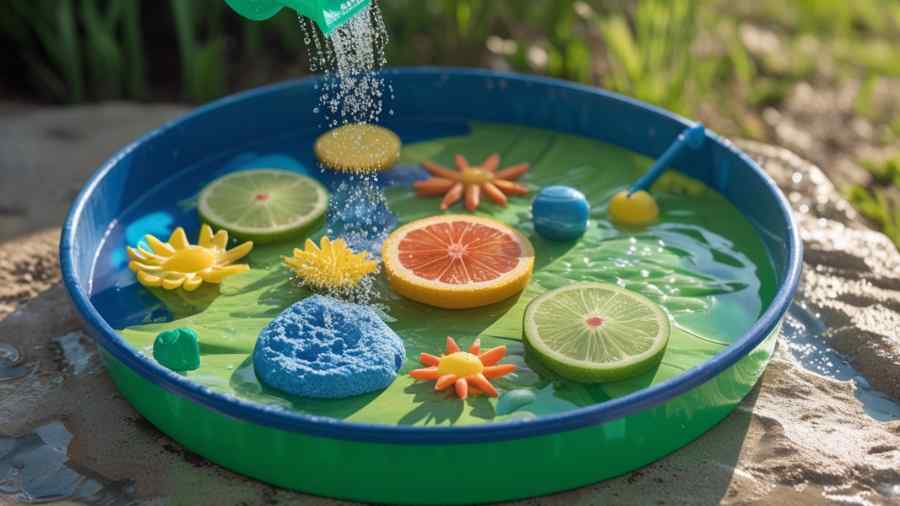
Water play is a summer favourite. Fill the tray with cool water and add cups, funnels, spoons, and floating toys. You can create a mini “water world” by adding toy fish, boats, and water wheels.
A great variation is a “sink or float” experiment, where children predict which objects will sink or float before testing them. This introduces early science concepts like buoyancy and observation.
For toddlers, simply splashing and pouring water builds hand-eye coordination and motor control. For older children, you can add ice cubes, soap bubbles, or even a few drops of food colouring to make the activity more engaging.
Garden Nature Exploration
Bring nature closer by using the tuff tray to explore plants, soil, and small creatures. Fill the tray with soil, leaves, twigs, and flowers collected from the garden. Provide magnifying glasses and containers for children to observe insects or study textures.
You can turn it into a “mini gardener” setup by letting children plant seeds in small pots placed inside the tray. Over time, they can water and watch the seeds grow, learning about plant life cycles and responsibility.
This idea promotes environmental awareness and mindfulness, helping children appreciate nature’s beauty and the importance of caring for living things.
Ice and Colour Mixing Experiment
This idea combines science and sensory exploration. Freeze coloured water into ice cubes using food colouring or natural juices. Place the cubes in the tray and let children explore how they melt under the summer sun.
Provide brushes, droppers, or spoons to mix the melting colours and create artistic patterns on paper. Discuss what happens as colours blend or when warm water is poured over the ice.
This simple activity encourages curiosity, scientific thinking, and fine motor skills. It’s also a cooling, refreshing play experience for hot days.
Lemonade Stand Role Play
A summer lemonade stand is a fun way to combine imaginative play and learning. Fill the tuff tray with yellow-coloured water, sliced lemons, plastic cups, and jugs. Children can pretend to make and sell lemonade, practising social interaction and simple maths through counting cups and “money.”
This setup promotes problem-solving, teamwork, and creativity. It’s also a great opportunity to discuss healthy drinks, flavours, and the sense of taste. For extra fun, let them mix colours to make different “fruit juices” or add scented water for a multi-sensory experience.
Mini Jungle or Safari Adventure
Create a wild animal world by covering the tray with soil, leaves, and small branches. Add toy animals such as lions, elephants, or monkeys, and create rivers or ponds using blue fabric or water.
Children can pretend to be explorers, rescuing animals or guiding them through the jungle. This helps develop storytelling, imagination, and understanding of wildlife habitats.
Educators can use this setup to introduce topics like animal classification, ecosystems, and conservation in an engaging way.
Bubble Science and Foam Fun
Foam play is both exciting and easy to set up. Mix dish soap with water to create bubbly foam in the tuff tray. Add a few drops of colour to make it vibrant. Children can explore the texture with their hands, spoons, or cups, building towers of foam and experimenting with bubbles.
For a scientific twist, introduce bubble wands and ask children to observe the shapes and sizes of bubbles. Discuss what causes bubbles to form and why they eventually pop. This combination of sensory play and simple science encourages critical thinking in a playful way.
Sea Life Sensory Exploration
This idea works wonderfully for ocean-loving children. Fill the tray with blue jelly, water beads, or coloured rice to represent the sea. Add toy fish, shells, and starfish for a realistic underwater scene.
Encourage children to identify and count the sea creatures or use them to tell stories about life under the ocean. This setup promotes descriptive language, fine motor skills, and sensory awareness.
Art and Creativity Corner
Turn your tuff tray into a mini art studio. Line it with paper and provide paintbrushes, sponges, or natural materials such as leaves and flowers. Children can use the materials to create patterns, prints, and textures.
Outdoor art play reduces the worry about mess and gives children freedom to express themselves. You can also incorporate recycled items such as bottle caps or cardboard pieces to promote eco-friendly creativity.
Safety and Practical Tips for Summer Tuff Trays
- Supervision is essential: Especially for water or small object play, always monitor children closely.
- Use washable and non-toxic materials: Safe for skin and easy to clean.
- Plan for shade: Keep trays out of direct sunlight to prevent overheating or fading materials.
- Rotate themes: Changing the setup every few days keeps children interested and engaged.
- Involve the children: Let them choose themes or help with setup and cleanup to encourage independence.
By following these guidelines, tuff tray play can remain safe, educational, and fun throughout the summer.
Educational Benefits of Tuff Tray Play
Beyond entertainment, tuff tray activities support various areas of development:
- Cognitive skills: Experimenting, comparing, and problem-solving through sensory exploration.
- Motor skills: Scooping, pouring, squeezing, and building enhance fine and gross motor control.
- Language development: Storytelling and role-play expand vocabulary and communication.
- Emotional growth: Sensory play can be calming and therapeutic, helping children manage emotions.
- Social interaction: Working together promotes cooperation and sharing.
These activities make learning natural and enjoyable, which is particularly valuable during school breaks.
Conclusion
Tuff trays are far more than just play equipment; they are creative platforms for discovery, imagination, and learning. Whether it’s splashing water, building sandcastles, or mixing colours, these summer tuff tray ideas turn ordinary afternoons into extraordinary adventures. They provide a balance of fun and education, helping children grow intellectually, emotionally, and socially while enjoying the beauty of the season.
With a bit of creativity and simple materials, you can turn any sunny day into an unforgettable play experience. So, bring out the tuff tray, add a touch of imagination, and let the summer magic begin.