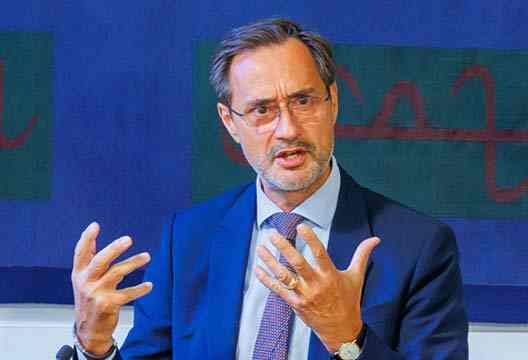
In an era shaped by shifting alliances, economic uncertainty, and rising geopolitical tensions, few thinkers have contributed as consistently and insightfully as Robin Niblett. Known for his strategic clarity and balanced analysis, he has played a pivotal role in shaping global policy discussions over the past two decades. From leading one of the world’s most respected think tanks to advising governments and corporations, his influence stretches far beyond academic circles.
Early Life and Educational Foundations
Robin Niblett was born in 1961 in the United Kingdom. From an early age, he showed a keen interest in global affairs, a curiosity that would later define his professional life. He pursued higher education with a focus on modern languages and international studies, equipping himself with both analytical and cultural insight.
His academic journey laid the groundwork for a career that would bridge policy, research, and real-world geopolitical strategy. Unlike many scholars who remain confined to academia, Robin Niblett developed a practical understanding of international affairs that enabled him to engage directly with policymakers and institutions.
Early Career and Entry into Policy Circles
Experience in the United States
Before becoming widely recognised in the UK, Robin Niblett spent a significant portion of his early career in the United States. He joined the Center for Strategic and International Studies (CSIS), a prominent think tank in Washington, D.C.
At CSIS, he held several senior roles, including:
- Director of the Europe Programme
- Executive Vice President
- Chief Operating Officer
This period was crucial in shaping his understanding of transatlantic relations. Working in Washington allowed him to observe firsthand how global policy is crafted and implemented, particularly in relation to Europe and NATO alliances.
Building Transatlantic Expertise
Robin Niblett became known for his deep expertise in US–Europe relations. His work often focused on how these partnerships could adapt to emerging global challenges, including economic shifts and security threats. This experience would later prove invaluable during his leadership at Chatham House.
Leadership at Chatham House
Transforming a Global Institution
In 2007, Robin Niblett became Director and Chief Executive of Chatham House, formally known as the Royal Institute of International Affairs. His tenure lasted until 2022, making him one of the longest-serving leaders in the organisation’s history.
Under his leadership, Chatham House underwent significant transformation:
- Expanded its global reach and influence
- Increased research output and policy impact
- Strengthened financial sustainability
- Enhanced its reputation as a neutral platform for dialogue
Robin Niblett steered the organisation through some of the most turbulent global events of the 21st century.
Navigating Global Crises
During his time at Chatham House, the world faced numerous challenges, including:
- The 2008 global financial crisis
- The Arab Spring uprisings
- The United Kingdom’s decision to leave the European Union
- Rising tensions between major powers
Robin Niblett ensured that Chatham House remained a trusted voice during these events, providing balanced analysis and fostering constructive debate among global leaders.
Intellectual Contributions and Thought Leadership
Understanding the Changing World Order
One of the defining aspects of Robin Niblett’s work is his analysis of the evolving global order. He has consistently argued that the post-Cold War system is under strain, with power shifting away from traditional Western dominance.
He highlights several key trends:
- The rise of China as a global power
- The reassertion of Russia on the international stage
- Increasing fragmentation in global governance
- The growing importance of regional alliances
Robin Niblett’s insights help policymakers understand not just what is happening, but why it matters.
The New Cold War Narrative
In recent years, Robin Niblett has contributed to discussions around what many describe as a “new Cold War,” particularly between the United States and China. His perspective is nuanced. Rather than framing the situation as a simple binary conflict, he emphasises complexity, interdependence, and the risks of oversimplification.
He argues that economic ties between major powers make outright confrontation less likely, but also more unpredictable.
Approach to Geopolitics
Pragmatism Over Ideology
Robin Niblett is widely respected for his pragmatic approach. He avoids ideological extremes and instead focuses on realistic, evidence-based analysis. This has made his work particularly valuable to governments and institutions seeking practical solutions.
Bridging Policy and Academia
One of his key strengths is the ability to bridge the gap between academic theory and real-world policy. Robin Niblett communicates complex ideas in a way that is accessible without sacrificing depth. This balance has helped him influence both scholarly debates and policy decisions.
Influence on Global Policy
Advising Governments and Institutions
Throughout his career, Robin Niblett has advised various governments, international organisations, and private sector leaders. His guidance often centres on risk management, strategic planning, and navigating geopolitical uncertainty.
Media and Public Engagement
Robin Niblett is also a prominent public commentator. He has appeared on major international media platforms, offering insights on global events. His ability to explain complex issues clearly has made him a trusted voice for both policymakers and the general public.
Post-Chatham House Career
Continuing Influence
After stepping down as Director of Chatham House in 2022, Robin Niblett did not retreat from public life. Instead, he transitioned into roles that allow him to continue shaping global discourse.
He serves as:
- A distinguished fellow at Chatham House
- An adviser to strategic consultancy firms
- A speaker on international affairs
Academic Leadership
Robin Niblett is set to take on the role of Warden at New College, Oxford. This position reflects his commitment to education and intellectual leadership, as well as his enduring influence in academic circles.
Writing and Publications
Contributions to Global Debate
Robin Niblett has written extensively on international relations. His articles and essays appear in leading publications, where he addresses pressing global issues such as:
- Climate change and geopolitics
- Economic resilience
- Strategic competition between major powers
Authorial Work
His book, The New Cold War, explores the shifting dynamics of global power. It provides a comprehensive analysis of the challenges facing the international system and offers insights into how nations can navigate an increasingly complex landscape.
Leadership Style and Legacy
Collaborative Leadership
Robin Niblett’s leadership style is often described as collaborative and inclusive. He values diverse perspectives and encourages open dialogue. This approach has been instrumental in fostering innovation and maintaining the credibility of institutions he has led.
Lasting Impact
The legacy of Robin Niblett lies in his ability to adapt to change while maintaining a clear strategic vision. His work has helped shape how governments, organisations, and individuals understand the modern world.
Relevance in Today’s World
Navigating Uncertainty
In a time of rapid change, the insights of Robin Niblett remain highly relevant. His emphasis on resilience, adaptability, and cooperation provides a framework for addressing global challenges.
Lessons for Future Leaders
Future policymakers and analysts can learn much from his approach:
- Prioritising long-term thinking
- Embracing complexity
- Building strong international partnerships
These principles are essential for navigating the uncertainties of the 21st century.
FAQs
Who is Robin Niblett and why is he important?
Robin Niblett is a leading British expert in international relations known for shaping global policy debates and leading Chatham House for 15 years.
What is Robin Niblett best known for?
He is best known for his leadership at Chatham House and his analysis of global geopolitics, especially US–Europe relations and emerging world order shifts.
What are Robin Niblett’s views on global power shifts?
He believes power is becoming more distributed globally, with rising influence from countries like China and increasing complexity in international relations.
Has Robin Niblett written any books?
Yes, he authored The New Cold War, which examines modern geopolitical tensions and global competition.
What role will Robin Niblett have at Oxford?
He is set to become the Warden of New College, Oxford, contributing to academic leadership and intellectual development.
Conclusion
Robin Niblett stands as one of the most influential voices in contemporary geopolitics. His career reflects a rare combination of intellectual depth, practical experience, and strategic foresight. From his transformative leadership at Chatham House to his ongoing contributions to global debate, he has consistently demonstrated an ability to interpret and navigate the complexities of international relations.
As the world continues to evolve, the insights of Robin Niblett will remain invaluable. His work not only helps us understand the present but also prepares us for the challenges of the future.