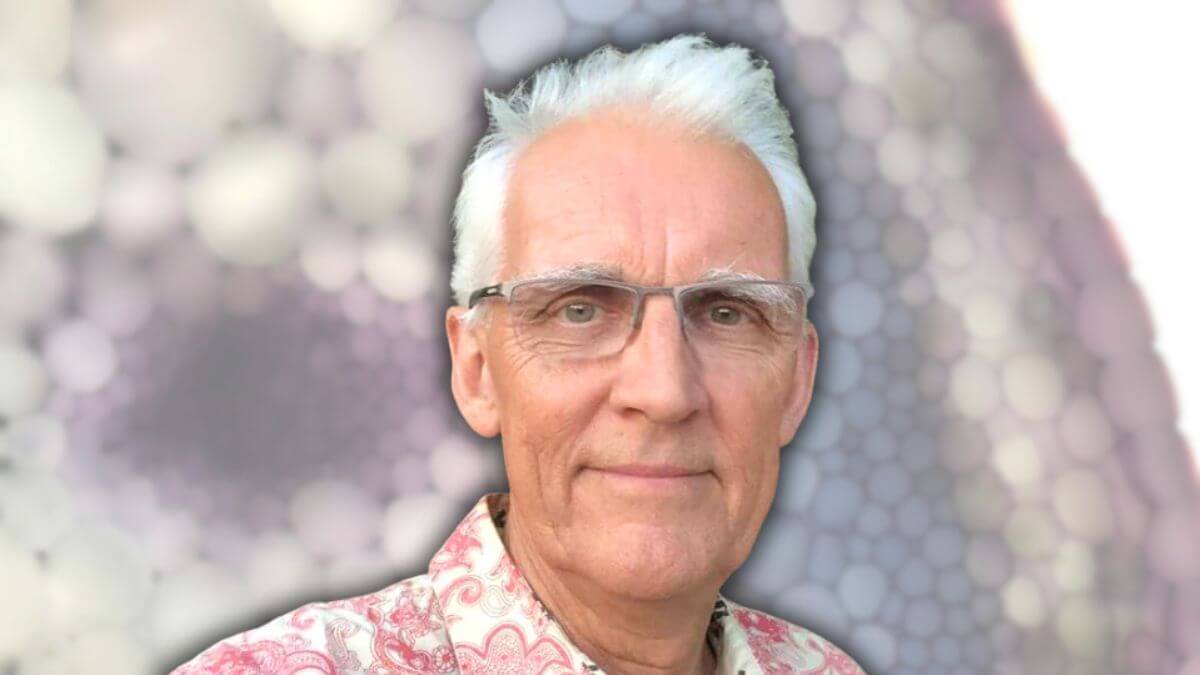
Rob Kesseler stands as one of the most distinctive creative figures in contemporary British art. His work occupies a rare and compelling space where visual art, scientific research, and botanical exploration meet. Rather than treating science as a mere reference point, Rob Kesseler embeds it into the very fabric of his creative practice. Through close collaboration with scientists and the use of advanced microscopy, he reveals hidden plant structures that are invisible to the naked eye and transforms them into powerful works of art.
Early Life and Formative Influences
Rob Kesseler was born in the United Kingdom and developed an early fascination with both visual culture and the natural environment. From a young age, he showed an interest in drawing, observation, and form, skills that would later become central to his artistic language. Unlike many artists who focus exclusively on emotional or symbolic expression, Kesseler was equally drawn to structure, pattern, and detail.
His education nurtured this dual interest. During his formative years as an art student, he began to question the traditional boundaries between disciplines. Why, he wondered, should art and science exist in isolation when both seek to understand and interpret the world? This question became a defining thread throughout his career.
Education and Academic Career
Rob Kesseler’s academic journey eventually led him to Central Saint Martins, one of the United Kingdom’s most respected institutions for art and design. There, he not only studied but later became a key figure in shaping interdisciplinary education. Over time, he rose to the position of Professor of Arts, Design and Science, reflecting his commitment to bridging creative and scientific thinking.
As an educator, Kesseler encouraged students to look beyond conventional categories. He championed collaboration, experimentation, and curiosity, urging emerging artists to engage with scientists, researchers, and technologists. His teaching philosophy mirrored his own practice: knowledge becomes richer when disciplines overlap.
Even after becoming an Emeritus Professor, his influence within academic circles has continued. His work is frequently cited as an example of how art education can evolve to address contemporary challenges, including environmental change, biodiversity loss, and public engagement with science.
Artistic Philosophy and Conceptual Foundations
At the heart of Rob Kesseler’s work lies a simple yet profound belief: the natural world contains infinite visual stories waiting to be revealed. Plants, seeds, pollen, and microscopic structures are not merely scientific specimens; they are sources of wonder, rhythm, and aesthetic power.
Kesseler does not see science as cold or detached. Instead, he views it as deeply poetic. By using scientific tools such as scanning electron microscopes, he uncovers forms that resemble landscapes, architectural structures, and abstract compositions. These discoveries challenge the viewer’s assumptions about scale and perception.
Importantly, his work does not aim to explain science in a didactic way. Rather, it creates an emotional and visual connection that sparks curiosity. Viewers are often surprised to learn that what they are seeing is real, not imagined. This sense of discovery is central to his philosophy.
The Creative Process: From Microscope to Artwork
Rob Kesseler’s creative process is meticulous and collaborative. It typically begins in scientific laboratories, where he works alongside botanists, biologists, and researchers. Using high-powered microscopes, he captures detailed images of plant material, focusing on structures such as pollen grains, seed surfaces, and internal tissues.
These initial images are often monochrome and purely scientific in nature. Kesseler then transforms them through a carefully considered artistic process. Colour is added by hand, compositions are refined, and multiple images may be combined to create a single final piece. The result is neither purely scientific illustration nor conventional fine art, but something uniquely his own.
This method reflects respect for both disciplines. The scientific accuracy of the source material is preserved, while artistic intuition guides the final presentation. Each work becomes a dialogue between observation and imagination.
Major Themes in His Work
Several recurring themes run through Rob Kesseler’s body of work.
One of the most prominent is scale. By enlarging microscopic structures to monumental proportions, he forces viewers to reconsider their relationship with the natural world. What is normally invisible becomes dominant, challenging the hierarchy of what we consider important or worthy of attention.
Another key theme is biodiversity. His focus on plant reproduction and structure highlights the incredible diversity of life forms that sustain ecosystems. In a time of environmental uncertainty, his work carries an implicit message about the fragility and value of the natural world.
There is also a strong sense of collaboration embedded in his practice. Many of his projects are created in partnership with scientific institutions, reflecting a belief in shared knowledge and collective creativity.
Exhibitions and Public Recognition
Rob Kesseler’s work has been exhibited widely, both in the United Kingdom and internationally. His exhibitions often attract diverse audiences, including art enthusiasts, scientists, students, and members of the general public. This broad appeal is a testament to the accessibility and visual impact of his work.
Museums, galleries, and cultural institutions have displayed his pieces not only as artworks but also as tools for engagement and education. His exhibitions frequently spark conversations about the role of art in communicating scientific ideas and environmental issues.
Critical reception has consistently highlighted the originality of his approach. Reviewers often note the balance he achieves between precision and beauty, as well as the emotional response his work evokes.
Publications and Contribution to Knowledge
In addition to exhibitions, Rob Kesseler has contributed significantly through publications. His books explore botanical subjects in depth, combining scientific insight with striking imagery. These works are valued not only by art readers but also by educators and researchers.
By presenting scientific content in an accessible and visually engaging way, his publications help bridge the gap between specialist knowledge and public understanding. They demonstrate how visual culture can play a vital role in education and awareness.
Influence on Contemporary Art and Education
Rob Kesseler’s influence extends beyond his own artwork. He has helped shape a generation of artists who are comfortable working across disciplines. Many contemporary practitioners now engage with science, technology, and environmental research, reflecting a shift that Kesseler helped pioneer.
In educational contexts, his work is often used as a case study in interdisciplinary practice. It shows students that creativity is not limited to traditional materials or methods, and that collaboration can lead to unexpected and meaningful outcomes.
His legacy is also evident in the growing acceptance of art-science projects within mainstream cultural institutions. What was once considered niche is now increasingly recognised as essential to addressing complex global issues.
Environmental Awareness and Cultural Impact
Although Rob Kesseler does not position himself as an activist in a conventional sense, his work carries a quiet but powerful environmental message. By revealing the intricate beauty of plant life, he fosters appreciation and respect for nature.
This approach avoids alarmism and instead encourages reflection. Viewers are invited to consider the richness of the natural world and their own role within it. In this way, his art contributes to a broader cultural shift towards sustainability and environmental responsibility.
Conclusion
Rob Kesseler is more than an artist; he is a connector of worlds. Through his unique fusion of art and science, he has transformed the way we see plants, microscopy, and the creative process itself. His work challenges perceptions, inspires curiosity, and demonstrates the profound value of interdisciplinary thinking.
From his early fascination with form and detail to his influential role as an educator and internationally recognised artist, Kesseler’s career reflects a consistent commitment to exploration and collaboration. In revealing the hidden structures of nature, he reminds us that beauty and knowledge often lie just beyond the limits of ordinary vision.