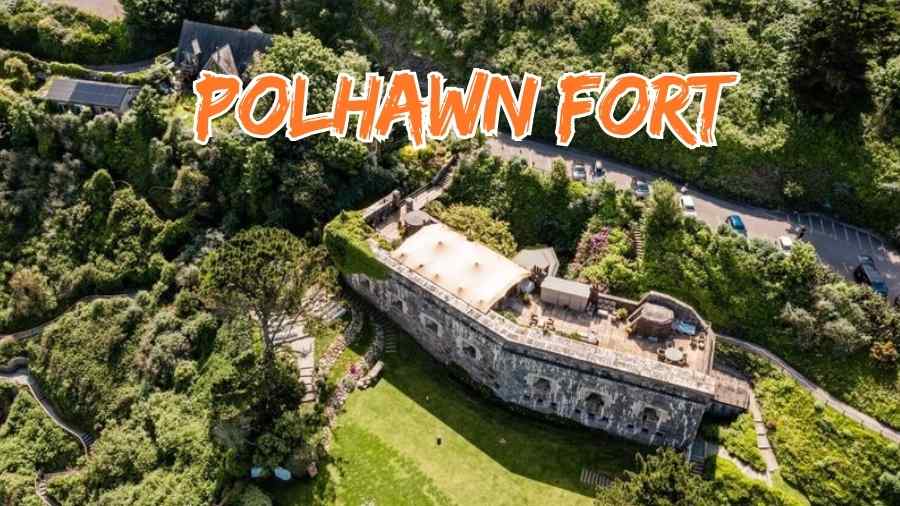
Perched dramatically above the sweeping curve of Whitsand Bay, Polhawn Fort stands as one of Cornwall’s most striking and evocative historic structures. With sheer cliffs beneath its stone walls and uninterrupted views across the English Channel, Polhawn Fort blends military heritage, architectural character, and natural beauty in a way few places can match.
The Origins of Polhawn Fort
Victorian Britain and Coastal Defence
The mid-nineteenth century was a time of uncertainty for Britain. Growing international tensions and rapid naval developments raised fears of invasion, particularly along the south coast. In response, the government initiated a wide-ranging programme of coastal fortifications designed to protect key ports and naval installations.
Polhawn Fort was constructed during this era, originally known as Polhawn Battery. Its position on the Rame Peninsula was carefully chosen to guard the eastern approaches to Whitsand Bay and, by extension, the vital naval facilities of Plymouth. The fort formed part of a broader defensive network intended to deter enemy landings before they could threaten strategic assets.
Construction and Early Challenges
Although built with ambition and urgency, Polhawn Fort encountered problems almost from the outset. Advances in military technology progressed faster than expected, rendering aspects of its design outdated before it was fully operational. Additionally, the fort’s orientation and firing angles were later judged to be less effective than planned.
As a result, Polhawn Fort never fulfilled its intended military purpose on the scale envisioned by its designers. Nevertheless, its solid construction and imposing form ensured its survival, allowing it to transition into new roles as history moved on.
Architectural Character and Design
Exterior Features
Polhawn Fort is a powerful example of Victorian military architecture. Constructed from robust stone, its curved outer walls follow the natural contours of the cliff edge, creating both a defensive barrier and a visually dramatic silhouette.
From the sea, the fort appears almost carved from the landscape itself, its pale stone contrasting with the deep blues and greens of the water below. From land, the approach is deliberately understated, reinforcing the sense of privacy and seclusion that defines the site.
Interior Spaces
Inside, the fort reveals a surprisingly refined atmosphere. Original features such as vaulted ceilings, thick stone walls, and historic passageways remain integral to the structure, yet they coexist with carefully considered modern enhancements.
Rooms are arranged to maximise natural light and sea views, offering a sense of openness that contrasts with the fort’s formidable exterior. This balance between strength and elegance is one of Polhawn Fort’s most compelling qualities.
From Military Site to Private Ownership
Decline of Defensive Use
By the early twentieth century, Polhawn Fort’s military relevance had faded. Changes in warfare, combined with shifting defence priorities, meant that many coastal forts were decommissioned or repurposed.
Polhawn Fort passed into private ownership, marking the beginning of a new chapter. Freed from its original function, the building was gradually adapted for civilian use while retaining its historic character.
Adaptive Reuse and Preservation
Throughout its private ownership, efforts were made to preserve the fort’s architectural integrity. Rather than undergoing radical alteration, the building was sensitively restored, allowing its history to remain visible in every stone and archway.
This approach ensured that Polhawn Fort would not become a forgotten relic but instead continue to play an active role in Cornwall’s cultural landscape.
Polhawn Fort as an Exclusive Venue
A Destination for Celebrations
In recent decades, Polhawn Fort has gained prominence as an exclusive venue for private events, particularly weddings. Its remote setting, combined with the sense of stepping into a self-contained world, makes it highly appealing to those seeking a memorable and distinctive location.
The fort offers a rare combination: historical gravitas, dramatic scenery, and a feeling of complete privacy. For many visitors, the experience feels less like attending an event and more like being invited into a secret coastal retreat.
Accommodation and Atmosphere
Accommodation within the fort allows guests to remain on site, deepening the sense of immersion. Bedrooms and communal spaces are designed to complement the building’s character, blending comfort with authenticity.
Evenings at Polhawn Fort are particularly atmospheric. As daylight fades, the sound of waves below and the vastness of the open sea create a setting that feels both intimate and awe-inspiring.
The Natural Setting of Whitsand Bay
Coastal Beauty
Whitsand Bay is renowned for its long, unspoilt beaches and expansive views. Polhawn Fort’s elevated position provides panoramic vistas that change constantly with the weather and the tides.
From bright, clear mornings to dramatic sunsets, the landscape surrounding the fort enhances its presence and contributes significantly to its appeal.
Relationship with the Landscape
Unlike many historic structures that dominate their surroundings, Polhawn Fort appears to exist in harmony with the landscape. Its stonework echoes the tones of the cliffs, while its low profile ensures that the natural environment remains the central feature.
This integration is one of the reasons the fort feels timeless rather than imposing, a place shaped as much by nature as by human design.
Cultural and Heritage Significance
Grade II* Listing
Polhawn Fort holds Grade II* listed status, recognising its exceptional historical and architectural importance. This designation places it among a select group of buildings considered particularly significant to England’s heritage.
The listing ensures that any alterations respect the fort’s character, safeguarding it for future generations.
A Symbol of Transformation
Beyond its formal heritage status, Polhawn Fort symbolises the adaptive reuse of historic structures. It demonstrates how buildings once associated with conflict and defence can be reimagined as places of celebration and connection.
This transformation adds a layer of meaning to the fort’s story, making it relevant not only as a relic of the past but also as a living, evolving space.
Visitor Experience and Perception
First Impressions
For many visitors, the first glimpse of Polhawn Fort is unforgettable. Approaching the site, the sudden reveal of the fort against the sea creates a sense of anticipation and wonder.
The journey itself contributes to the experience, reinforcing the feeling of arriving somewhere special and removed from everyday life.
Lasting Memories
Guests often describe their time at Polhawn Fort as deeply memorable. Whether attending a celebration or simply experiencing the setting, the combination of history, scenery, and atmosphere leaves a lasting impression.
It is this emotional resonance, as much as its physical beauty, that defines the fort’s enduring appeal.
Conclusion
Polhawn Fort stands as a powerful reminder of Britain’s Victorian past while embodying the possibilities of thoughtful preservation and reinvention. From its origins as a coastal defence installation to its current life as a refined and exclusive destination, the fort has adapted without losing its soul.
Set against the raw beauty of the Cornish coastline, Polhawn Fort offers more than a physical space; it provides an experience shaped by history, landscape, and atmosphere. Its enduring appeal lies in this balance, making it not only a landmark of architectural significance but also a place where past and present coexist in remarkable harmony.
FAQs
What is Polhawn Fort best known for today?
Polhawn Fort is best known as an exclusive coastal venue, particularly popular for private celebrations and weddings, while retaining its historic identity.
How old is Polhawn Fort?
The fort dates back to the mid-nineteenth century, making it over 150 years old.
Is Polhawn Fort historically protected?
Yes, it holds Grade II* listed status, highlighting its architectural and historical importance.
Where is Polhawn Fort located?
It is situated on the Rame Peninsula in Cornwall, overlooking Whitsand Bay and the English Channel.
Can people stay overnight at Polhawn Fort?
Yes, the fort includes on-site accommodation, allowing guests to fully experience the location.