Pavey Ark is one of the most instantly recognisable and talked-about fells in the English Lake District. Rising sharply above the calm waters of Stickle Tarn, this rugged mountain combines drama, history, and challenge in a way that few Lakeland peaks can match. For walkers, scramblers, climbers, and even casual admirers of landscape, pavey ark holds a special place as both a visual icon and a deeply rewarding destination.
Situated within the Langdale Pikes, pavey ark is not simply a summit to tick off a list. It is a fell that demands respect, rewards preparation, and offers a profound sense of connection to the wild character of the Lake District. From its steep southern face to its surprisingly gentle northern slopes, the mountain reveals different personalities depending on how it is approached.
Understanding Pavey Ark’s Place in the Lake District
Location and Setting
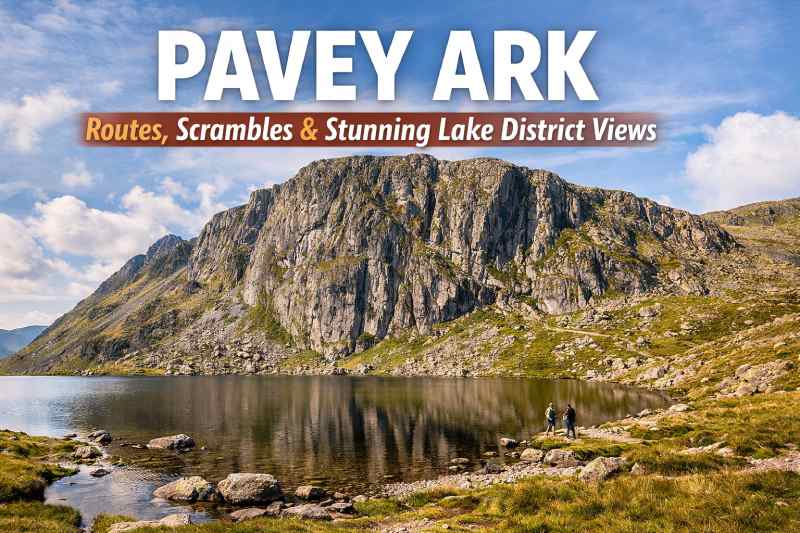
Pavey ark sits at the head of Great Langdale, one of the most scenic valleys in Cumbria. It forms part of the Langdale Pikes group, alongside neighbouring fells such as Harrison Stickle and Pike of Stickle. From below, especially when viewed from Stickle Tarn, pavey ark appears as a towering wall of rock, dominating the landscape with a sense of scale that often surprises first-time visitors.
Despite its dramatic appearance, pavey ark is not the highest fell in the area, yet it feels imposing because of its steep southern cliffs and exposed ridgelines. The contrast between the tranquil tarn below and the sheer rock above is one of the reasons the fell has become so iconic.
Height and Character
At just under 700 metres, pavey ark is modest in height compared to some of the Lake District’s larger peaks. However, height alone does not define difficulty or presence. The fell’s craggy southern face gives it a seriousness that demands careful route choice, while the northern side rises more gradually across open moorland.
This dual nature makes pavey ark fascinating. It can be a challenging scramble for the adventurous or a steady walk for those who prefer a less exposed ascent.
The Geological Story of Pavey Ark
Ancient Volcanic Origins
The rock that forms pavey ark dates back hundreds of millions of years to a time of intense volcanic activity. Much of the fell is composed of hard volcanic tuff and lava, which explains the steep, broken cliffs that characterise its southern face. Over time, erosion has shaped these rocks into gullies, ledges, and terraces that now form famous routes such as Jack’s Rake.
The durability of this volcanic rock has allowed pavey ark to retain its sharp features, giving it a rugged profile that contrasts with the smoother, grassy slopes found elsewhere in the Lake District.
Shaping by Ice and Weather
During the last ice age, glaciers carved out the surrounding valleys and deepened corries, leaving behind features like Stickle Tarn. The steep drop from the tarn to the valley floor emphasises the scale of pavey ark and adds to its dramatic appeal.
Weather continues to shape the fell today. Freeze-thaw cycles widen cracks in the rock, while heavy rainfall channels water down gullies, subtly altering routes over time.
Approaches and Routes to Pavey Ark
Walking Routes for Hillwalkers
For walkers who prefer to avoid exposure, the most straightforward way up pavey ark is from the north. This route involves approaching via the moorland slopes from the direction of Thunacar Knott. While longer and less visually dramatic, it offers a safer option in poor weather or for those new to Lakeland fells.
The path is generally clear, with a steady gradient that allows walkers to gain height gradually. This approach also provides expansive views across the central fells, making it rewarding despite lacking the excitement of the southern face.
The Classic Approach from Stickle Tarn
Most people associate pavey ark with the approach from Stickle Tarn. The walk up to the tarn itself is an experience, with the path climbing through stone-strewn ground before opening up to reveal the still waters nestled beneath towering cliffs.
From here, the fell truly reveals its character. Walkers are confronted with the craggy face of pavey ark and must decide whether to tackle a scramble or find an alternative route.
Jack’s Rake: The Famous Scramble
What Makes Jack’s Rake Special
Jack’s Rake is arguably the most famous route on pavey ark. Rather than a single climb straight up, it is a diagonal rake, or natural ledge system, that cuts across the face of the crag. This makes it one of the longest scrambles in the Lake District.
The route is graded as an easy scramble, but that description can be misleading. While the technical difficulty is not extreme, the exposure is significant. In places, the drop below is sheer, and a slip could have serious consequences.
Experience Required
Jack’s Rake is best suited to confident walkers with scrambling experience and a good head for heights. Dry conditions are essential, as wet rock can be extremely slippery. Helmets are often recommended due to the risk of loose stones dislodged by other climbers above.
Despite its challenges, many consider Jack’s Rake one of the most rewarding scrambles in England. The sense of journey, the constant change in perspective, and the dramatic views make it unforgettable.
Alternative Scrambles and Climbs
Other Rakes and Gullies
Pavey ark offers several alternative routes for those seeking something different. North Rake and Easy Gully provide other lines of ascent, each with their own character and difficulty. These routes are generally less popular than Jack’s Rake but still demand care and experience.
Rock Climbing Routes
The crags of pavey ark are also a well-known climbing venue. Numerous traditional climbing routes are established on the fell, attracting climbers who enjoy the solid rock and dramatic setting. These routes vary widely in grade and require appropriate equipment and skills.
Conditions and Seasonal Considerations
Summer and Dry Weather
In summer, pavey ark is at its most accessible. Longer daylight hours and drier rock make scrambling safer, though crowds can be an issue during peak periods. Early starts are often recommended to avoid congestion on popular routes.
Winter Challenges
In winter, pavey ark transforms into a very different proposition. Snow and ice can turn straightforward scrambles into serious mountaineering routes. Ice axes, crampons, and winter skills become essential, and many walkers choose to avoid the fell entirely in severe conditions.
The northern slopes may offer safer passage, but navigation becomes more challenging in snow or low visibility.
Safety and Responsible Walking
Planning and Preparation
Anyone heading to pavey ark should plan carefully. Checking the weather forecast, understanding the chosen route, and carrying appropriate equipment are all essential. Mobile phone signal can be unreliable, so maps and navigation skills remain important.
Respect for the Environment
Pavey ark lies within a protected landscape, and visitors are encouraged to follow responsible walking practices. Sticking to established paths where possible helps reduce erosion, and all litter should be carried out.
Why Pavey Ark Continues to Inspire
Pavey ark is more than a hill to climb. It is a place that challenges perception, offering both intimidation and invitation in equal measure. For some, it is the thrill of Jack’s Rake that draws them in. For others, it is the quiet satisfaction of reaching the summit via a gentler route and looking back over the valley below.
The fell encapsulates what makes the Lake District special: variety, history, beauty, and the chance to test oneself against the landscape. Each visit can feel different depending on weather, season, and route, ensuring that pavey ark never feels exhausted or predictable.
FAQs
Is pavey ark suitable for beginners?
Pavey ark can be suitable for beginners if approached via the gentler northern route, but scrambles like Jack’s Rake are not recommended without prior experience.
How long does it take to climb pavey ark?
Most ascents take between three and five hours, depending on the chosen route, pace, and weather conditions.
Is Jack’s Rake dangerous?
Jack’s Rake involves significant exposure and can be dangerous in wet or icy conditions. It should only be attempted by confident scramblers in good weather.
Can pavey ark be climbed in winter?
Yes, but winter ascents require proper mountaineering equipment and skills. Conditions can be severe and should not be underestimated.
What is the best time of year to visit pavey ark?
Late spring to early autumn offers the best balance of weather and daylight, though conditions can change rapidly at any time.
Conclusion
Pavey ark stands as one of the Lake District’s most compelling fells, combining dramatic scenery with a rich variety of routes and experiences. Whether approached as a steady walk, a thrilling scramble, or a technical climb, it offers something memorable to all who treat it with respect. Its enduring appeal lies in this versatility, ensuring that pavey ark remains a landmark of adventure, challenge, and quiet awe in the heart of Cumbria.