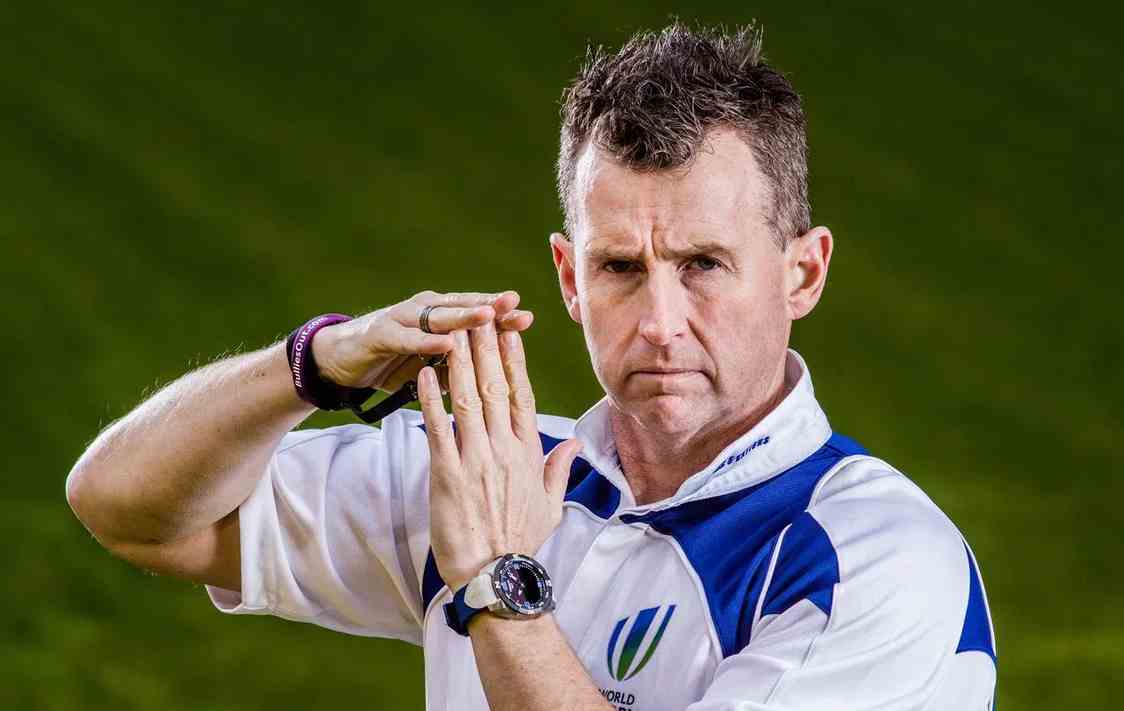
Rugby union is a sport built on discipline, respect, and the authority of the referee. Few officials in the history of the sport have commanded that authority with the calm confidence and personality of Nigel Owens. Known around the world for his fairness, clarity, and occasional humour on the field, he became one of the most respected referees the sport has ever seen.
For more than two decades, he officiated some of the most important matches in international rugby. From Six Nations fixtures to the Rugby World Cup final, his presence in the middle of the pitch symbolised professionalism and integrity. His career not only shaped modern refereeing but also influenced the wider culture of rugby.
Early Life in Rural Wales
The story of Nigel Owens begins in the quiet countryside of Carmarthenshire in West Wales. Born on 18 June 1971 in the village of Mynyddcerrig, he grew up in a farming community where rugby was deeply embedded in local culture.
Life in rural Wales often revolves around community, farming, and sport. Like many young Welsh boys, he developed a strong connection with rugby from an early age. However, rather than pursuing a playing career, he gradually became fascinated by the rules of the game and the role of the referee.
Encouraged by teachers and local rugby organisers, he began refereeing youth matches as a teenager. What started as a small involvement in school and local games soon developed into a serious commitment to officiating.
Despite his growing passion for refereeing, his early career was far from glamorous. He worked various jobs while continuing to officiate amateur matches across Wales. These early experiences helped him understand the game deeply and refine his decision-making skills.
The Journey Into Professional Refereeing
Becoming an international rugby referee requires years of dedication and consistent performance. For Nigel Owens, the journey from local rugby grounds to international stadiums took patience and determination.
During the late 1990s and early 2000s, he steadily climbed through the Welsh rugby officiating system. His natural authority, calm communication style, and ability to manage players quickly caught the attention of rugby administrators.
In 2001, he became a professional referee under the Welsh Rugby Union. This milestone allowed him to focus fully on refereeing and begin officiating higher-level competitions, including European club tournaments and professional league matches.
The transition to professional rugby was demanding. Matches became faster, players more physical, and decisions more scrutinised. Yet his composed manner and sharp understanding of the laws of rugby allowed him to adapt quickly.
His international breakthrough arrived in 2005 when he officiated his first test match between Ireland and Japan. From that point onwards, he began to establish himself as one of the most reliable referees on the global stage.
Becoming a Leading Figure in World Rugby
Over the following years, Nigel Owens built a reputation for consistency and professionalism. Rugby authorities frequently selected him to officiate high-profile international matches, including Six Nations fixtures and Rugby Championship games.
One of the qualities that set him apart from many referees was his communication style. Rather than relying purely on authority, he often explained his decisions clearly to players. This approach helped reduce tensions on the field and maintained the flow of the game.
Players and coaches appreciated his transparency. Even when decisions were controversial, most participants respected his reasoning and fairness.
As his career progressed, he began refereeing in multiple Rugby World Cups. Officiating in such tournaments requires exceptional performance, as only the best referees are selected for the knockout stages.
The highlight of his career came in 2015 when he was chosen to referee the Rugby World Cup Final between New Zealand and Australia at Twickenham Stadium. Being appointed to officiate the final of the sport’s most prestigious tournament confirmed his status among the elite referees in rugby history.
Record-Breaking Achievements
Few referees in rugby have achieved the same level of recognition and longevity as Nigel Owens. His career is marked by several impressive milestones that underline his contribution to the sport.
One of his most notable achievements was becoming the first referee to officiate 100 international test matches. This milestone reflects not only his experience but also the trust that rugby authorities placed in his judgement.
Throughout his career he officiated hundreds of professional matches across domestic leagues, European competitions, and international tournaments.
His professionalism earned him numerous honours, including recognition from rugby organisations and sporting institutions. In 2015, he was named World Rugby Referee of the Year, an award that highlighted his influence on the global game.
In addition, he was appointed a Member of the Order of the British Empire for services to sport, recognising both his refereeing career and his positive impact on the rugby community.
A Unique Refereeing Style
One reason why Nigel Owens became so popular among rugby fans was his distinctive personality on the field.
Referees are often perceived as distant authority figures, but he brought a human touch to the role. His calm tone and occasional humour helped maintain control without escalating conflict.
Many memorable moments from his career involve his witty responses to players who questioned decisions. These exchanges often demonstrated his ability to maintain authority while keeping the atmosphere respectful.
His refereeing style can be summarised through several key characteristics:
Clear Communication
He consistently explained decisions in simple language that players could understand. This transparency reduced confusion and built trust between the referee and teams.
Calm Leadership
Rugby matches can become heated, especially in high-stakes competitions. His ability to remain composed under pressure helped maintain order during intense moments.
Respect for the Spirit of the Game
Beyond enforcing rules, he emphasised the core values of rugby, particularly respect between players, referees, and officials.
Because of these qualities, many players have stated that they felt comfortable with him in charge of their matches.
Personal Challenges and Advocacy
Outside rugby, Nigel Owens has spoken openly about personal struggles that shaped his life.
Growing up in a small rural community, he faced challenges related to identity and acceptance. For many years he dealt with internal pressures and mental health difficulties while continuing to pursue his refereeing career.
In 2007 he publicly came out as gay, becoming one of the first high-profile officials in rugby to do so. His openness helped encourage greater acceptance and inclusivity within the sport.
He has since become a strong advocate for mental health awareness and equality in sport. Through interviews, public speaking, and community involvement, he has shared his experiences in order to support others facing similar challenges.
His honesty and courage have earned him respect beyond the rugby field.
Life Beyond the International Stage
After more than twenty years at the highest level, Nigel Owens retired from international refereeing in 2020. His final professional match marked the end of an extraordinary career that spanned thousands of hours on rugby pitches around the world.
Retirement from refereeing did not mean stepping away from the sport entirely. Instead, he became involved in mentoring and training new referees in Wales.
By sharing his experience with younger officials, he continues to influence the next generation of rugby referees.
In addition to his involvement in rugby development, he remains closely connected to farming. Returning to agricultural life in West Wales has allowed him to reconnect with the rural environment that shaped his upbringing.
He also works as a television pundit and commentator, offering insights into refereeing decisions and match dynamics during major tournaments.
Cultural Impact on Rugby
The legacy of Nigel Owens extends far beyond statistics or match records. He helped reshape how referees interact with players and how fans perceive officiating in rugby.
His style demonstrated that referees can maintain authority while also communicating openly and respectfully. This approach has influenced modern refereeing standards, particularly in professional competitions.
Moreover, his openness about personal struggles has contributed to broader conversations about inclusivity and mental health within sport.
Many younger referees now cite him as an inspiration when entering the profession.
FAQs
Who is Nigel Owens?
Nigel Owens is a Welsh rugby union referee widely regarded as one of the greatest officials in the history of the sport.
When did Nigel Owens referee the Rugby World Cup Final?
He refereed the Rugby World Cup Final in 2015 between New Zealand and Australia at Twickenham Stadium.
How many international matches did Nigel Owens referee?
He became the first rugby referee to officiate more than 100 international test matches during his career.
Why is Nigel Owens respected in rugby?
He is respected for his calm leadership, clear communication with players, and consistent application of rugby laws.
What does Nigel Owens do after retirement?
After retiring from international refereeing, he became involved in mentoring referees, working as a rugby commentator, and continuing his farming activities in Wales.
Conclusion
Nigel Owens remains one of the most influential referees rugby union has ever seen. From humble beginnings in rural Wales to officiating the biggest matches in world rugby, his career reflects dedication, resilience, and professionalism.
His calm leadership on the field, combined with his willingness to speak openly about personal challenges, has left a lasting mark on the sport. By promoting fairness, respect, and transparency, he helped set a standard that continues to guide referees around the world.