Tucked away in the rolling countryside of Lancashire, Nicky Nook is one of those quietly magnificent places that rewards anyone willing to lace up their boots and head outdoors. Though modest in height compared to the dramatic peaks of the Lake District, this much-loved fell offers expansive views, peaceful surroundings, and a sense of heritage rooted deeply in the landscape of North West England.
Where Is Nicky Nook Located?
Situated near the village of Scorton in Lancashire, Nicky Nook lies on the western edge of the Forest of Bowland National Landscape. The area is known for its undulating hills, reservoirs, farmland, and open moorland. Unlike more heavily trafficked hiking destinations, this fell retains a welcoming, local charm.
The nearest access point for many walkers is Scorton, a picturesque village with stone cottages, traditional pubs, and a village green. From here, well-trodden paths guide visitors gradually upwards through fields and woodland before reaching open hillside.
Although the summit stands at only around 214 metres above sea level, its elevated position above the surrounding plains gives it an unexpectedly commanding outlook.
The Landscape and Natural Beauty
One of the defining features of Nicky Nook is its varied scenery. The lower slopes are dotted with grazing livestock and framed by dry stone walls, while higher sections transition into open moorland with sweeping grasses and hardy shrubs.
Panoramic Views from the Summit
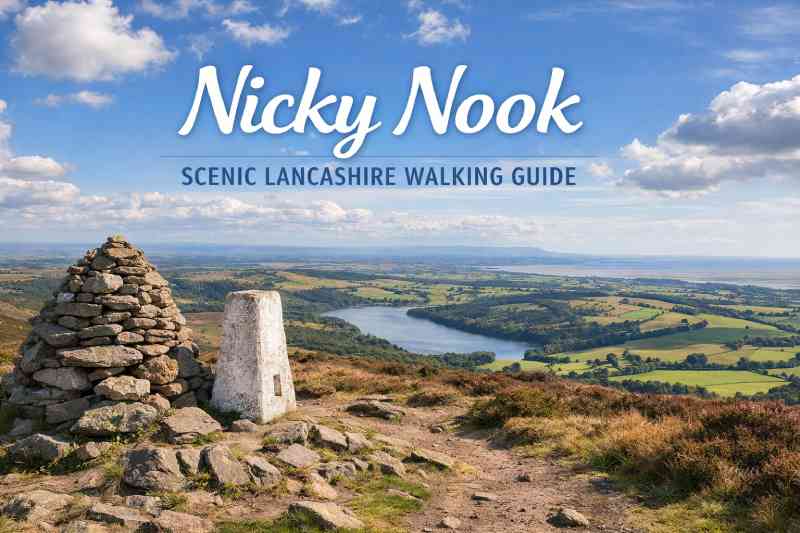
The summit is marked by a distinctive stone cairn and a trig point, both serving as landmarks for walkers. On a clear day, the view stretches across Morecambe Bay towards the distant Lake District fells. To the west, the Fylde Coast lies beyond rolling farmland. In exceptional conditions, some walkers even claim to glimpse the Isle of Man on the horizon.
The openness of the summit makes it an ideal spot for photography, picnics, and quiet reflection. Unlike steeper mountains, the relatively gentle climb allows many visitors to enjoy the view without feeling exhausted.
Wildlife and Seasonal Changes
The surrounding countryside supports a range of wildlife. Skylarks are often heard overhead during spring and summer, their song carrying across the open fields. In autumn, the landscape shifts to warm hues of gold and rust, while winter occasionally brings frost-tipped grasses and crisp, clear air.
Spring is particularly charming, as hedgerows bloom and lambs graze in nearby pastures. Each season gives the fell a different personality, encouraging repeat visits throughout the year.
Walking Routes and Accessibility
One of the reasons Nicky Nook remains popular is its accessibility. The paths are generally well maintained, and several circular routes allow walkers to tailor their journey according to fitness level and available time.
Short Circular Walk from Scorton
The most common route begins in Scorton and follows public footpaths across fields before ascending the hillside. This circular walk typically takes between one and three hours, depending on pace and stops for photographs.
The gradient is moderate rather than steep, making it suitable for families with older children and for those looking for a gentle introduction to hill walking.
Longer Walks and Reservoir Routes
For those seeking a longer outing, routes can be extended to include Grizedale Reservoir and surrounding countryside. These extended walks provide additional variety, combining woodland paths, waterside stretches, and open hillside sections.
Good footwear is recommended, particularly after rainfall, as parts of the path can become muddy. Even so, the terrain is generally forgiving compared to higher and more rugged mountain routes elsewhere in the region.
The History and Origins of the Name
The name Nicky Nook has intrigued visitors for generations. While its precise origins remain uncertain, local historians suggest possible links to Old Norse language or folklore traditions.
The word “nook” often refers to a secluded corner or sheltered place. “Nicky” has been associated in folklore with spirits or water entities in northern England. Some theories propose that the name may have referred to a small valley or hidden hollow connected to local legends.
Though no definitive explanation has been confirmed, the mysterious quality of the name adds to the hill’s charm. It evokes a sense of storytelling and ancient connection to the land.
The Forest of Bowland Connection
The fell sits within the wider Forest of Bowland National Landscape, an area designated for its natural beauty. This designation helps protect the region’s moorland, farmland, and biodiversity.
While larger peaks in the Bowland area often attract experienced hikers, Nicky Nook offers a gentler alternative. It allows visitors to experience the character of Bowland without committing to a strenuous expedition.
The wider region is also known for its dark skies, making evening visits especially atmospheric. Watching the sun set from the summit can be a memorable experience, as the light fades across fields and distant coastline.
Why It Appeals to Walkers
There are countless hills across Britain, yet Nicky Nook continues to draw steady footfall. Its appeal lies in its balance of accessibility and reward.
Firstly, the climb is manageable for most reasonably fit individuals. Secondly, the views far exceed what one might expect from a modest elevation. Finally, the rural setting offers peace that is increasingly rare in modern life.
Many local residents treat it as a regular exercise route. Others visit occasionally for special outings, family gatherings, or simply to clear their heads after a busy week.
Photography and Outdoor Activities
Beyond walking, the area attracts photographers, runners, and nature enthusiasts. The changing light conditions create dramatic skies, especially when coastal weather systems roll inland.
Trail runners often incorporate Nicky Nook into their training circuits, appreciating the mixture of ascent and open terrain. Birdwatchers and landscape photographers also frequent the summit during early morning hours when the countryside feels especially tranquil.
Local Amenities and Visitor Information
Scorton provides convenient facilities for visitors. Cafés, pubs, and small shops make it easy to combine a walk with refreshments. Car parks are available near the village, though weekends can be busy during fair weather.
Public footpaths are clearly signposted, but carrying a basic map or using a navigation app can help ensure you remain on the intended route. Respecting farmland and livestock is important, as many paths cross working agricultural land.
Safety Considerations
Although the hill is relatively modest, preparation remains essential. Weather can change quickly, and exposed summits can feel cooler than expected. Waterproof clothing and sturdy footwear are advisable.
Mobile phone reception is generally available but should not be relied upon entirely. Informing someone of your planned route is always sensible practice, even for shorter countryside walks.
The Cultural and Community Significance
For many residents of Lancashire, Nicky Nook is more than a walking destination. It forms part of the region’s identity. School outings, charity walks, and community events have taken place along its paths over the years.
The fell has featured in local art, photography competitions, and walking guides. Its recognisable cairn silhouette is familiar to many who have grown up in the area.
Because it is neither too remote nor too commercialised, it occupies a comfortable middle ground that preserves its authenticity.
Environmental Responsibility
Visitors play a crucial role in maintaining the beauty of Nicky Nook. Following the Countryside Code helps protect both wildlife and farmland. This includes closing gates, taking litter home, and keeping dogs under control near livestock.
Erosion can occur if walkers stray from established paths, particularly in wet conditions. Remaining on marked routes helps preserve the hillside for future generations.
Sustainable tourism ensures that this cherished landscape continues to thrive without losing its character.
Best Times to Visit
While the hill is accessible year-round, each season offers a slightly different experience. Spring and summer provide longer daylight hours and warmer temperatures. Autumn delivers dramatic skies and colourful foliage. Winter can be peaceful and atmospheric, though conditions may be muddy.
Early mornings and late afternoons often provide the most rewarding light for photography and the quietest atmosphere for those seeking solitude.
FAQs
Is Nicky Nook suitable for beginners?
Yes, the climb is moderate and manageable for most people with basic fitness, though proper footwear is recommended.
How long does it take to walk up and back?
A typical circular walk from Scorton takes between one and three hours, depending on pace and route choice.
Are dogs allowed on the hill?
Dogs are welcome, but they should be kept under control, especially around grazing livestock.
Is there parking nearby?
Yes, parking is available in and around Scorton village, though it can fill quickly during busy weekends.
What makes Nicky Nook special compared to other hills?
Its accessibility, panoramic views, and peaceful setting make it stand out despite its modest height.
Conclusion
Nicky Nook may not be the tallest or most dramatic hill in Britain, but its charm lies in its balance of simplicity and splendour. With sweeping views across Lancashire, accessible walking routes, and a name steeped in local intrigue, it offers a countryside experience that feels both authentic and rewarding.