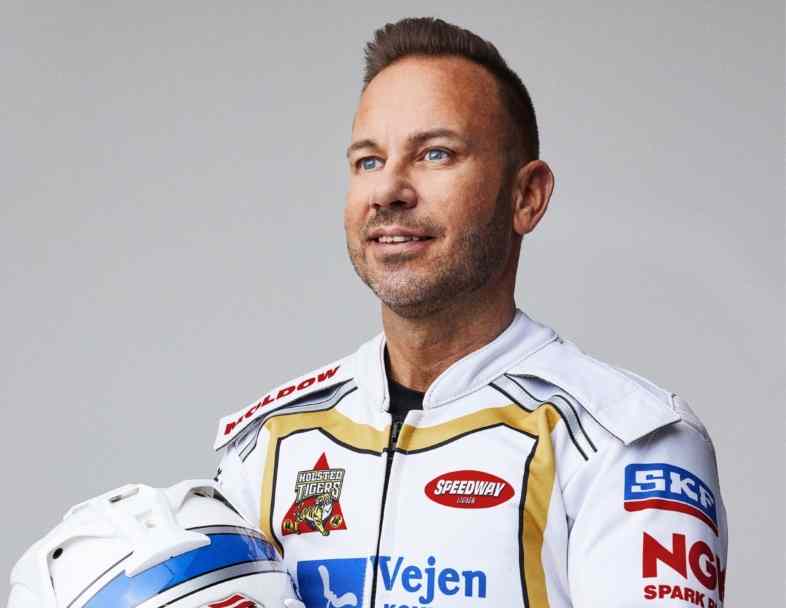
Few riders in the history of motorcycle speedway have embodied raw determination, unfiltered passion and relentless ambition quite like Nicki Pedersen. Over the course of a glittering career that has spanned decades, he has thrilled British crowds, lifted world titles and carved out a reputation as one of the most formidable competitors the sport has ever seen. From the terraces of Cardiff’s Principality Stadium to local tracks across Denmark and the UK, his name has long commanded attention.
Early Life and Introduction to Speedway
Born on 2 April 1977 in Odense, Denmark, Nicki Pedersen grew up in a country where speedway enjoys deep roots and passionate support. Denmark has produced numerous world-class riders, and from an early age it was clear that he possessed both the temperament and natural ability to join that elite group.
He began riding at the age of 11, encouraged by a family environment that understood the demands of the sport. His brother, Ronni Pedersen, would also go on to compete at a high level, creating a competitive yet supportive dynamic that sharpened his focus.
By his mid-teens, he was already demonstrating a fierce competitive edge. Those who watched him as a junior rider often remarked on two defining qualities: fearlessness into the first bend and an unwavering refusal to concede position. These traits would later become hallmarks of his professional career.
Breaking Into Professional Speedway
The Move to British Speedway
Like many aspiring European riders, he sought to test himself in the British leagues. The UK has long been considered a proving ground for elite speedway talent, with its tight circuits demanding exceptional throttle control and tactical awareness.
His early spells with clubs such as Newcastle Diamonds and Wolverhampton Wolves provided crucial experience. British fans quickly noticed the young Dane’s aggressive style and willingness to take calculated risks. Racing week in, week out on demanding tracks hardened his racing instincts and improved his adaptability.
Development of a Distinct Racing Style
By the late 1990s and early 2000s, Nicki Pedersen had developed a distinctive approach to racing:
- Lightning starts off the tapes
- Tactical awareness in tight spaces
- Controlled aggression when battling rivals
- A refusal to back down under pressure
This blend of technical precision and mental resilience would become central to his future world championship campaigns.
Ascendancy to World Champion
The First World Title – 2003
The 2003 season marked a turning point. Competing in the Speedway Grand Prix series, he displayed remarkable consistency across multiple rounds. Winning key heats and maintaining composure in decisive moments, he secured his first Individual Speedway World Championship.
For British supporters, his victory at the British Grand Prix in Cardiff was especially memorable. The roaring crowd witnessed a rider in peak form, combining speed, bravery and tactical mastery.
Further Titles in 2007 and 2008
While many riders struggle to remain at the top after a single world title, Nicki Pedersen returned stronger. He claimed additional championships in 2007 and 2008, confirming his place among speedway’s modern greats.
During these seasons, he demonstrated:
- Superior race management
- Consistent high scoring across rounds
- Mental strength in high-pressure finals
- The ability to recover from setbacks
Winning three world titles in a fiercely competitive era cemented his legacy and placed him alongside the sport’s most decorated champions.
Success with the Danish National Team
Speedway is not solely an individual pursuit. Team competitions such as the Speedway World Cup have produced some of the sport’s most dramatic moments.
Representing Denmark, Nicki Pedersen played a pivotal role in securing multiple World Cup victories. Denmark’s triumphs in 2006, 2008, 2012 and 2014 highlighted his importance as both a points scorer and inspirational figure within the squad.
His contribution extended beyond statistics. Teammates often cited his intensity and expectation of excellence as motivating forces within the camp.
British League Impact and Popularity
Eastbourne Eagles Era
One of his most successful British club spells came with the Eastbourne Eagles. His performances were instrumental in the club’s achievements, and he became a fan favourite despite — or perhaps because of — his uncompromising racing style.
Later Career in the UK
Even later in his career, Nicki Pedersen returned to British speedway, including stints with Peterborough Panthers. Such returns demonstrated both his enduring fitness and his commitment to racing at the highest possible level.
British supporters have always appreciated riders who race wholeheartedly. Although sometimes controversial, his commitment to winning has rarely been questioned.
Controversies and Competitive Fire
No honest profile would ignore the more turbulent aspects of his career. Speedway is a contact sport, and his aggressive approach has occasionally led to clashes with rivals and officials.
There have been heated exchanges, controversial disqualifications and disciplinary incidents. However, these episodes also underline the fierce competitive spirit that has driven him throughout his career.
Importantly, many within the sport recognise that great champions often walk a fine line between passion and confrontation. His intensity has both divided opinion and fuelled his success.
Technical Skill and Equipment Mastery
Elite speedway riders must understand their machinery intimately. Over the years, Nicki Pedersen has shown exceptional mechanical awareness, working closely with tuners to optimise engine performance and set-ups.
Key elements of his technical proficiency include:
- Fine-tuning throttle response for rapid starts
- Adjusting gearing for varying track lengths
- Reading track conditions to adapt tyre choice
- Maintaining physical fitness to handle demanding race schedules
His meticulous preparation has frequently provided the marginal gains required at world championship level.
Leadership and Mentorship
As his racing career matured, he began to assume leadership roles. Serving as Danish national team manager, he transitioned from competitor to mentor.
This shift required a different skill set: strategic planning, rider management and motivational communication. Drawing on decades of experience, he helped guide younger riders while maintaining Denmark’s competitive standing on the international stage.
Such roles illustrate that his contribution to the sport extends well beyond individual trophies.
Longevity and Physical Demands
Motorcycle speedway is physically punishing. Riders endure intense g-forces, constant vibration and frequent crashes. Maintaining competitiveness into one’s forties requires discipline and resilience.
Nicki Pedersen has invested heavily in physical conditioning and injury recovery. Despite setbacks, he has consistently returned to action, displaying remarkable durability.
Longevity at this level is rare. Competing successfully across multiple decades speaks volumes about his dedication and adaptability.
Influence on Modern Speedway
The impact of Nicki Pedersen extends into the wider culture of the sport.
Raising Competitive Standards
His uncompromising mindset forced rivals to elevate their own performance. Racing against him often demanded perfection from the start gate to the finish line.
Inspiring Danish Talent
Denmark continues to produce world-class riders, and many younger competitors cite him as a formative influence. Watching a compatriot dominate the global stage inspired a generation to pursue international success.
Global Recognition
Three world championships and numerous Grand Prix victories have ensured lasting recognition within speedway’s global community. His name remains synonymous with intensity, achievement and championship pedigree.
Personal Life and Character
Away from the track, Nicki Pedersen has shown a more reflective side. Interviews over the years reveal a thoughtful competitor who understands the sacrifices required for elite sport.
Balancing family life with an international racing calendar is no small task. His ability to sustain long-term focus while managing personal responsibilities demonstrates maturity and perspective developed over time.
Career Statistics and Achievements Overview
While statistics alone cannot capture his full impact, they offer clear evidence of sustained excellence:
- Three Individual World Championships
- Multiple Speedway World Cup victories
- Numerous Speedway Grand Prix wins
- Danish Championship titles
- Extensive British league success
Such achievements place him firmly within the upper echelon of modern speedway legends.
FAQs
How many world championships has Nicki Pedersen won?
He has won three Individual Speedway World Championships, in 2003, 2007 and 2008.
Did Nicki Pedersen race in the UK leagues?
Yes, he competed for several British clubs, including Eastbourne Eagles and Peterborough Panthers.
What is Nicki Pedersen known for in racing style?
He is recognised for aggressive starts, fearless overtaking and intense competitiveness.
Has Nicki Pedersen held leadership roles?
Yes, he has served as Danish national team manager, contributing beyond his individual racing career.
Is Nicki Pedersen still involved in speedway?
Even as his competitive appearances reduce, he remains active in mentoring and leadership within the sport.
Conclusion
Nicki Pedersen’s career is defined by courage, controversy, brilliance and longevity. From a determined youngster in Odense to a three-time world champion admired across Britain and beyond, his journey reflects the very essence of speedway: speed, risk and unrelenting ambition.
Few riders have combined technical skill, competitive ferocity and enduring resilience so effectively. Whether admired for his trophies or debated for his intensity, his impact on the sport is undeniable. For British fans who have witnessed his thunderous first bends and dramatic Grand Prix victories, the legacy of Nicki Pedersen will remain etched in speedway history for generations to come.