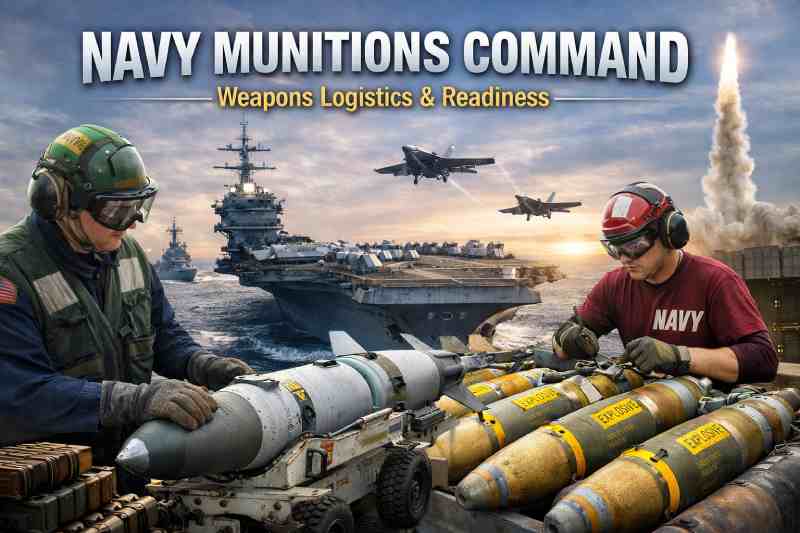
Modern naval forces rely not only on powerful ships and aircraft but also on a complex network of logistical systems that ensure weapons are available, safe, and ready for deployment. Among the most critical organisations supporting this capability is the Navy Munitions Command. Responsible for managing, storing, maintaining, and distributing the weapons used by naval forces, this command plays a vital role in ensuring operational readiness across global maritime operations.
From handling advanced missiles and aerial bombs to maintaining strict safety protocols for explosive storage, the work carried out by specialists within the Navy Munitions Command ensures that naval fleets remain fully prepared for training exercises, humanitarian missions, and combat scenarios. Understanding how this command operates provides valuable insight into the logistical backbone that supports modern naval warfare.
Understanding the Role of Navy Munitions Command
The Navy Munitions Command is responsible for overseeing the lifecycle of naval ordnance, from initial receipt and inspection to storage, maintenance, assembly, and final delivery to operational units. These tasks require specialised expertise and strict adherence to safety regulations due to the hazardous nature of military explosives.
Weapons managed by the command include a wide range of ordnance used by ships, submarines, and naval aircraft. These can include precision-guided bombs, torpedoes, missiles, mines, and conventional ammunition. Each type of weapon requires different handling procedures, storage environments, and maintenance schedules to ensure safety and reliability.
Because of this complexity, the Navy Munitions Command operates through carefully structured divisions and facilities designed to maintain the highest standards of operational readiness.
The Importance of Naval Ordnance Logistics
Effective weapons logistics are essential to the success of naval missions. Ships deployed at sea often operate far from their home ports for extended periods. Without a reliable supply of munitions, naval forces would be unable to conduct sustained operations.
This is where the Navy Munitions Command becomes indispensable. By managing stockpiles of ordnance and ensuring that weapons are ready for use at a moment’s notice, the command helps maintain the combat capability of naval fleets.
The logistics system supporting naval weapons involves multiple stages, including:
- Receiving and verifying incoming ordnance shipments
- Safely storing explosives in specialised facilities
- Conducting inspections and maintenance procedures
- Assembling weapons for operational use
- Transporting munitions to ships, aircraft squadrons, or other military units
Each stage must be carefully managed to minimise risk while maintaining efficiency.
Organisational Structure and Divisions
To handle the complex responsibilities associated with naval weapons management, the Navy Munitions Command operates through a structured organisational system. Different divisions focus on specific aspects of ordnance support, ensuring that each stage of the process is handled by trained specialists.
Administrative and Planning Division
The administrative division manages planning, scheduling, and operational coordination. Personnel in this division ensure that weapons inventories are tracked accurately and that supply requests from operational units are fulfilled efficiently.
Planning teams also forecast future ordnance requirements based on training schedules, deployment plans, and strategic defence needs.
Magazine Division
Magazine divisions oversee the storage of explosives and ammunition within specialised bunkers and storage facilities. These locations are designed to minimise risk by maintaining safe distances between storage areas and following strict environmental controls.
Personnel working in magazine divisions must follow precise safety procedures when handling explosives to prevent accidents and maintain regulatory compliance.
Missile and Weapons Assembly Division
Some weapons arrive in components and must be assembled before use. Technicians within the assembly division prepare these weapons for operational deployment. This process can involve installing guidance systems, configuring fuses, and ensuring that all components meet operational standards.
Precision and attention to detail are essential, as even small errors in assembly could affect the reliability or safety of a weapon.
Quality Assurance Division
Quality assurance teams inspect weapons to verify that they meet operational requirements. These inspections help detect issues such as corrosion, mechanical damage, or manufacturing defects that could compromise performance.
Through regular inspection programmes, the Navy Munitions Command ensures that all stored ordnance remains reliable and safe for use.
Global Operations and Strategic Locations
Naval forces operate across vast ocean regions, from the Pacific and Atlantic Oceans to strategic maritime chokepoints around the world. To support these operations, the Navy Munitions Command maintains facilities at key naval bases located in strategic regions.
These installations allow the command to support fleet units deployed across different theatres of operation. By maintaining weapons stockpiles near major naval bases, the command ensures that ships and aircraft can be rearmed quickly without returning to distant home ports.
Strategic locations often include naval air stations, major fleet bases, and logistics hubs that serve as supply points for deployed units. These facilities are equipped with specialised storage areas, maintenance workshops, and transportation infrastructure designed specifically for handling explosives.
Safety Protocols and Explosive Handling
Handling explosives is inherently dangerous, which is why safety procedures are among the most important aspects of the Navy Munitions Command’s operations.
Personnel working with munitions undergo extensive training in explosives safety, risk management, and emergency response procedures. Storage facilities are designed with protective barriers, ventilation systems, and environmental monitoring equipment to reduce the likelihood of accidents.
Strict safety standards govern every stage of the process, including:
- Storage temperature and humidity control
- Distance requirements between explosive storage areas
- Handling procedures for transporting munitions
- Inspection schedules for detecting deterioration
These safety measures help protect both military personnel and nearby communities.
Support for Naval Aviation
Naval aviation units rely heavily on the services provided by the Navy Munitions Command. Aircraft carriers and naval air stations require a continuous supply of bombs, missiles, and other weapons used by combat aircraft.
Before aircraft can be armed for missions, these weapons must be properly assembled, inspected, and delivered to flight line crews. Specialists within the command prepare ordnance for aircraft such as fighter jets, maritime patrol aircraft, and helicopters.
The rapid pace of aviation operations means that weapons must be prepared quickly and accurately. This requires highly coordinated teamwork between ordnance technicians, logistics personnel, and aviation support crews.
Maintenance and Lifecycle Management
Weapons stored for long periods must still remain safe and operational. Over time, environmental factors such as humidity, corrosion, or ageing components can affect the condition of munitions.
To address these challenges, the Navy Munitions Command conducts routine maintenance and lifecycle management activities. These include periodic inspections, component replacements, and refurbishment programmes designed to extend the service life of weapons systems.
Such maintenance ensures that stockpiled munitions remain reliable when needed for operational use.
Role in Modern Naval Warfare
In modern warfare, the speed at which a naval force can deploy weapons and maintain combat readiness often determines mission success. Advanced missiles and precision-guided munitions are only effective if they are available, maintained, and delivered to operational units at the right time.
The Navy Munitions Command plays a central role in ensuring this capability. By maintaining an efficient ordnance logistics system, the command supports everything from routine training exercises to high-intensity combat operations.
Modern naval missions often involve cooperation between multiple branches of the military and allied nations. Effective weapons logistics therefore require coordination across complex supply networks.
Training and Expertise of Personnel
Personnel working within the Navy Munitions Command must possess specialised technical knowledge. Their responsibilities include explosives handling, weapons assembly, safety inspections, and logistics coordination.
Training programmes prepare technicians to manage a wide range of weapons systems safely. This training often includes both classroom instruction and practical experience in controlled environments.
Because of the risks involved in handling explosives, strict certification requirements ensure that only qualified personnel perform sensitive tasks.
Technological Advancements in Weapons Logistics
As military technology evolves, the systems used to manage weapons logistics must also adapt. Modern tracking technologies, digital inventory systems, and automated handling equipment have improved the efficiency and accuracy of ordnance management.
These advancements allow logistics personnel to track weapons inventory in real time, reducing the risk of shortages or delays. Digital systems also help ensure that inspection records, maintenance histories, and safety compliance documentation remain accurate and accessible.
Technology therefore plays an increasingly important role in supporting the mission of the Navy Munitions Command.
Contribution to National Security
Reliable weapons logistics are essential to maintaining national defence capabilities. Without efficient systems for managing ordnance, naval forces would struggle to sustain operations during extended deployments.
The Navy Munitions Command contributes to national security by ensuring that weapons are available, safe, and ready for use whenever required. Its work supports not only combat readiness but also training programmes that prepare naval personnel for real-world operations.
In many ways, the command serves as the unseen foundation supporting the effectiveness of naval forces worldwide.
FAQs
What does Navy Munitions Command do?
Navy Munitions Command is responsible for managing the storage, maintenance, assembly, and distribution of weapons and ammunition used by naval forces.
What types of weapons are handled by Navy Munitions Command?
The command manages a wide range of ordnance, including missiles, bombs, torpedoes, mines, and various types of naval ammunition used by ships and aircraft.
Where are Navy Munitions Command facilities located?
Facilities are typically located at major naval bases and air stations around the world, allowing the command to support fleet operations in multiple regions.
Why is weapons logistics important for naval forces?
Efficient logistics ensure that ships and aircraft always have access to the weapons they need for training, defence operations, and combat missions.
Who works within Navy Munitions Command?
Personnel include ordnance technicians, logistics specialists, safety inspectors, and administrative staff trained in explosives handling and weapons management.
Conclusion
Naval power depends not only on advanced warships and aircraft but also on the systems that ensure those forces are properly equipped. The Navy Munitions Command plays a crucial role in maintaining this capability by managing the storage, maintenance, and distribution of naval weapons.
Through specialised facilities, highly trained personnel, and strict safety protocols, the command ensures that naval forces remain prepared for missions across the globe. Its work supports everything from routine training operations to complex military deployments.