Nestled just northeast of Manchester city centre, Miles Platting is an area that tells a compelling story of industrial rise, social struggle, and modern regeneration. Once a powerhouse of the Industrial Revolution, it has evolved into a neighbourhood undergoing significant transformation, attracting renewed interest from residents, developers, and historians alike.
Historical Origins and Early Development
The Meaning Behind the Name
The name Miles Platting has its roots in early English language traditions. “Platting” referred to a small bridge or pathway crossing water, suggesting that the area once featured streams or crossings important to early settlers. By the late 18th century, the name began appearing on local maps, marking the emergence of a distinct community.
Industrial Revolution and Growth
The transformation of Miles Platting accelerated during the Industrial Revolution. Its proximity to Manchester made it an ideal location for factories and mills, particularly those involved in cotton production.
Key Industrial Features
- Cotton mills such as Victoria Mill and Ducie Mill
- Gas works and chemical plants
- Warehousing and transport links via canals
The nearby Rochdale Canal played a crucial role in transporting goods, making the area a strategic industrial hub. Workers flocked to the district, leading to rapid population growth and dense housing developments.
Social Fabric and Community Life
Working-Class Identity
For much of its history, Miles Platting was defined by its strong working-class character. Families often lived in tightly packed terraced housing, forming close-knit communities where neighbours relied heavily on one another.
Cultural Diversity
During the 19th and early 20th centuries, the area became home to Irish and Italian immigrants who contributed significantly to its cultural identity. Over time, newer waves of migration added to this diversity, shaping a multicultural environment that continues today.
Community life revolved around:
- Local churches and schools
- Street markets and small shops
- Social clubs and pubs
This sense of belonging remained strong even during difficult economic periods.
Decline in the Mid-20th Century
Industrial Collapse
By the mid-1900s, the decline of manufacturing industries hit Miles Platting hard. As factories closed, unemployment rose sharply, leading to economic hardship for many residents.
Housing Challenges
The dense housing that once supported industrial workers began to deteriorate. Many properties fell into disrepair, and the area developed a reputation for poor living conditions.
Key Issues Faced
- Overcrowding
- Limited sanitation facilities
- Structural decay in older buildings
Urban planners eventually classified parts of the area as slums, prompting large-scale demolition and redevelopment efforts.
Social Impact
The decline brought not only economic challenges but also social issues. Crime rates increased, and opportunities for young people became limited. Despite this, the community spirit persisted, with residents supporting one another through difficult times.
Regeneration and Urban Renewal
Late 20th Century Transformation
From the 1990s onwards, Miles Platting became a focus of regeneration initiatives. Government programmes aimed to revitalise East Manchester, replacing outdated housing with modern developments.
Housing Redevelopment
One of the most visible changes has been the transformation of housing. Old terraced homes were replaced with a mix of:
- Modern council housing
- Private developments
- Eco-friendly residential projects
These changes aimed to improve living standards while attracting new residents.
Infrastructure Improvements
Investment in infrastructure has played a key role in the area’s revival. Improved roads, public spaces, and access to the city centre have made Miles Platting more accessible and appealing.
Present-Day Miles Platting
A Changing Landscape
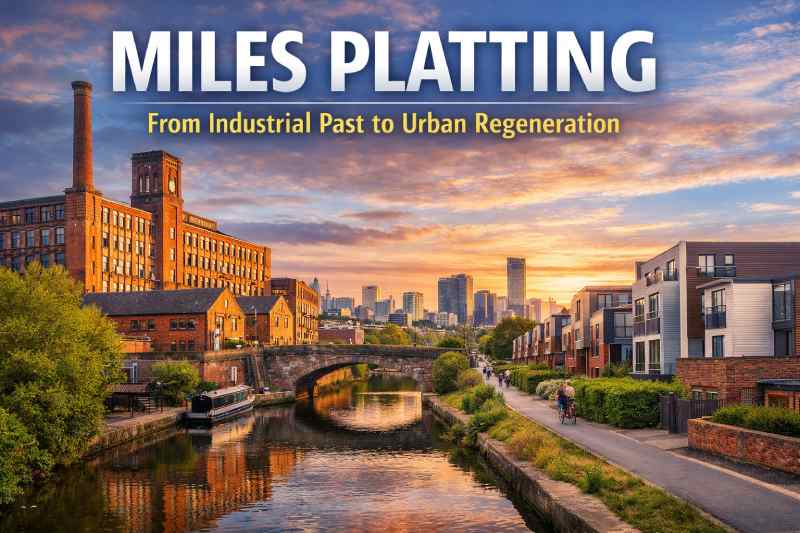
Today, Miles Platting is a blend of old and new. Historic industrial buildings stand alongside contemporary housing developments, creating a unique urban landscape.
Some former mills have been converted into apartments and offices, preserving architectural heritage while serving modern needs.
Demographics and Lifestyle
The population of the area reflects a mix of long-term residents and newcomers. Young professionals, families, and students are increasingly drawn to its proximity to central Manchester.
Daily life now includes:
- Access to nearby employment opportunities
- Local schools and community centres
- Parks and green spaces
Connectivity and Transport
The location of Miles Platting makes it highly convenient for commuters. It is within walking distance of Manchester city centre and well-served by public transport.
Although the old railway station closed in the late 20th century, bus routes and road connections ensure easy travel throughout the region.
Economic Opportunities and Property Trends
Growing Interest in Property
As regeneration continues, property values in Miles Platting have seen gradual growth. Compared to central Manchester, the area remains relatively affordable, making it attractive to first-time buyers and investors.
Rental Market
The rental market is also expanding, driven by demand from those seeking affordable accommodation near the city centre. New developments have introduced higher-quality housing options, further boosting appeal.
Employment Prospects
Residents benefit from proximity to Manchester’s thriving economy, which includes sectors such as:
- Technology
- Finance
- Retail
- Creative industries
This accessibility has contributed to the area’s ongoing revival.
Challenges and Criticism
Gentrification Concerns
While regeneration has brought many benefits, it has also raised concerns about gentrification. Long-term residents worry about rising costs and the potential loss of community identity.
Balancing Old and New
Maintaining a balance between preserving heritage and encouraging development remains a challenge. Some critics argue that rapid changes risk erasing the area’s historical character.
Social Inequality
Despite improvements, pockets of deprivation still exist. Addressing these disparities is essential for ensuring inclusive growth.
Cultural and Historical Significance
Preserving Heritage
Miles Platting’s industrial past is an important part of Manchester’s history. Efforts to preserve historic buildings and landmarks help maintain a connection to this heritage.
Community Initiatives
Local organisations and community groups play a vital role in fostering social cohesion. Events, workshops, and neighbourhood projects help strengthen community ties.
Identity and Pride
For many residents, Miles Platting represents more than just a place to live. It embodies resilience, history, and a sense of pride that continues to shape its future.
Future Outlook
Continued Development
The future of Miles Platting looks promising, with ongoing investment in housing and infrastructure. Plans for further development aim to enhance quality of life while supporting economic growth.
Sustainable Urban Living
There is increasing emphasis on sustainability, with new projects incorporating green spaces and energy-efficient designs.
Community-Centred Growth
Ensuring that development benefits existing residents remains a priority. Inclusive planning and community involvement will be key to the area’s long-term success.
FAQs
What is Miles Platting known for?
Miles Platting is known for its industrial heritage, particularly its role in Manchester’s textile industry, as well as its modern regeneration efforts.
Is Miles Platting a good place to live?
It is becoming increasingly popular due to its affordability, proximity to the city centre, and ongoing redevelopment, though opinions vary depending on personal preferences.
How far is Miles Platting from Manchester city centre?
The area is located about 1.4 miles from the centre, making it easily accessible by foot, bus, or car.
Has Miles Platting improved over the years?
Yes, significant regeneration since the 1990s has improved housing, infrastructure, and overall living conditions.
Are property prices rising in Miles Platting?
Property prices have been gradually increasing due to demand and redevelopment, though they remain more affordable than central Manchester.
Conclusion
Miles Platting stands as a powerful example of urban transformation. From its origins as an industrial stronghold to its struggles with decline and its ongoing regeneration, the area reflects the broader story of Manchester itself. While challenges remain, the progress made in recent decades is undeniable.
As investment continues and the community evolves, Miles Platting is poised to become an increasingly desirable place to live. Its blend of history, resilience, and modern opportunity ensures that it will remain an important part of Manchester’s urban landscape for years to come.