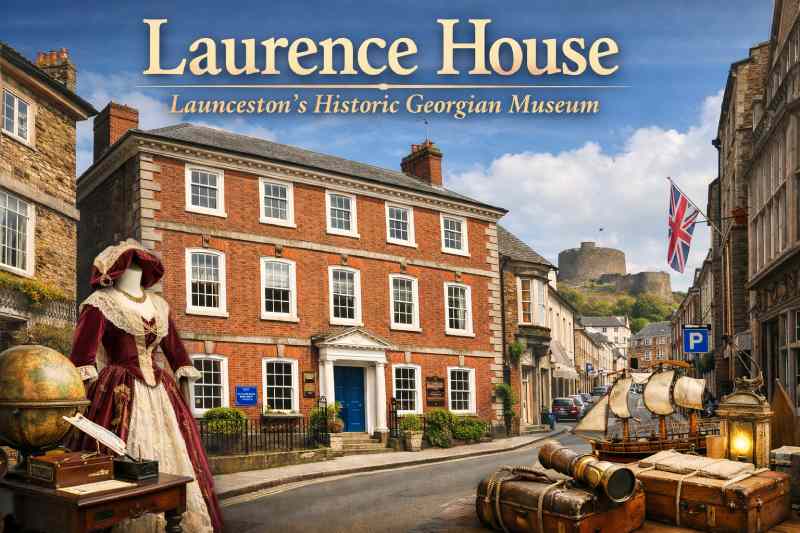
Laurence House stands proudly in the historic town of Launceston in Cornwall, representing one of the most important heritage buildings in the region. Today the building functions as a fascinating museum, offering visitors a unique opportunity to explore the social, cultural, and historical development of the town and its surrounding areas. From Georgian architecture to Victorian clothing displays and stories of Cornish connections with Australia, the museum brings centuries of local history to life.
The building itself is not just a place where artefacts are stored. It is a carefully preserved historic residence that allows visitors to step directly into the past. Walking through its rooms provides insight into how people once lived, dressed, worked, and interacted within the community. The combination of historical architecture and curated exhibitions makes Laurence House a cultural landmark in Cornwall.
The Origins and Construction of the Historic Building
The story of Laurence House begins in the eighteenth century, during the Georgian era. The building was constructed in 1753 when Launceston was an important administrative and commercial centre in Cornwall. Wealthy merchants and influential families built elegant homes in the town, and this property quickly became one of the finest examples of Georgian residential architecture.
During that period, Castle Street was one of the most prestigious areas in Launceston. The street was lined with well-designed townhouses belonging to prominent residents who played important roles in local trade, governance, and social life.
The construction of Laurence House reflected the wealth and status of its original owners. Georgian architecture emphasised symmetry, balanced proportions, and refined design. The building’s structure reflects these principles through its orderly windows, elegant interior layout, and carefully designed decorative features.
Over time, the house became a symbol of the prosperity and development that characterised Launceston during the eighteenth century.
Architectural Characteristics of the Georgian Townhouse
One of the most remarkable aspects of Laurence House is its architectural authenticity. Unlike many historic buildings that have been heavily modified over time, much of the original design has been preserved.
Visitors entering the building can still observe many elements typical of Georgian architecture.
Symmetrical Design
Georgian buildings often emphasised balance and proportion. The windows, doors, and room arrangements inside the house reflect this careful symmetry.
Large Sash Windows
The building features tall sash windows that allow natural light to fill the interior rooms. These windows were a common feature of Georgian homes and provided both practicality and elegance.
Decorative Interior Features
Inside the house, visitors can see period fireplaces, moulded ceilings, and elegant staircases. These decorative features demonstrate the craftsmanship and design preferences of the eighteenth century.
Spacious Room Layout
The layout of the rooms follows a traditional Georgian plan, with reception rooms and living spaces designed to host social gatherings and formal meetings.
Together, these architectural features allow visitors to imagine the lifestyle of wealthy residents who once lived within the house.
Transformation into a Museum
For many decades the building functioned as a private residence. However, as time passed, the cultural value of the structure became increasingly recognised.
Eventually, the property came under the ownership of the National Trust, an organisation dedicated to protecting historic places across the United Kingdom. The building was then leased to Launceston Town Council, which established the site as a local history museum.
The transformation of Laurence House into a museum ensured that the building itself, along with the historical stories connected to it, would remain preserved for future generations.
Instead of remaining a private home, the building now serves as a space where visitors, students, and researchers can learn about the heritage of Cornwall.
Exhibitions Highlighting the History of Launceston
One of the most valuable aspects of the museum is its diverse collection of exhibitions that document the development of the town.
The displays explore how Launceston evolved from a medieval administrative centre into the community known today. Through historical objects, photographs, and documents, visitors can trace the changes in industry, governance, and everyday life.
Some exhibits explore the political and civic history of the town, while others highlight the lives of ordinary residents who contributed to the local culture.
The museum presents history in an accessible way, ensuring that both casual visitors and serious historians can appreciate the significance of the artefacts.
The Victorian Costume Collection
Among the most admired displays in the museum is its remarkable collection of Victorian clothing.
Fashion during the nineteenth century reflected strict social customs and changing cultural trends. The museum’s collection includes dresses, hats, accessories, and other garments that illustrate how people dressed during the Victorian era.
The clothing displays also provide insight into the social hierarchy of the period. Wealthy individuals often wore elaborate garments made from expensive fabrics, while working people wore simpler and more practical clothing.
By examining these garments, visitors gain a clearer understanding of how fashion influenced identity, class, and daily life during the nineteenth century.
Cornwall’s Connections to Early Australian History
An intriguing section of the museum explores the relationship between Cornwall and early Australian colonisation.
During the eighteenth and nineteenth centuries, many people from Cornwall travelled to Australia. Some emigrated voluntarily in search of opportunity, while others were transported as convicts during Britain’s penal transportation period.
The museum highlights the stories of Cornish individuals who played roles in the development of early Australian settlements. These stories demonstrate how a relatively small region of Britain became connected to global historical events.
This aspect of the museum’s collection adds an international dimension to the local history of Launceston.
Educational Opportunities and Community Engagement
Beyond its exhibitions, the museum also serves an important educational role within the community.
Schools frequently organise visits to the museum, allowing students to learn about local history through direct interaction with artefacts and historical environments.
Educational programmes often include guided tours, workshops, and activities designed to help young people understand the past in an engaging and memorable way.
These programmes encourage curiosity and inspire students to appreciate the heritage of their region.
Community events are also organised at the museum throughout the year. These events help strengthen the connection between local residents and their shared history.
Cultural Significance for Cornwall
The importance of Laurence House extends beyond its function as a museum. The building represents a preserved piece of Cornish history that reflects the social and architectural traditions of the eighteenth century.
Historic buildings like this help communities maintain a connection with their past. They provide physical reminders of earlier generations and the lives they lived.
For visitors travelling through Cornwall, the museum offers an opportunity to explore the deeper cultural identity of the region. While Cornwall is often celebrated for its landscapes and coastal scenery, places like this reveal the human stories behind the landscape.
By preserving these stories, the museum contributes to a broader understanding of British heritage.
Tourism and Visitor Experience
Tourism plays an important role in the preservation of historic sites. Visitors who explore the museum not only learn about local history but also support the ongoing maintenance of the building.
Guests can wander through the rooms of the house, observing historical artefacts displayed in carefully arranged exhibits. Each room provides a different perspective on life in Launceston during various periods of history.
Many visitors describe the experience as similar to stepping into the past. The preserved architecture and authentic atmosphere create a strong sense of historical immersion.
This makes the museum particularly appealing for those interested in British history, architecture, and cultural heritage.
Preservation and Future Protection
Maintaining a building that dates back to the eighteenth century requires careful conservation work. Specialists must ensure that the structure remains stable while preserving the original design features.
The partnership between the National Trust and the local council plays a vital role in this process. Conservation experts regularly monitor the condition of the building and its collections to ensure that they remain protected.
As interest in local heritage continues to grow, the museum is expected to remain an important educational and cultural institution in the years ahead.
Preservation efforts ensure that future generations will be able to experience the same historical environment that visitors enjoy today.
FAQs
What is Laurence House known for?
Laurence House is known as a historic Georgian townhouse that now operates as a museum preserving the history of Launceston and the wider Cornwall region.
When was Laurence House built?
The building was constructed in 1753 during the Georgian era, a time known for elegant architectural design and urban development in Britain.
What can visitors see inside the museum?
Visitors can explore exhibitions about local history, Victorian clothing collections, and displays highlighting Cornwall’s connections with early Australian settlements.
Who manages Laurence House today?
The property is owned by the National Trust and operated as a museum by Launceston Town Council.
Why is Laurence House important for local heritage?
The building preserves centuries of historical information about Launceston and provides an educational resource for residents, students, and visitors.
Conclusion
Laurence House remains one of the most valuable historical landmarks in Launceston, Cornwall. Built in the Georgian era, the building reflects both the architectural elegance and the cultural history of the eighteenth century. Through its exhibitions, preserved interiors, and educational programmes, the museum offers visitors a meaningful opportunity to explore the past. By protecting the building and its collections, the community ensures that the heritage of Launceston continues to be shared with future generations.