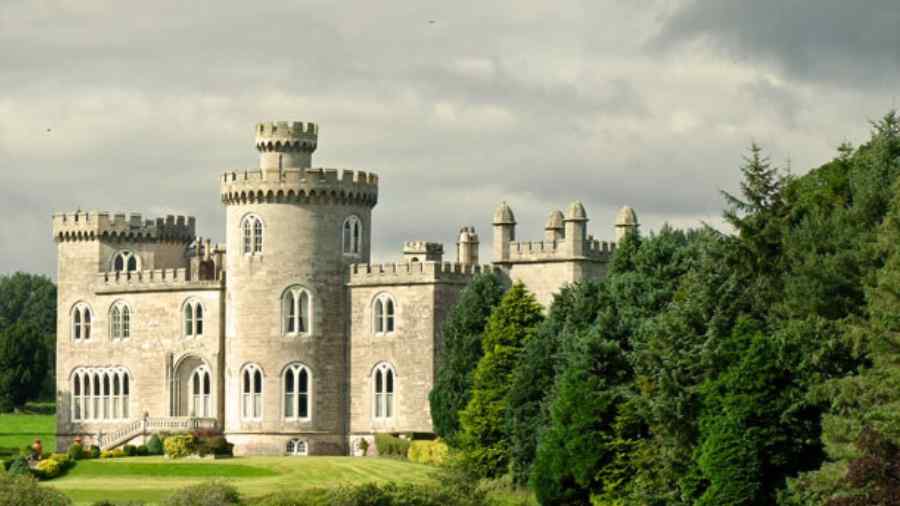
Killymoon Castle is one of Northern Ireland’s most intriguing and visually captivating historic estates, a Gothic masterpiece that rises beside the River Ballinderry near Cookstown in County Tyrone. Its grand silhouette, elegant towers, lush woodland surroundings and long heritage make it a treasured landmark for architecture lovers, historians and travellers seeking beauty, tranquillity and a glimpse into past eras of Irish aristocracy. The castle has stood for more than two centuries, witnessing periods of prosperity, decline, war and renewal. Today, it remains privately owned and is admired for both its architectural grandeur and its continuing role in local culture and heritage.
The Early Roots of Killymoon Castle
Before the castle took its present form, the land upon which it stands had already held deep historical resonance. During the 17th century, members of the Stewart family arrived in the Cookstown area during the Plantation of Ulster, a time when lands were being granted and settled by families from Scotland and England. The Stewarts soon became established landowners, and in 1671, they constructed an earlier version of Killymoon Castle. This first structure was more modest by comparison, resembling a fortified country house rather than the fairy-tale style castle seen today.
Tragically, this original building was lost to a fire in 1801. Rather than accept defeat, the Stewarts viewed this loss as an opportunity for renewal and rebirth. The owner at that time, Colonel James Stewart, made a bold decision to rebuild not just a house, but a grand architectural statement symbolising imagination, wealth, status and cultural refinement.
Rebirth Through Vision and Architecture
To bring this ambitious vision to life, Colonel Stewart commissioned the renowned architect John Nash in the early 19th century. Nash, already developing a strong reputation in Britain for his picturesque and romantic architectural style, would later become widely known for works such as Buckingham Palace’s remodel and the Royal Pavilion in Brighton. Killymoon Castle is believed to be Nash’s first castle design in Ireland, making it a valuable architectural milestone.
Construction of the new castle commenced in 1802. The finished structure was unveiled in 1803 and presented a remarkable departure from the more rigid architectural styles of earlier periods. Instead of symmetry and classical order, Nash embraced creativity, giving the castle a charming irregular silhouette. Round towers, castellated parapets, pointed arch windows and varied roof heights combined to create a striking composition. The castle does not appear repetitive or uniform; rather, it evokes a romantic image reminiscent of medieval fantasy, designed to impress and captivate the eye from every angle.
Interior Elegance and Aristocratic Living
Beyond its dramatic exterior, Killymoon Castle also became known for its refined interior. Rooms were arranged with a sense of luxury and comfort. One of the most admired features is the cantilevered staircase, a sweeping architectural flourish that stands without visible support. Intricate plasterwork, fine wood panelling and period furnishings contributed to an atmosphere of aristocratic taste.
During the 19th century, the castle served as a hub of social gatherings, political visits and cultural occasions. Members of the Stewart family were prominent in local affairs, and the castle functioned as a symbol of their status and influence. The estate extended over lush parkland, offering scenic walks, grazing fields, gardens and river views. The environment surrounding Killymoon Castle was carefully managed to reflect ideas of beauty and leisure central to the era’s aristocratic identity.
Challenges, Change and New Ownership
However, like many great estates in Ireland, Killymoon Castle eventually faced financial strain. Economic pressures, agricultural changes and the social shifts of the 19th century contributed to the need for the property to change ownership. The Stewarts eventually parted with the castle, marking the end of a family relationship that had lasted for generations.
Yet, the castle continued to endure. It transitioned through different owners and uses over time, including during the 20th century when it played a role in wartime efforts. During the Second World War, parts of the castle were used by military personnel. This chapter added a new layer to the castle’s story, connecting it not only to aristocratic heritage but to global historical events.
Modern Identity and Preservation
Today, Killymoon Castle remains privately owned and inhabited. Although it is not open as a casual walk-in tourist site, it is well preserved and admired for its beauty and cultural significance. The estate has adapted to modern life while maintaining its historic identity. Parts of the grounds are used for events, weddings and special gatherings, allowing people to experience its timeless charm in meaningful ways.
The nearby Killymoon Golf Club occupies part of the surrounding land and provides a recreational landscape that blends neatly with the castle’s original parkland setting. Visitors who approach the estate catch views of the castle’s distinctive towers rising above the treetops, creating a sense of wonder and curiosity.
Cultural and Architectural Significance
Killymoon Castle is not only a beautiful landmark but also a valuable example of the Gothic Revival movement. Its design represents a period in which romantic imagination influenced architecture, encouraging structures that captured mood and feeling rather than strict adherence to classical rules. This creative spirit helped shape architectural tastes throughout the British Isles and remains influential today.
Moreover, the castle stands as a physical record of Ireland’s layered history:
- The Plantation period and the arrival of Scottish families
- The rise of aristocratic estates in the 18th and 19th centuries
- The challenges of economic and social change
- The effects of war and shifting land ownership
- Modern preservation and heritage identity
Each era has left its imprint, making the site both historically informative and emotionally evocative.
The Landscape and Natural Surroundings
Killymoon Castle’s location is an integral part of its charm. The River Ballinderry flows softly beside it, reflecting the castle’s silhouette on calm days. Trees, meadowland and rolling fields provide a peaceful setting that enhances the building’s storybook quality. The changing seasons offer different moods: autumn brings golden leaves draping the grounds, winter gives the towers an almost solemn beauty, spring wakes the estate with fresh colour and summer displays the full grace of green lawns and river shimmer.
This natural harmony is not accidental. Historic estates were designed to be lived in with the landscape, not separate from it. Killymoon Castle is a fine example of how architecture and nature can form a unified expression of beauty.
Tourism Interest and Local Role
Even though it is privately owned, the castle is widely recognised in local culture. It draws interest from photographers, travellers, historians and architectural scholars. It also contributes to the tourism appeal of Cookstown and County Tyrone as a whole. Visitors who explore the town, nearby Drum Manor Forest Park or the surrounding countryside often learn about Killymoon Castle through local stories, signage or guided information.
The castle stands not just as a building, but as a shared cultural memory for the community.
Conclusion
Killymoon Castle remains one of Northern Ireland’s most enchanting historic estates, admired for its Gothic beauty, riverside landscape and deep-rooted heritage. From its early 17th-century beginnings to its elegant reconstruction under John Nash, and from aristocratic grandeur to modern preservation, the castle tells a story of endurance, imagination and grace. Its distinctive towers and picturesque grounds continue to inspire those who encounter it, whether through study, photography or simply passing view. Killymoon Castle endures as a symbol of history’s ability to live quietly and beautifully within the present day.