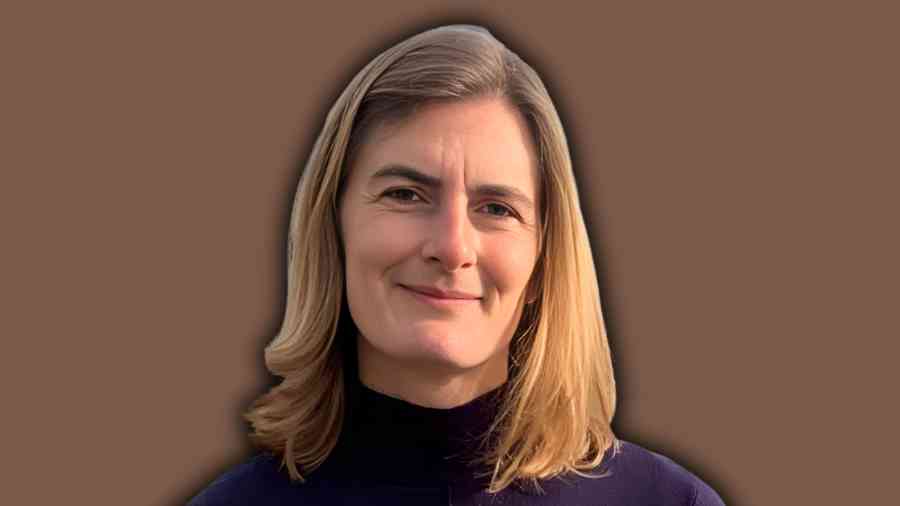
Kate Ravilious has established herself as one of the most trusted and thoughtful science writers in the United Kingdom. Known for her clear explanations, careful research, and balanced tone, she has played an important role in helping the public understand complex scientific issues. From climate change and geology to weather systems and environmental research, her work consistently bridges the gap between academic science and everyday understanding.
Early Life and Academic Foundations
Kate Ravilious’s journey into science communication is rooted in a strong academic background. From an early stage, she demonstrated a curiosity about how the natural world works. This curiosity later developed into formal scientific training, including advanced academic study.
She pursued science at university level and went on to complete doctoral research, gaining first-hand experience of how scientific knowledge is produced, tested, and debated. This academic grounding is significant because it informs the way she approaches journalism. Unlike writers who enter science reporting from purely media backgrounds, she understands the culture of research, peer review, and evidence-based conclusions from the inside.
This scientific literacy allows her to ask better questions, interpret studies more accurately, and avoid the exaggeration that sometimes creeps into popular science reporting. It also gives her credibility among researchers, many of whom trust her to represent their work fairly and responsibly.
Transition from Science to Journalism
Moving from scientific research into journalism is not always straightforward. It requires a shift from specialised language to clear storytelling without losing accuracy. Kate Ravilious made this transition successfully by focusing on communication rather than simplification.
Rather than dumbing down complex ideas, she reframes them. Her writing often takes a step-by-step approach, guiding readers through unfamiliar concepts in a logical and engaging way. This ability to translate science into readable prose has become one of her defining strengths.
As a freelance science journalist, she began contributing to respected publications, steadily building a reputation for reliability and insight. Over time, her work appeared in major national outlets, reaching a broad audience interested in science, environment, and climate-related issues.
Areas of Expertise and Reporting Focus
Kate Ravilious is best known for her reporting on environmental and Earth sciences. These fields are particularly challenging because they often involve uncertainty, long timescales, and complex data. Her coverage shows a careful balance between urgency and realism.
Climate and Environmental Science
One of her key areas of focus is climate change and its impacts. She writes about shifting weather patterns, rising sea levels, biodiversity loss, and the scientific evidence behind these changes. Importantly, her articles tend to avoid alarmism. Instead, she presents the facts, explains what scientists know, and highlights where uncertainties remain.
This measured approach helps readers engage with climate science without feeling overwhelmed or sceptical. By grounding global issues in clear explanations and real-world examples, she makes abstract data feel relevant and understandable.
Geology and Earth Processes
Another area where Kate Ravilious excels is geology. Topics such as earthquakes, volcanic activity, plate tectonics, and landscape formation are often underrepresented in mainstream media. Her work brings these subjects to life, showing how Earth processes shape both the planet and human societies.
Her geological reporting often connects deep time with present-day concerns, helping readers understand how past events influence current environmental risks. This perspective is especially valuable in discussions about natural hazards and long-term environmental planning.
Weather and Atmospheric Science
Weather and atmospheric science also feature prominently in her writing. She explores how weather systems work, why extreme events occur, and how climate change influences patterns such as heatwaves, storms, and flooding. Her articles often clarify common misconceptions, offering readers a more nuanced understanding of what science can and cannot predict.
Writing Style and Journalistic Approach
One of the reasons Kate Ravilious’s work resonates with readers is her writing style. It is calm, precise, and engaging without being sensational. She avoids unnecessary jargon but does not shy away from technical detail when it adds value.
Her articles often follow a clear structure, beginning with a real-world observation or research finding and then expanding into broader context. Quotes from scientists are used thoughtfully, not as decoration but as integral parts of the explanation.
She also places strong emphasis on evidence. Studies are not presented as absolute truths but as contributions to an evolving body of knowledge. This approach encourages readers to see science as a process rather than a collection of fixed answers.
Role in Public Understanding of Science
Science journalism plays a crucial role in shaping public understanding, and Kate Ravilious contributes meaningfully to this process. By presenting science accurately and responsibly, she helps readers make informed decisions and develop critical thinking skills.
Her work supports science literacy by explaining not just results, but methods. Readers come away with a better sense of how scientific conclusions are reached, why disagreements occur, and how consensus is built over time. This is particularly important in areas like climate science, where public trust is essential.
In addition, her reporting often highlights the human side of science. Researchers are portrayed as dedicated professionals working within constraints, rather than distant authorities. This humanisation helps build trust and interest in scientific work.
Civic Engagement and Public Service
Beyond journalism, Kate Ravilious is also active in public life. She has served as a local councillor in York, contributing to decision-making on issues such as transport, planning, and environmental policy. This role reflects a broader commitment to applying scientific understanding to real-world challenges.
Her experience as a science communicator brings valuable perspective to local governance. Evidence-based thinking, long-term planning, and environmental awareness are increasingly important at the local level, where many climate and infrastructure decisions are made.
This combination of journalism and civic engagement is relatively rare and highlights her dedication to public service. It also reinforces the idea that science communication is not just about reporting, but about contributing to informed society.
Challenges in Modern Science Journalism
The field of science journalism faces significant challenges, including shrinking newsroom budgets, increased pressure for rapid content, and competition from unverified online sources. Freelance journalists like Kate Ravilious must navigate these challenges while maintaining quality and integrity.
Her continued success suggests a strong commitment to journalistic standards. Rather than chasing trends or sensational headlines, she focuses on depth and accuracy. This approach may not always produce viral content, but it builds long-term trust with readers and editors alike.
Another challenge is the politicisation of science. Topics such as climate change can attract strong opinions and misinformation. Writing about these issues requires care, balance, and resilience. Her work demonstrates an ability to address controversial topics without becoming confrontational or dismissive.
Influence and Professional Reputation
Within the world of science communication, Kate Ravilious is widely respected. Researchers value her accuracy, editors trust her judgement, and readers appreciate her clarity. Over time, this reputation has allowed her to tackle complex and sensitive subjects with confidence.
Her influence is not limited to individual articles. By consistently modelling good science journalism, she sets an example for newer writers entering the field. Her work shows that it is possible to be both accessible and rigorous, informative and engaging.
She also contributes to a broader culture of thoughtful reporting, where science is treated with the seriousness it deserves rather than as a source of novelty or controversy alone.
The Importance of Independent Science Writers
As an independent journalist, Kate Ravilious represents an important part of the media ecosystem. Freelance writers bring flexibility, specialised knowledge, and diverse perspectives to science coverage. They often have the freedom to pursue stories in depth, rather than fitting them into predetermined editorial formats.
Her career illustrates the value of independence combined with expertise. By maintaining control over her focus areas and standards, she has built a body of work that remains consistent in quality and tone.
This independence also allows her to cover underreported topics, ensuring that important scientific issues reach the public even when they fall outside mainstream news cycles.
Legacy and Continuing Relevance
Kate Ravilious’s work remains highly relevant at a time when science plays an increasingly central role in public life. Issues such as climate change, environmental degradation, and natural hazards demand clear, accurate communication.
Her articles help readers navigate these challenges with understanding rather than fear. By focusing on evidence and explanation, she contributes to a more informed and resilient society.
As science continues to evolve, the need for journalists who can interpret and explain it responsibly will only grow. Her career serves as a reminder of the impact that careful, principled journalism can have over time.
Conclusion
Kate Ravilious exemplifies the best qualities of British science journalism. With a strong scientific background, a clear and thoughtful writing style, and a commitment to public understanding, she has made a lasting contribution to how science is communicated in the UK. Her work demonstrates that complex ideas can be explained without distortion, and that journalism can inform, educate, and empower readers.
In a world facing profound environmental and scientific challenges, voices like hers are not just valuable, they are essential.