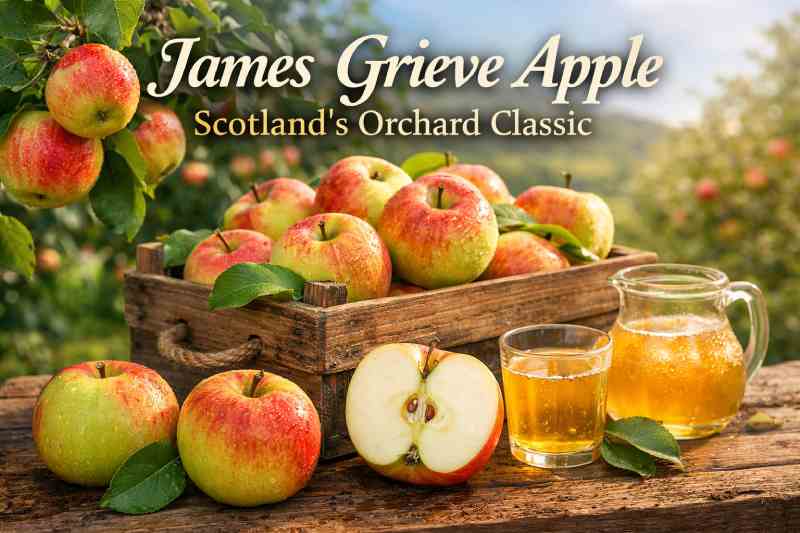
The James Grieve apple is one of Britain’s most cherished heritage varieties, admired for its vibrant flavour, generous juiciness and strong ties to Scotland’s horticultural past. Though it may not dominate supermarket shelves today, this historic apple continues to thrive in gardens, traditional orchards and among growers who value taste over transport durability. Its story reflects the golden age of British fruit breeding and the enduring appeal of varieties developed with flavour at their heart.
The Origins of James Grieve in Scotland
The James Grieve apple traces its roots to Edinburgh in the late nineteenth century. It was raised by a Scottish nurseryman of the same name and introduced to the public in the 1890s. At a time when Britain’s fruit breeding was flourishing, new varieties were developed not merely for yield but for taste, resilience and adaptability to local climates.
James Grieve quickly gained attention for its lively balance of sweetness and acidity. It was soon recognised by horticultural societies and became widely planted in orchards across Scotland and northern England. Its reliability in cooler climates made it especially suited to the British Isles, where unpredictable summers could challenge more delicate cultivars.
By the early twentieth century, James Grieve had earned formal horticultural awards and established itself as a respected dual-purpose apple — suitable for both eating fresh and cooking.
Appearance and Distinctive Characteristics
Colour and Form
James Grieve apples are typically medium to large in size. The skin has a yellow-green base, often overlaid with an attractive red or orange flush and faint striping. This bright colouring gives the fruit a traditional orchard charm, quite different from the uniform sheen of modern commercial apples.
The shape is round to slightly flattened, with gentle ribbing near the crown. The skin is relatively thin, contributing to the fruit’s tenderness.
Texture and Flavour
One of the defining qualities of James Grieve is its juiciness. When freshly picked, the flesh is crisp, pale cream in colour and bursting with sharp, refreshing acidity. If left to ripen for a short period after harvest, the flavour mellows into a sweeter, more rounded profile while retaining a pleasant tang.
This progression from sharp to sweet makes James Grieve particularly versatile. Early in the season it is excellent for cooking, while slightly later it becomes a delightful dessert apple.
The texture can become softer as it ripens, almost pear-like, which many enthusiasts find appealing. However, this softness also means the fruit bruises easily, limiting its suitability for long-distance transport and commercial storage.
Growing James Grieve in the UK
Climate Suitability
James Grieve performs exceptionally well in cooler climates, which explains its popularity in Scotland and northern regions of England. It tolerates damp conditions better than many continental varieties and copes well with variable summer temperatures.
This adaptability makes James Grieve a dependable choice for British gardeners seeking a heritage apple that will crop reliably without requiring exceptional heat.
Pollination and Productivity
The tree is partially self-fertile, meaning it can produce fruit on its own. However, yields improve significantly when another compatible apple variety is nearby for cross-pollination. In traditional orchards, it often flowers alongside other mid-season cultivars, ensuring strong fruit set.
The blossom appears in spring and is typically abundant, providing ornamental value as well as the promise of a healthy crop. Mature trees can be productive year after year when properly pruned and cared for.
Soil and Maintenance
Like most apple trees, James Grieve prefers well-drained soil enriched with organic matter. It benefits from an open, sunny position but can tolerate partial shade better than many modern varieties.
Regular pruning encourages airflow and sunlight penetration, reducing the risk of disease and supporting consistent fruiting. Gardeners often note that James Grieve is relatively resilient, though basic orchard hygiene and monitoring for common apple pests remain important.
Harvesting and Storage
Harvest Season
In the UK, James Grieve is generally ready for picking from early to mid-September, though exact timing varies by region and weather conditions. The fruit should be harvested carefully to avoid bruising.
Apples intended for cooking may be picked slightly earlier when their acidity is at its peak. Those left to ripen on the tree develop greater sweetness.
Storage Considerations
Unlike modern commercial apples bred for extended storage, James Grieve does not keep for long periods. Its tender flesh and high juice content mean it is best enjoyed within a few weeks of harvest.
For this reason, it is commonly grown by home gardeners and small orchards rather than large-scale retailers. Its relatively short shelf life is part of its charm — a reminder that some of the finest flavours are fleeting.
Culinary Uses of James Grieve
Fresh Eating
When allowed to mellow after picking, James Grieve offers a beautifully balanced eating experience. The sweetness becomes more pronounced, while the underlying sharpness provides refreshing complexity.
It is particularly enjoyable sliced and served simply, allowing its natural flavour to shine.
Cooking and Baking
Picked slightly underripe, James Grieve retains structure during cooking. It works wonderfully in traditional British desserts such as apple crumble, pies and tarts. The acidity cuts through sugar and pastry richness, creating a well-rounded dish.
Stewed James Grieve produces a fragrant purée that pairs well with pork dishes or can be served with custard for a comforting pudding.
Juicing and Cider
Thanks to its remarkable juiciness, James Grieve is an excellent choice for fresh apple juice. The resulting drink has a bright, lively character. It can also contribute depth and acidity when blended with sweeter apples for cider production.
Heritage Value and Cultural Significance
James Grieve represents a period when fruit breeding was guided by flavour and local suitability rather than uniform appearance or transport durability. As interest in heritage and regional foods has grown, many orchardists and gardeners have rediscovered its merits.
The survival of James Grieve in British orchards reflects a broader movement to preserve traditional varieties. These apples form part of the nation’s agricultural history, embodying skills and tastes passed down through generations.
In Scotland especially, James Grieve remains a symbol of local horticultural pride. Its connection to Edinburgh and its adaptability to northern climates make it particularly meaningful in that context.
Why James Grieve Fell from Commercial Favour
Despite its excellent flavour, James Grieve gradually lost prominence in mainstream retail. The reasons are largely practical:
- The fruit bruises easily.
- It does not store well for extended periods.
- Its texture softens relatively quickly after harvest.
Modern supply chains favour apples that can be transported long distances and stored for months without loss of firmness. While such varieties serve commercial needs, they often lack the distinctive character that makes James Grieve so memorable.
Today, the apple’s continued cultivation depends largely on enthusiasts, specialist nurseries and traditional orchards.
Planting James Grieve in a Home Garden
For gardeners considering adding James Grieve to their orchard, it offers several advantages:
- Strong performance in cooler UK climates.
- Attractive blossom in spring.
- Reliable cropping.
- Excellent dual-purpose fruit.
Choosing the appropriate rootstock allows control over tree size, whether a compact tree for a small garden or a larger specimen for an orchard setting. With thoughtful pruning and attentive harvesting, James Grieve can reward growers with flavourful fruit year after year.
Conclusion
James Grieve remains one of Britain’s most distinctive heritage apples, celebrated for its lively flavour, generous juiciness and enduring connection to Scotland’s horticultural past. Though it may not suit the demands of modern supermarket supply chains, it continues to flourish in traditional orchards and home gardens where flavour and character are valued above uniform perfection.