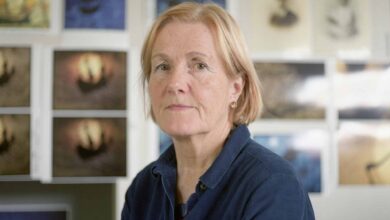
Grace Roodenrys is an emerging figure in contemporary literary criticism whose work bridges rigorous scholarship and accessible cultural commentary. Known for her sharp analytical style, deep engagement with poetry and prose, and a growing international academic presence, she represents a new generation of writers shaping how literature is read, discussed, and valued today. Her career, still unfolding, already reflects a rare combination of academic distinction, editorial confidence, and an instinctive sensitivity to language.
Early Life and Educational Foundations
Grace Roodenrys was born and raised in Australia, where her early academic trajectory quickly distinguished her from her peers. From a young age, she demonstrated a strong aptitude for language, critical thinking, and close textual analysis. English literature, in particular, became both a discipline and a passion, offering her a framework through which to explore ideas of identity, ethics, history, and aesthetics.
Her secondary education laid the groundwork for later success, with outstanding academic results in advanced English subjects. These achievements were not merely the result of technical skill, but of a thoughtful, questioning approach to texts. Teachers and mentors have frequently noted her capacity to move beyond surface interpretation and engage deeply with structure, voice, and context.
University Studies and Academic Excellence
Grace Roodenrys went on to study English literature at university level, where her academic performance reached an exceptional standard. She graduated with First Class Honours, earning a University Medal, one of the highest academic distinctions awarded. Such recognition reflects sustained excellence across coursework, research, and critical writing.
During her undergraduate years, grace roodenrys developed a particular interest in contemporary literature and poetry, alongside broader theoretical frameworks. Her work displayed an ability to situate texts within both historical traditions and present-day cultural conversations. Rather than treating literature as a static object, she approached it as a living dialogue between writer, reader, and society.
Transition to Postgraduate Research
Following her undergraduate success, Grace Roodenrys pursued postgraduate study in English literature at an international level. She was awarded a prestigious scholarship to study at the University of Oxford, marking a significant step in her academic journey. This transition placed her within one of the world’s most intellectually demanding environments, surrounded by scholars whose work spans centuries of literary history.
At Oxford, grace roodenrys has continued to refine her critical voice, engaging with advanced literary theory while maintaining a commitment to clarity and relevance. Her research interests remain broad yet coherent, often focusing on the intersections between contemporary writing, environmental thought, and cultural criticism.
Writing Career and Published Work
Beyond academia, Grace Roodenrys is recognised as a writer and literary critic whose work appears in respected journals and publications. Her writing ranges from formal criticism to reflective essays, often characterised by precision, restraint, and intellectual curiosity.
Literary Criticism and Essays
As a critic, grace roodenrys is attentive to nuance. She resists reductive readings and instead favours interpretations that acknowledge ambiguity and complexity. Her essays frequently explore how language shapes moral and emotional understanding, particularly in poetry and experimental prose.
She has written on both established and emerging writers, offering readings that are informed without being exclusionary. This balance has helped her work resonate with both academic audiences and general readers interested in literature and culture.
Creative and Cultural Engagement
While primarily known for criticism, Grace Roodenrys also engages creatively with language. Her writing demonstrates an appreciation for rhythm, imagery, and form, suggesting a close relationship between her analytical and creative impulses. Even when addressing theoretical concerns, her prose remains attentive to style and tone.
In cultural commentary, grace roodenrys often situates literature within broader social and ethical contexts. Rather than treating books as isolated artefacts, she considers how they reflect and challenge contemporary values, making her work particularly relevant in ongoing debates about art’s role in society.
Teaching and Mentorship
In addition to writing, Grace Roodenrys has experience as an English tutor and mentor. Her teaching approach is shaped by her own academic journey: structured, demanding, yet supportive. She emphasises close reading, clear argumentation, and independent thought, encouraging students to develop confidence in their interpretations.
Students taught by grace roodenrys often describe her methods as both rigorous and encouraging. She focuses on helping learners articulate complex ideas clearly, an approach that mirrors her own writing style. This commitment to education reflects a broader belief in the importance of literary literacy as a transferable, lifelong skill.
Intellectual Themes and Interests
The work of Grace Roodenrys is unified by a set of recurring intellectual concerns. While her topics vary, certain themes consistently emerge, giving her writing a distinctive coherence.
Contemporary Literature and Modern Voices
Grace roodenrys shows a strong interest in contemporary writers, particularly those experimenting with form and language. She is attentive to how modern texts respond to ecological anxiety, political uncertainty, and shifting notions of selfhood. Her criticism often highlights how literary innovation arises from cultural pressure rather than abstraction.
Poetry and Language
Poetry occupies a central place in her intellectual life. Grace Roodenrys approaches poetry as a site where language’s limits and possibilities are most visible. Her readings frequently attend to sound, pacing, and silence, as well as to the ethical implications of poetic representation.
Ethics, Environment, and Culture
Another significant strand in grace roodenrys’s work is environmental and ethical thought. She is interested in how literature can articulate responsibility, care, and attention in an age marked by ecological crisis. This perspective informs her engagement with both criticism and creative writing, positioning literature as a medium for ethical reflection rather than moral instruction.
Reputation and Emerging Influence
Although still early in her career, Grace Roodenrys has begun to establish a reputation as a thoughtful, reliable voice in literary discourse. Editors and academics alike recognise her capacity to engage seriously with texts while remaining accessible to non-specialist readers.
Her international academic experience has broadened her perspective, allowing her to move confidently between Australian and British literary contexts. This transnational outlook enriches her work, enabling comparisons and insights that are increasingly valuable in a globalised literary landscape.
As grace roodenrys continues to publish and teach, her influence is likely to grow, particularly among readers seeking criticism that is both intellectually demanding and humane.
Why Grace Roodenrys Matters Today
The significance of Grace Roodenrys lies not only in her achievements but in her approach. At a time when cultural commentary often favours speed over depth, she exemplifies a slower, more attentive mode of reading and writing. Her work suggests that careful thought and clear language remain essential to meaningful literary engagement.
Grace roodenrys represents a generation of critics who refuse to separate scholarship from public conversation. By writing with precision and openness, she contributes to a literary culture that values understanding over performance and curiosity over certainty.
FAQs
Who is Grace Roodenrys?
Grace Roodenrys is an Australian writer, literary critic, and academic known for her work in contemporary literature, poetry, and cultural criticism.
What is Grace Roodenrys known for?
Grace roodenrys is known for her academic excellence, published literary criticism, and her thoughtful engagement with modern writing and ethical themes.
Where did Grace Roodenrys study?
Grace Roodenrys studied English literature at university level in Australia and later pursued postgraduate study at the University of Oxford on scholarship.
What subjects does Grace Roodenrys write about?
Grace roodenrys writes about contemporary literature, poetry, environmental thought, and the cultural role of language and criticism.
Is Grace Roodenrys involved in teaching?
Yes, Grace Roodenrys has experience as an English tutor and mentor, supporting students in literary analysis and academic writing.
Conclusion
Grace Roodenrys stands out as a compelling figure in modern literary criticism, combining academic distinction with a genuine commitment to clear, thoughtful writing. Her work reflects a deep respect for literature as both an art form and a cultural practice, capable of shaping how people think and feel about the world around them. As her career continues to develop, grace roodenrys is well placed to become an increasingly influential voice, offering insight, care, and intellectual integrity to contemporary literary discourse.