Fidra Lighthouse is more than a navigational tower standing against the rugged winds of the North Berwick coastline. It is a place where history, literature, wildlife and Scottish coastal heritage merge into one compelling landscape. Situated on Fidra Island in the Firth of Forth, this lighthouse has long watched over vessels, guided sailors to safety and silently witnessed centuries of maritime change. Its story stretches far beyond its beacon; it is entangled with folklore, engineering brilliance, the writings of Robert Louis Stevenson, evolving conservation efforts and the natural beauty of Scotland’s east coast.
Introduction to Fidra Lighthouse
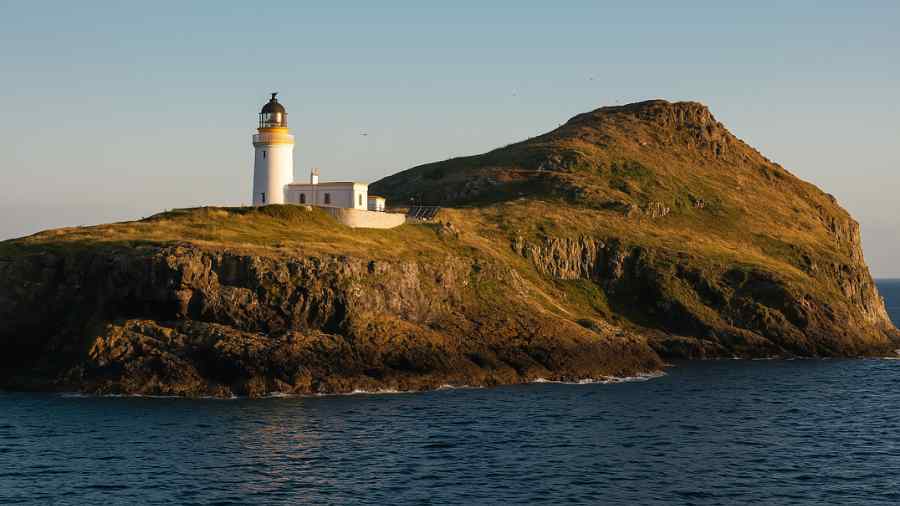
Fidra Lighthouse stands upon the uninhabited Fidra Island, a small volcanic rock formation lying just off North Berwick. The light, first illuminated in the year 1885, was a critical maritime instrument during a time when Scotland’s coasts were bustling corridors of fishing boats, trading ships and international travel. Before the days of GPS navigation, lighthouses like Fidra were among the most important tools protecting human life at sea. With its distinctive white tower rising from the centre of the island, Fidra Light continues to shine, fully automated today but no less iconic.
The very view of this lighthouse instantly sparks imagination. From the shores of North Berwick, locals and tourists often gaze across the water, watching seabirds swirl around its cliffs while waves crash below. Fidra Lighthouse does not sit in a populated or easily accessible area, which adds to its charm. It stands alone, silent, resilient and unyielding against the North Sea – the kind of monument that feels frozen in time.
The Construction and Engineering of Fidra Lighthouse
The lighthouse owes its design to members of the renowned Stevenson family — a dynasty of visionary lighthouse engineers responsible for many of Scotland’s coastal lights. Constructed in the late nineteenth century, Fidra Lighthouse stands approximately 17 metres tall, although its elevation from sea level gives its beam a much greater focal height. This extra elevation allows its light to cut through fog and dark waters far beyond what the physical tower suggests.
Before automation in 1970, lighthouse keepers lived on the island, maintaining the light through storms and unpredictable Scottish weather. Life on remote islands could be unforgiving, but it was also peaceful, structured and filled with purpose. Imagine nights where the only sound was the sea, the only company seabirds and the ever-present beam sweeping steadily across the horizon. Keepers would have tended the lamp, monitored weather, recorded visibility and kept communication with the mainland. Their presence ended when Fidra became one of the earliest Scottish lighthouses to operate without human staff.
The lighthouse was powered originally by oil, later by gas and eventually by electricity. Over time, its mechanisms evolved and maintenance reduced as automation technology improved. Today, monitoring is handled remotely, demonstrating how historical structures adapt to modern advancements without losing their identity.
The Island of Fidra: Landscape, Geography and Natural Character
Fidra Island covers a small area but offers breathtaking scenery. Its steep cliffs, rocky edges and patches of grass create ideal nesting areas for seabirds. The surrounding waters are rich with marine life, continuously shaping the island’s ecosystem. While small in size, Fidra feels much larger in presence thanks to its dramatic silhouette and commanding lighthouse crown.
During summer, daylight stretches long across the horizon, bathing the island in soft coastal glow. In winter, storms crash violently against the rocks, and waves churn with grey power beneath the lighthouse. This contrast makes Fidra a place of mood and mystery. Each season paints a different picture: bright and lively in nesting months, dark and brooding during cold tides.
Wildlife and Conservation: A Sanctuary for Seabirds
Fidra is not only a maritime landmark; it is a refuge for wildlife. The island is protected primarily for its bird population, including puffins, gulls, fulmars and various auks. Puffins, perhaps the most recognised symbol of the island, burrow into the ground and raise their young here. In the past, invasive vegetation had reduced their nesting success, but conservation work restored their habitat, allowing numbers to grow significantly.
Birdwatchers often come to the mainland viewpoints armed with binoculars, hoping to catch sight of puffins bobbing near the shoreline. It is not uncommon to witness large flocks circling overhead, their calls carried by the wind. This relationship between nature and heritage illustrates how historical sites can also serve as modern ecological treasures.
Seals are also sometimes seen resting on rocks nearby, while dolphins and occasional whales pass further out in deeper waters. Fidra Lighthouse stands not only as a guide for ships but a guardian of biodiversity.
Cultural and Literary Significance
Fidra carries a strong connection with Scottish literature, particularly with Robert Louis Stevenson. It is widely believed that Fidra inspired the fictional Treasure Island in his famous adventure novel. As a child, Stevenson visited North Berwick often, and Fidra, visible from the coastline, became embedded in his creative imagination. Whether visiting families or simply observing the island from the beach, he would have seen the lighthouse glowing at night and seabirds soaring in daylight. That kind of imagery shapes stories.
The island also appears in references within his lesser-known book Catriona, strengthening the association between artistic imagination and real geography. This cultural connection deepens the island’s identity. Fidra Lighthouse therefore exists not merely as brick and machinery but as a symbol of childhood wonder and storytelling.
Tourism and Access: Viewing Fidra Lighthouse Today
Reaching Fidra Island itself is challenging, particularly because it is a protected wildlife sanctuary. Boat landings are limited and weather dependent, and during nesting seasons access is discouraged to prevent disturbance. Most visitors admire the lighthouse from the mainland, especially from Yellowcraig Beach or North Berwick’s coastal paths. On a clear day, Fidra appears exceptionally close, its white structure gleaming against blue water and green grass.
The distance creates a human desire to get closer. Many photographers bring long lenses to capture the lighthouse with waves crashing around it. Walkers often spend hours appreciating its silhouette as they follow shoreline trails. The remoteness fuels its mystique. Unlike many lighthouses that stand beside harbours, Fidra remains wild and solitary.
Why Fidra Lighthouse Remains Important
Historical structures survive when they hold purpose. Fidra Lighthouse continues to guide vessels even in modern times. Although commercial traffic may have changed from what it was in the nineteenth century, navigation hazards remain real. Natural conditions such as fog, tide shifts and rocky seabeds require warning systems. Archaic does not mean irrelevant. The lighthouse persists because safety remains timeless.
Its importance extends beyond navigation. Fidra represents Scotland’s maritime engineering legacy, environmental responsibility and cultural narrative. It is a visual anchor to local identity, a landmark recognised by generations. When locals look to the horizon, they don’t just see a small island – they see a reminder of history.
Experience, Atmosphere and Emotional Presence
Anyone standing on the coast facing Fidra Lighthouse is likely to feel something deep. There is peace in its isolation, strength in its endurance and romance in the idea of an island untouched by urban chaos. It draws the imagination outward. One may wonder how many sailors have thanked its light, how many storms it has resisted or how many stories it silently holds.
Scotland is known for dramatic coasts, but Fidra carries a particularly poetic charm. It is not surrounded by crowds or souvenir shops. It simply stands, functioning quietly, waiting for the next wave, the next sunrise, the next pair of curious eyes.
Future of Fidra Lighthouse
The future of such lighthouses depends on preservation, funding and public interest. Automation reduces the need for daily maintenance, yet weathering remains relentless. Wind, saltwater and erosion continue to shape the island. As climate change influences sea levels and storm intensity, structures like Fidra may require attention to secure their continued existence. Conservation authorities, maritime bodies and heritage organisations must work collectively to protect such landmarks.
Public fascination also plays a role. When people value a place, they speak of it, visit coastal viewpoints and support preservation efforts. Fidra Lighthouse is loved — and this admiration ensures that its story continues.
Conclusion
Fidra Lighthouse stands not only as a beacon for sailors but as a beacon of history, wildlife, literature and enduring Scottish heritage. Rising from its small island, it tells a story that stretches across centuries. The engineering brilliance of its construction, the cultural footprint left by Stevenson, the thriving bird colonies and the wild beauty of its landscape combine into a tapestry of meaning. While many lighthouses around the world have fallen into disuse or stand forgotten, Fidra continues to shine both literally and symbolically. It reminds us of a time when light at sea meant survival, when structures built by human hands were tested by nature every day. It stands as proof that simplicity, strength and purpose can last generations. Anyone who gazes across the Firth of Forth toward Fidra sees more than a lighthouse — they see history alive.