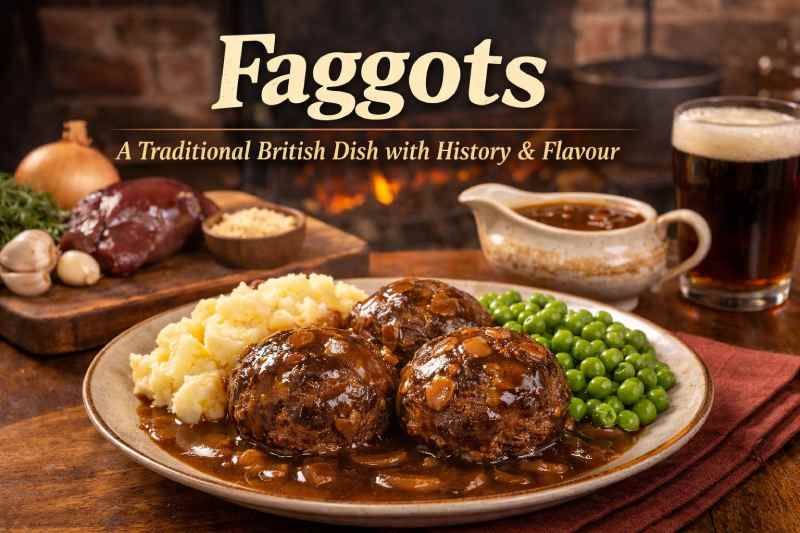
British cuisine is often celebrated for its comforting, hearty dishes that reflect centuries of tradition and practicality. Among these lesser-known yet deeply rooted meals is Faggots, a dish that carries both historical significance and a unique place in regional cooking. Despite the unusual name, this traditional recipe represents resourcefulness, flavour, and cultural identity, particularly in parts of England and Wales.
What Are Faggots?
At their core, Faggots are savoury meatballs made primarily from minced pork offal, including liver and heart, combined with herbs, onions, and breadcrumbs. These ingredients are shaped into balls and typically wrapped in caul fat before being baked slowly.
Key Ingredients
- Pork liver and heart
- Fatty pork meat
- Onions and herbs (such as sage and thyme)
- Breadcrumbs
- Caul fat (for wrapping)
The result is a rich, earthy dish with a deep flavour profile, often served with onion gravy, mashed potatoes, and peas.
A Dish of Substance
Unlike modern meatballs, this traditional preparation uses cuts of meat that are often overlooked today. This not only adds a distinctive taste but also reflects a time when every part of the animal was valued.
Historical Origins of Faggots
Working-Class Roots
The history of Faggots dates back to the 19th century, particularly in the industrial regions of the West Midlands and South Wales. These areas were home to miners and labourers who required filling, affordable meals.
Offal was inexpensive and widely available, making it an ideal ingredient for families seeking nourishment on a limited budget. By combining it with herbs and breadcrumbs, cooks were able to create a dish that was both economical and satisfying.
Resourcefulness in Cooking
The development of Faggots reflects a broader philosophy of “nose-to-tail” eating, where no part of the animal is wasted. This approach was not only practical but also deeply embedded in traditional British cooking.
Regional Significance
West Midlands
In the West Midlands, Faggots are more than just a meal; they are a cultural symbol. Often served in local pubs and homes, the dish is closely associated with regional identity.
South Wales
Similarly, in South Wales, the dish has long been a staple. It is commonly enjoyed with thick gravy and hearty sides, making it a comforting option during colder months.
Variations Across Regions
While the basic recipe remains consistent, slight variations exist:
- Some versions include additional spices for extra flavour
- Others may use different ratios of meat to offal
- Cooking methods can vary slightly depending on tradition
These variations highlight the adaptability of the dish while maintaining its core identity.
How Faggots Are Traditionally Prepared
Step-by-Step Process
- Preparation of Ingredients
The offal and meat are finely minced to ensure a consistent texture. - Mixing
The minced meat is combined with chopped onions, herbs, and breadcrumbs. - Shaping
The mixture is formed into round balls of equal size. - Wrapping
Each ball is wrapped in caul fat, which helps retain moisture and flavour during cooking. - Cooking
The balls are baked slowly, often in a rich onion gravy, until tender and fully cooked.
Serving Suggestions
Traditionally, Faggots are served with:
- Creamy mashed potatoes
- Green peas or seasonal vegetables
- Thick onion gravy
This combination creates a well-balanced and deeply satisfying meal.
Nutritional Value and Considerations
Rich in Nutrients
One of the notable aspects of Faggots is their nutritional profile. Offal is rich in essential nutrients, including:
- Iron
- Vitamin A
- Vitamin B12
- Protein
These nutrients make the dish particularly beneficial for maintaining energy and overall health.
Moderation Is Key
However, due to the richness of the ingredients, it is best enjoyed in moderation. The high fat content, especially from caul fat, contributes to its hearty nature.
Cultural Perception and Modern Relevance
Changing Attitudes Towards Offal
In recent decades, the popularity of offal-based dishes has declined in some areas, largely due to changing tastes and perceptions. Many modern consumers prefer leaner cuts of meat, leading to a reduced presence of traditional dishes like Faggots on everyday menus.
Revival in Contemporary Cuisine
Despite this decline, there has been a renewed interest in traditional cooking methods and sustainable eating. Chefs and food enthusiasts are rediscovering the value of using the whole animal, bringing dishes like Faggots back into the spotlight.
A Symbol of Heritage
Today, the dish is often celebrated as part of Britain’s culinary heritage. It represents a connection to the past and a reminder of the ingenuity of earlier generations.
Differences Between Traditional and Modern Versions
Traditional Approach
- Uses a higher proportion of offal
- Wrapped in caul fat
- Cooked slowly for depth of flavour
Modern Adaptations
- May reduce the amount of offal
- Sometimes omit caul fat for a lighter version
- Incorporate contemporary seasonings
These adaptations make the dish more accessible to modern tastes while preserving its essence.
Why Faggots Still Matter Today
Sustainability
The philosophy behind Faggots aligns with modern sustainability practices. By utilising less popular cuts of meat, the dish reduces waste and promotes responsible consumption.
Culinary Diversity
Exploring traditional dishes enriches our understanding of global cuisine. It allows us to appreciate the diversity of flavours and techniques that exist beyond mainstream recipes.
Comfort and Tradition
For many, this dish remains a source of comfort and nostalgia. It evokes memories of home-cooked meals and family gatherings, reinforcing its enduring appeal.
Tips for First-Time Tasters
If you are trying Faggots for the first time, consider the following tips:
- Pair with a rich gravy to balance the flavours
- Serve with simple sides to let the dish shine
- Approach with an open mind, especially if you are unfamiliar with offal
These suggestions can enhance your experience and help you appreciate the dish fully.
FAQs
What do Faggots taste like?
They have a rich, savoury flavour with a slightly earthy taste due to the use of offal, balanced by herbs and onions.
Are Faggots still popular in the UK?
They are less common than before but remain popular in certain regions and among those who appreciate traditional cuisine.
Can Faggots be made without offal?
Yes, modern versions sometimes use regular minced meat, although this changes the authentic flavour.
How are Faggots usually served?
They are typically served with mashed potatoes, peas, and onion gravy for a complete meal.
Are Faggots healthy to eat?
They are nutritious due to their high vitamin and mineral content, but should be eaten in moderation due to their richness.
Conclusion
The story of Faggots is one of tradition, resilience, and culinary ingenuity. Originating as a humble working-class meal, it has endured as a symbol of British heritage and resourcefulness. While modern tastes have evolved, the dish continues to hold a special place in regional cuisine and is gradually being rediscovered by a new generation.