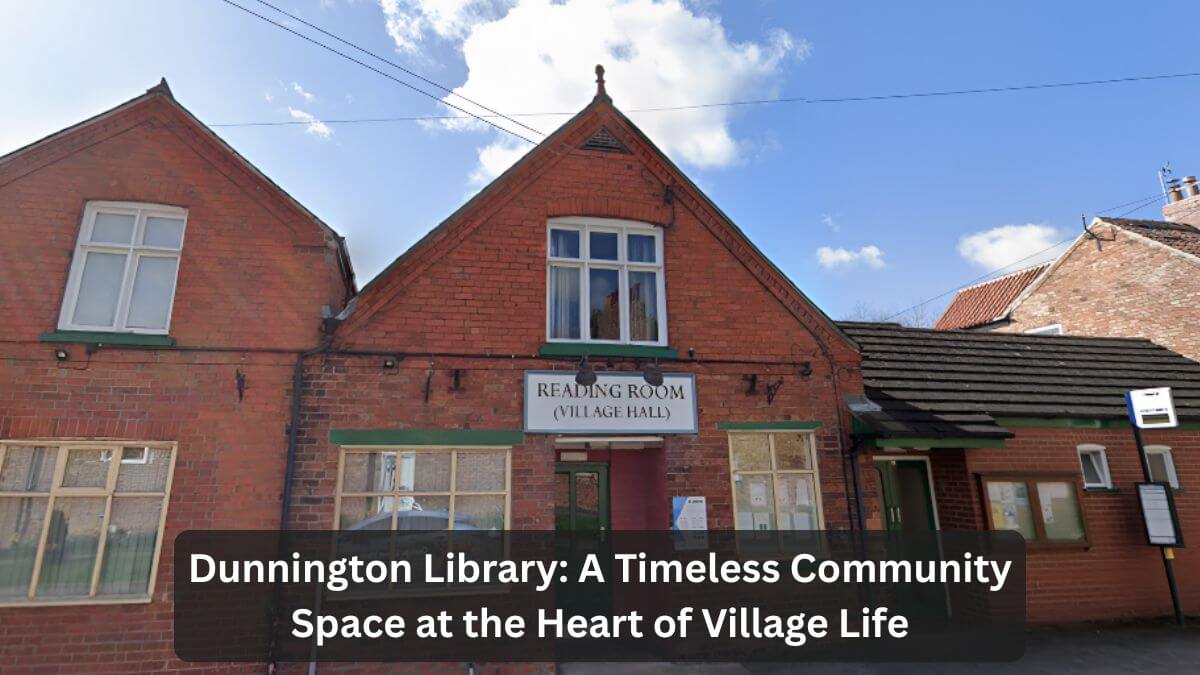
Dunnington Library stands as one of those quietly significant places that shape everyday life far more than they advertise. Nestled within the village of Dunnington on the eastern edge of York, this library has long served as a centre for learning, conversation, and community connection. It is not merely a building that houses books; it is a living space where generations have come to read, study, socialise, and feel part of something local and enduring.
The Village Setting of Dunnington
To understand Dunnington Library, it is essential to understand Dunnington itself. Once a rural settlement surrounded by farmland, the village has gradually evolved into a residential community while retaining a strong sense of identity. Its village green, church, and traditional buildings give it a character that blends history with everyday modern life.
Within this setting, the library feels naturally placed. It does not dominate the village but complements it. Residents often describe it as a familiar landmark rather than a formal institution. Children walk there after school, older residents attend reading groups, and families drop in as part of their weekly routine. The library reflects the rhythm of village life, opening its doors in step with the needs of the people it serves.
Origins and Historical Background
Dunnington Library is housed in a building traditionally known as the Reading Room, a name that itself reflects the long-standing British tradition of shared learning spaces. Reading rooms emerged in villages across England in the nineteenth and early twentieth centuries, often supported by local benefactors or parish groups who believed education should be accessible to all.
Over time, the Reading Room in Dunnington evolved into a modern public library while retaining its original community-focused purpose. Rather than losing its character, the building adapted, incorporating new resources while preserving its welcoming atmosphere. This continuity between past and present gives the library a sense of legitimacy and trust that cannot be manufactured overnight.
A Place Designed for Accessibility
One of the defining strengths of Dunnington Library is its accessibility. This is not limited to physical access, though that is important, but extends to emotional and social accessibility as well. The space is unintimidating. There is no sense that one must be an academic or avid reader to belong there.
The library welcomes children discovering books for the first time, adults seeking practical information, and older residents who may come as much for conversation as for reading. Staff and volunteers are known for being approachable and patient, reinforcing the idea that the library exists for everyone, regardless of age or background.
The Collection and Reading Culture
At its core, Dunnington Library remains committed to books. Its collection is carefully curated to reflect the interests of the local community. Fiction shelves include popular contemporary novels alongside classics, while non-fiction covers practical topics such as history, health, crafts, and local interest.
Children’s books form a particularly important part of the collection. Brightly displayed and regularly refreshed, they encourage early literacy and curiosity. Parents often remark that the library plays a vital role in fostering a love of reading that extends beyond the classroom.
The library also supports a strong reading culture through group activities. Reading groups bring people together to discuss books in a relaxed environment, helping to turn solitary reading into a shared experience. These gatherings often become social anchors, particularly for residents who live alone.
Digital Services in a Traditional Space
While the atmosphere of Dunnington Library is rooted in tradition, its services are firmly modern. Public access computers allow users to browse the internet, complete forms, apply for jobs, or access online services. For many residents, particularly older people, this digital support is invaluable.
Staff provide assistance with basic digital skills, from setting up email accounts to navigating online resources. This support bridges a crucial gap, ensuring that the digital transformation of public services does not leave anyone behind. In this way, the library functions as a gateway to the wider digital world, all within a familiar and supportive environment.
Educational Support and Lifelong Learning
Education at Dunnington Library extends beyond formal schooling. Students use the space for quiet study, while adults pursue lifelong learning through reading, research, and informal discussion. The library embodies the idea that learning does not end with exams or qualifications.
Local history resources, in particular, attract those interested in understanding the heritage of Dunnington and the surrounding York area. These materials connect residents with their past, strengthening the sense of place and continuity that defines village life.
Social Connection and Community Wellbeing
One of the most significant roles played by Dunnington Library is its contribution to social wellbeing. In an era where loneliness is increasingly recognised as a public health issue, the library offers a safe and neutral space where people can simply be present among others.
Coffee mornings, informal gatherings, and community events transform the library into a social hub. Conversations sparked over books often extend into friendships. For some residents, a visit to the library may be their primary social interaction of the week, giving the space an importance that goes far beyond its shelves.
Support for Families and Children
Families regard Dunnington Library as a trusted environment for children. Storytime sessions introduce young listeners to language, rhythm, and imagination, laying the foundations for literacy. These sessions also provide parents and carers with opportunities to connect, share experiences, and feel supported.
The presence of children in the library is not seen as a disturbance but as a sign of health and continuity. Their energy reinforces the idea that the library belongs to the future as much as to the past.
Volunteering and Local Involvement
Another key element of Dunnington Library’s success is the involvement of local volunteers. Their contribution reflects a broader sense of ownership felt by the community. Volunteers often assist with daily operations, events, and outreach, strengthening the bond between the library and its users.
This model of shared responsibility ensures that the library remains responsive to local needs rather than distant administrative priorities. It also fosters pride, as residents see the library as something they actively help sustain.
The Library Within the York Network
While deeply rooted in its village, Dunnington Library is also part of a wider library network across York. This connection allows residents to access a broader range of resources while retaining the intimacy of a local branch. Books can be requested, services shared, and standards maintained across the network.
This balance between local character and wider support is crucial. It ensures sustainability without sacrificing identity, allowing Dunnington Library to remain both resilient and distinctive.
Challenges Facing Modern Libraries
Like many public libraries, Dunnington Library faces challenges. Funding pressures, changing reading habits, and competition from digital entertainment all present ongoing tests. However, the library’s strong community integration provides a degree of protection.
Rather than attempting to compete directly with digital platforms, the library focuses on what it does best: offering a physical, human-centred experience. Its value lies not in novelty but in reliability, trust, and presence.
Adaptation and Future Relevance
The future of Dunnington Library will depend on its ability to continue adapting while preserving its core values. This may involve expanding digital literacy programmes, hosting new types of community events, or reimagining the use of space.
What remains constant is the underlying principle that knowledge should be shared, accessible, and rooted in community life. As long as that principle guides its development, the library will remain relevant.
Cultural Significance Beyond Books
Libraries have always been cultural symbols as much as practical institutions. Dunnington Library represents the belief that public spaces matter, that learning is a communal good, and that villages thrive when people have places to gather without commercial pressure.
In this sense, the library is a quiet form of cultural resistance, standing against the idea that value must always be monetised. Its existence affirms that some spaces are worth maintaining simply because they enrich human life.
Conclusion
Dunnington Library is far more than a place to borrow books. It is a reflection of village identity, a guardian of local knowledge, and a cornerstone of social connection. Through its blend of tradition and adaptation, it continues to meet the evolving needs of its community without losing sight of its purpose.
In a rapidly changing world, the library offers continuity. It reminds residents that learning is lifelong, that community spaces matter, and that progress does not require abandoning what already works. As long as Dunnington Library remains rooted in the people it serves, it will continue to be not just relevant, but essential.