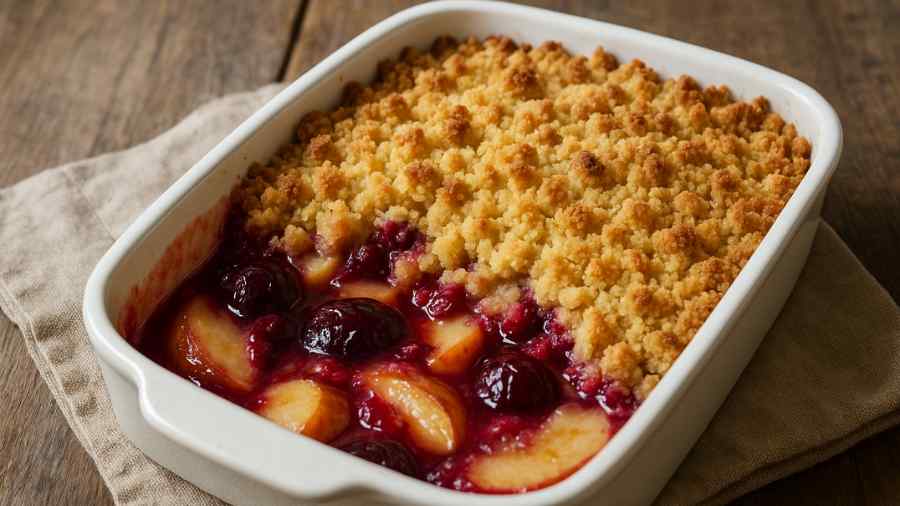
Among the many desserts found in British kitchens, the crumble holds a special place. It is warm, familiar, and wonderfully simple, yet it carries a depth of comfort that feels like home. When the year begins to edge toward autumn and the air cools slightly, many people look forward to the return of damsons. Their deep purple skins and sharp flavour make them quite different from ordinary plums. When combined with apples and baked beneath a buttery crumble topping, something truly memorable happens. The damson and apple crumble becomes more than a dessert. It becomes a seasonal celebration of flavour, colour, and tradition.
The Story and Tradition of the Crumble
During the Second World War, rationing affected nearly every kitchen across the United Kingdom. Ingredients often used for pies, such as butter, sugar, and flour, were limited. This challenged home cooks to find new ways to achieve the satisfaction of a warm dessert without using more resources than necessary. The crumble was the answer. It required fewer ingredients than pastry and was quicker to assemble. It soon became a staple, not only out of necessity but also because of the pleasure it offered.
Over time, the crumble moved from being a wartime substitute to becoming a beloved classic. Families passed down crumble recipes, each adding their own touches. Some topped theirs with oats for texture, others added spices for warmth, and some kept it plain and timeless. Crumbles became part of Sunday lunches, holiday gatherings, and cold-weather meals. The dish did not need to be fancy to feel special.
Understanding the Damson
The damson is a fruit with personality. Small and oval with dark purple skin, it has a tart and slightly tannic flavour that sets it apart from sweeter plums. Damsons ripen in late summer and early autumn and have long been associated with the British countryside. They are often found in old gardens, hedgerows, and village orchards, where the fruit is gathered in baskets, bowls, or even aprons.
Because of their sharpness, damsons are rarely eaten raw. They are fruits that come alive through cooking. Heat draws out their juice, deepens their colour to a vivid ruby or wine-red, and softens the tart edge into something rich and rounded. However, damsons do contain stones, and these must be removed. Some people remove them before cooking, while others simmer the damsons first and then pick the stones out later. The effort may sound small, but there is something almost meditative about it. It slows the process down and invites care, which feels fitting for a homemade dessert.
Why Apples Make a Perfect Partner
Apples are a natural companion to damsons. Their sweetness helps balance the damsons’ tart flavour, while their gentle aroma gives the filling a sense of calm warmth. When cooked, apples soften beautifully. Depending on the type used, they may melt into the fruit mixture or retain tender shapes that offer texture.
A cooking apple such as Bramley will break down into a soft, smooth base that catches the damsons’ bold flavour. Eating apples like Cox or Braeburn hold their structure more, adding small pockets of bite. Many home cooks enjoy mixing the two types. This creates a fruit layer with both softness and interest.
The pairing of damsons and apples is not simply about taste. It is also a reflection of the British countryside. Both fruits are tied to orchard seasons and rural landscapes, making the crumble feel rooted in place and time.
Preparing the Fruit Layer
To prepare the fruit, start by washing the damsons and either remove the stones beforehand or simmer the fruit briefly so the stones can be taken out more easily. Peel, core, and slice the apples into even pieces. Place the fruits into a pot with a small amount of sugar, allowing them to soften gently. This slow cooking encourages the flavours to blend and the juices to release. The fragrance that rises from the pan is often enough to reassure you that something lovely is underway.
Some cooks add a squeeze of lemon juice to brighten the flavour. Others include a cinnamon stick or a little vanilla for warmth. A very small splash of water may be added if needed to help the fruit simmer without sticking. The goal is to reach a filling that tastes balanced: not too sharp, not too sweet, and naturally vibrant.
Crafting the Crumble Topping
The crumble topping is where texture and flavour meet. Begin with plain flour and cold butter. Rub them together lightly with your fingertips until the mixture resembles soft crumbs. Add sugar to sweeten and encourage browning during baking. Keeping the crumbs slightly irregular leads to a more satisfying texture after baking.
Many people enjoy adding rolled oats for extra chew and rustic charm. Others incorporate crushed nuts such as hazelnuts or almonds for depth and subtle flavour. A dusting of cinnamon or nutmeg can make the crumble feel more suited to cold evenings and cosy kitchens. Whatever additions you choose, the goal is to create a topping that is crisp on top while gently soft underneath, where it meets the fruit.
Baking and Serving
Once the fruit and topping are prepared, place the fruit in an ovenproof dish, scatter the crumble mixture on top, and bake until golden. You will know it is ready when the topping has taken on colour and the fruit bubbles around the edges. The scent coming from the oven is in itself a kind of comfort: a sign that warmth and sweetness are close at hand.
Damson and apple crumble is best served warm. Traditional accompaniments include custard, cream, or vanilla ice cream. Custard gives a velvety richness, cream adds cooling smoothness, and ice cream creates a pleasing contrast between heat and cold. Each brings its own pleasure, and choosing is simply a matter of mood.
Variations and Adaptations
One of the strengths of crumble is its adaptability. For those who follow a gluten-free diet, simply replace the flour with a gluten-free blend and ensure that any oats used are certified gluten-free. For a vegan version, plant-based margarine works well and still allows the topping to crisp.
Some cooks add blackberries during late summer, which deepens the colour and adds a dark woodland sweetness. In winter, spices play a larger role, making the dessert feel festive and warming. A scattering of flaked almonds on top gives a toasty finish that pairs beautifully with the deep fruit below.
Why This Dessert Remains Beloved
Damson and apple crumble is not flashy. It does not need decoration or elaborate presentation. Its warmth lies in its honesty. It takes simple ingredients and turns them into something generous and full of feeling. The flavours are bold yet familiar. The texture is soft yet comforting. The act of making it invites patience and care, and the act of sharing it invites closeness.
It reflects the slow transition of seasons, the gathering of fruit, and the steady comfort of home cooking. It holds memories as easily as it holds flavour. Perhaps that is why the crumble continues to be found on family tables year after year. It gives not only nourishment, but reassurance.
Conclusion
Damson and apple crumble is a dessert that carries tradition, flavour, and warmth in equal measure. The tart richness of damsons and the gentle sweetness of apples create a fruit layer that feels balanced and full of character. The crumble topping brings texture and a golden finish that completes the dish beautifully. Whether served with custard, cream, or ice cream, it offers comfort in every spoonful.
Making a damson and apple crumble is more than following a recipe. It is a small, thoughtful expression of care, a moment to slow down, and an invitation to share something warm and memorable with others. It remains a dessert that not only satisfies the appetite, but also the heart.